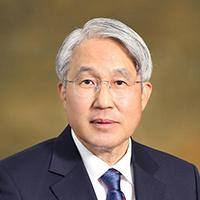
By Hong Hyun-Ik
Chancellor, Korea National Diplomatic Academy
Leading nation's diplomacy for peace, climate and economy
President Moon Jae-in from Oct. 28 to Nov. 5 carried out summit diplomacy in his latest trip to Europe, visiting Rome, Glasgow and Budapest. The purpose of his visit was to attend the summits of the Group of 20 (G20) economies and the United Nations Climate Change Conference (COP26), but the focus was on forming the foundation for the Korean Peninsula peace process, consolidating the nation's status as a climate response leader and pursuing feasible economic interests.
President Moon, to create new momentum for peace on the Korean Peninsula, on Oct. 29 held his second talks with Pope Francis after their first meeting three years ago. The president asked the priest to pay a visit to North Korea and told the world of the response: "If he (the pope) received an invitation, he would gladly visit the North for the sake of helping Koreans and the cause of peace." The president also hosted an exhibition of crosses made with barbed wire from the Demilitarized Zone at the Church of St. Ignatius of Loyola in Rome to highlight the urgency of peace on the peninsula. The former bishop of the Diocese of Daejeon, Lazzaro You Heung-sik, who is now prefect of the Vatican's Congregation for the Clergy, also said, "The Roman Curia is making efforts to make the pope's visit to North Korea happen."
On Oct. 30 at the G20 summit, President Moon stressed the importance of cooperation among member countries to overcome COVID-19 and achieve global economic recovery. He also explained Korea's contributions in the fight against the pandemic such as sharing the nation's "phased return to normal life" with all participating countries, and highlighted Korea's role in expanding vaccine donations and serving as a "vaccine production hub."
On the sidelines of the G20 summit, President Moon held a series of bilateral meetings with leaders of the European Union, France, Australia and Germany. When he emphasized the need for swift resumption of dialogue among both Koreas and the U.S., French President Emmanuel Macron pledged to play a necessary role and contribute whenever needed. German Chancellor Angela Merkel also said she will continue to support Seoul’s effort to improve inter-Korean relations and efforts to settle peace on the Korean Peninsula. And in a brief meeting with U.S. President Joe Biden, President Moon delivered the pope's willingness to visit North Korea, to which the U.S. leader responded by saying President Moon was "making progress" in resolving peninsular issues.
At the COP26 summit in Glasgow, President Moon upgraded Korea's 2030 Nationally Determined Contributions and pledged to reduce greenhouse gas emissions more than 40% from 2018 levels. "We will actively cooperate with developing countries in their efforts for forest recovery," he added, and "through inter-Korean forestry cooperation, we will reduce greenhouse gas emissions on the entire Korean Peninsula." At the event, Korea reinforced its status as a leader in responding to climate change playing the role of bridge connecting both advanced and developing countries. Minister of Foreign Affairs Chung Eui-yong, who accompanied the president on his trip, also held meetings in Rome with U.S. Secretary of State Antony J. Blinken and Chinese Foreign Minister Wang Yi. In Glasgow, Minister Chung held a meeting with the British foreign minister, having one-on-one talks over a month with his counterparts from all member countries of the U.N. Security Council.
In Budapest, the final leg of his trip, President Moon held summits in a group and individually with the leaders of the four nations of the Visegrad Group (V4) -- Hungary, Slovakia, Poland and the Czech Republic. The group is Korea's second-largest trading partner among EU members and the only leader-level body within the EU region. In the second Korea-V4 summit since the first six years ago, the leaders of the four countries welcomed Seoul's proposal to declare a formal end to war on the Korean Peninsula. Korea and the group also bolstered cooperation in electric vehicles, batteries and nuclear power and shared a vision of leading the era of the Fourth Industrial Revolution by connecting the V4's basic science capacity with Korea's prowess in applied sciences like information and communications technology. Hungary, the group's chair this year, helped Korea enter Northern Diplomacy in Europe during the Cold War. In 2019, Korea became Hungary's largest investor. Making the first state visit by a Korean leader to Hungary in 20 years, President Moon enabled the opening of the "New Eurasia Route" connecting Northeast and Central Asia, Russia and Central Europe through strengthening ties with the four V4 countries.
As a result, President Moon affirmed and boosted Korea's status as an advanced nation in global issues such as achieving economic recovery after COVID-19 and responding to climate change. He not only displayed summit diplomacy to promote economic interests but also expanded the diplomatic foundation for restoring the peace process on the Korean Peninsula.
Tasks and direction of Korea's response
An invitation from North Korea is a prerequisite for the pope's visit. The feasibility of this is unclear because three years ago during President Moon's visit to Pyeongyang, North Korean leader Kim Jong Un expressed an intent to invite the priest but sent no invitation letter. The pope's advanced age and health after undergoing an operation are also factors as his overseas trips are set up a year in advance. To make the visit happen before President Moon leaves office, Kim must send an official invitation soon. Another obstacle is the North's lingering border shutdown due to COVID-19.
Also crucial in this regard is improving Korea's ties with Japan, as President Moon and Japanese Prime Minister Fumio Kishida have not held bilateral talks. This is partially due to how COP26 was a large gathering with more than 100 heads of state attending. The Japanese leader's stay in the U.K. was not long enough to arrange a meeting. Because the U.S. has emphasized Japan's role in restoring peace on the Korean Peninsula, diplomacy to secure Japanese cooperation is needed.
The biggest task is a declaration for formally ending the Korean War, which will serve as momentum to restoring mutual trust for resuming negotiations between the North and the U.S. Pyeongyang has recently shown interest in the declaration but wants Washington to first drop its double standards and hostile policy toward the North. This can imply the latter's demand for a halt to the joint military drill between the South and the U.S. and easing of international sanctions. Washington apparently considers the declaration a gift to Pyeongyang and can discuss this if the North comes to the negotiating table. President Moon's proposal has made no progress, however, since the North sticks to its position of making America give up its hostile policy before resuming dialogue.
Seoul must display more active diplomacy toward both Pyeongyang and Washington. It must persuade Kim to announce that the declaration is merely a symbolic act that does not affect the status of U.S. forces in South Korea or the U.N. Command, as confirmed by President Moon in 2018. The Biden administration of the U.S. needs to be reminded that the North partially implemented agreements reached in the 2018 North Korea-U.S. summit in Singapore, though then U.S. President Donald Trump did not. Washington must be persuaded to regain Pyeongyang's trust by implementing part of the accords as a precondition to dialogue and unconditional acceptance of the declaration. By applying a snapback clause that reimposes sanctions if the North breaks its pledges, we must show that easing the humanitarian part of sanctions on Pyeongyang can drive the latter's denuclearization.
The Moon administration should make maximum diplomatic efforts until its term ends. The situation of the Korean Peninsula should be normalized through resumption of talks on the North's nuclear program and restoring inter-Korean relations to pass on to the next administration in South Korea.
Translated by Korea.net staff writer Yoon Sojung