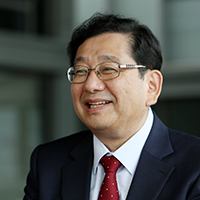
By Yuji Hosaka
Professor emeritus of political science, Sejong University
Japan's relations with both Korea and China have recently shown signs of strain. A major reason for deterioration in Beijing-Tokyo ties occurred when Japanese Prime Minister Sanae Takaichi on Nov. 7 angered China by telling a session of her country's legislature, "An emergency in Taiwan would threaten Japan's very existence." Beijing blasted the statement as implying that Japan would mobilize its Self-Defense Force if a contingency occurred in Taiwan.
The prime minister on Dec. 9 also poured cold water on ties with Korea by saying at a parliamentary session, "Taekshima (Dokdo) Island is inherently Japanese territory historically and geographically and under international law." Her claim raised diplomatic tension as the Office of the President in Seoul issued a strong protest against it.
Behind this unprecedented series of conflicts lies a complex web of age-old historical disputes and complex global legal interests. This critical review of this latest situation aims to suggest practical solutions for all three countries to move away from antagonism and toward peace.
After her comment on Taiwan ignited controversy, Prime Minister Takaichi on Dec. 3 tried to clarify her stance by telling a plenary session of the House of Councilors, "There is absolutely no change in Japan's fundamental position on Taiwan per the 1972 Japan-China Joint Communique."
Adopted when the two countries forged diplomatic relations in 1972, the communique said China "emphasizes that Taiwan is part of Chinese territory" and that the Japanese government "fully understands and respects this position." So the prime minister's statement that day was an apparent attempt to backtrack her stance expressed on Nov. 7.
But China's response has remained cold. Chinese Foreign Ministry Spokesperson Lin Jian on Dec. 4 told a regular news briefing, "We urge the Japanese side to show genuine remorse and for Prime Minister Takaichi to retract her erroneous remarks." This pressure seeks to get the prime minister to accurately and completely reconfirm the communique's content instead of making the ambiguous statement of "no change in Japan's position."
Since China has considered a series of retaliatory measures in showing a hardline stance, a resolution to the debacle is unlikely unless the prime minister retracts her comments or takes similar measures.
Japan's continued claim to Korea's Dokdo Island also ignores historical truth. Since resolving a dispute over Ulleungdo Island with its neighbor in the late 17th century, Japan has banned its nationals from traveling to Ulleungdo and Dokdo, making it clear that Dokdo is not Japanese territory. This is confirmed by the Directional Map of Takeshima, an official map among Japanese court records from 1838, and the State Council Order, an official document from the Meiji government from 1877. Yet the Japanese government made these ancient maps and official documents classified materials, preventing public access and clearly reflecting the intent to hide the truth.
Even under modern international law, Dokdo is Korean territory. After Japan secretly incorporated it into Shimane Prefecture's Oki Islands in February 1905, prefecture officials arrived on Ulleungdo in March 1906 and informed the Ulleungdo County magistrate of the island's annexation. In response, the prime minister of the Korean Empire blasted the claim that Dokdo was Japanese territory as "completely groundless," declaring the island Korean territory.
In 1945, Korea was liberated after Japan's defeat in World War II and ensuing occupation by the Allies. Afterward, the supreme commander for the Allied Powers Directive SCAPIN 677 designated Dokdo Korean territory. In April 1951, when the first British draft of the San Francisco Peace Treaty declared separate from Japanese territory, Japan did not protest. That September when the treaty was signed, no specific mention was made of of Dokdo in a clause on Korean territory. And in December of the same year, SPAPIN 677-1, a document explaining the treaty, made a reference to SCAPIN 677 to effectively acknowledge Dokdo as part of Korea.
After the treaty took effect, Tokyo began efforts to legally incorporate Dokdo into its territory by intentionally including it in its bombing practice zones of U.S. Forces Japan in 1953. When Seoul protested, Washington excluded Dokdo from the zones designated by Tokyo. In 1954, the U.S. Department of State mentioned this fact and said in a document, that since it accepted Korea's protest and excluded Dokdo from the zones designated by Japan, the argument that Dokdo is Japanese territory "is no longer valid." Since then, the U.S. Board on Geographic Names has also recognized Dokdo as Korean territory.
Considering this context backed by history and international law, the claim by the Japanese prime minister that Dokdo is Japanese territory is inappropriate.
A summit between Korea and Japan from Jan. 13-14 will be held in Nara Prefecture, the prime minister's hometown. This unfortunate development is clearly a crisis for both sides ahead of the upcoming talks, but also offers a test to affirm the trust both sides have built for years. The hope is that both leaders can wisely overcome this crisis and reach a major resolution for peace in Northeast Asia based on friendship and cooperation. The two countries should never forget that the co-prosperity of the six countries in Northeast Asia requires a firm foundation of peace and cooperation between Seoul and Tokyo.
The true path to peace is to resolve global conflicts through the universal principle of using treaties and avoiding extreme confrontation. The world must transcend the walls of conflict built by ideology and geopolitical interests. Only when Seoul and Tokyo take the lead by embracing their historic mission of building peace can Northeast Asia and the world truly start a new era of peace.
Yuji Hosaka is a Korean political scientist of Japanese descent who has taught political diplomacy at Sejong University since 1998. In recognition of his long-term research and work to affirm national sovereignty over Dokdo, he received Korea's Order of Merit for Distinguished Service Merit. He is professor emeritus at Sejong University and director of its Dokdo Research Institute.
Translated by Korea.net staff writer Yoon Sojung