By Jun Bong-Geun
Adjunct professor, Korean National Diplomatic Academy
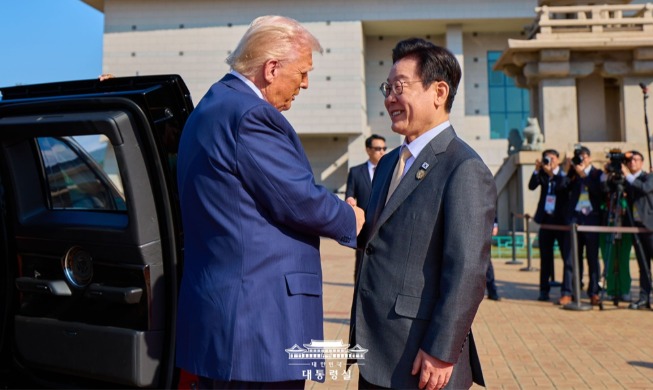
In their bilateral summit in late October in Gyeongju, Gyeongsangbuk-do Province, South Korea and the U.S. agreed to expand and develop their ties into "a future-oriented, comprehensive strategic alliance." A key result of these talks was Washington's approval of Seoul's bid to build its own nuclear-powered submarines. The final agreement per a joint fact sheet released on Nov. 14 clearly stated the U.S. stance, saying, "The United States has given approval for the ROK (Republic of Korea) to build nuclear-powered attack submarines. The United States will work closely with the ROK to advance requirements for this shipbuilding project, including avenues to source fuel."
This confirmed American support for the submarine project for the first time in 20 years, setting the political and diplomatic basis to proceed. Yet this venture will incur huge costs and considerable time as well as carry major strategic implications. Thus the road ahead will be far from smooth. Without a firm belief in the need and purpose for the submarines, the project could face many challenges both in and out of the country and lose its way. So this column covers why Korea needs such submarines and for what purpose.
First, nuclear submarines are a viable and effective non-nuclear deterrent to North Korea's nuclear and missile threats. Pyeongyang is presumed to have 50-100 nuclear weapons and secured a range of delivery vehicles like intercontinental and submarine-launched ballistic missiles, strategic cruise and hypersonic missiles, and nuclear torpedoes while developing nuclear-powered submarines equipped to carry nuclear missiles.
The North's Nuclear Force Policy Act, enacted in 2022, stipulates arbitrary, preemptive and offensive use of nuclear weapons, posting an existential security threat to the people of South Korea. North Korean leader Kim Jong Un also exacerbated this threat by recently redefining the inter-Korean connection from fraternal ties to "a hostile bilateral relationship."
Despite calls in South Korea to go nuclear to counter the North's threat, the Lee administration in Seoul has rejected this, citing the Republic of Korea's position as "a globally responsible state" that exemplifies compliance with global norms. The country is a trading power with an externally dependent economy, something that would be destroyed if it went nuclear. So the goal should be to maximize a strong non-nuclear and conventional deterrence. The country has advanced diesel and air-independent propulsion submarines but its capacity to deter the North's use of nuclear weapons strategic attack submarines faces limits in submersion time, range and missile payload.
Nuclear submarines are South Korea's lone non-nuclear option that can remain submerged for months without refueling to trace and attack the North's underwater vessels. They provide a preemptive strike capability if a nuclear attack is imminent and a mode of retaliation through surviving forces in the event of a contingency. This role greatly bolsters two elements of the nation's three-axis system -- preemptive strike, missile defense and massive retaliation. Thus such submarines are a crucial component of non-nuclear deterrence against Pyeongyang.
Second, such submarines can qualitatively raise strategic stability on the Korean Peninsula and in Northeast Asia by bolstering the deterrence and defense posture related to the bilateral alliance with the U.S. North Korea, China and Russia have recently reinforced their nuclear, missile and naval capabilities in rapid fashion, whereas U.S. forces in the region have stayed relatively stagnant. If this development disrupts the balance of power and deterrence structure on the peninsula and its surrounding waters, the risk of military adventurism by certain powers will grow. Nuclear submarines can fill this power vacuum within the context of the alliance with Washington and trilateral cooperation with the U.S. and Japan, helping restore and maintain the balance of military and strategic stability in the region.
Skeptics warn that the acquisition of such submarines over the long term will lead to U.S. withdrawal from the bilateral alliance or South Korea going nuclear. But North Korea, China and Russia are quickly boosting their nuclear capabilities. China's Victory Day military parade in October punctuated the growing alliance among Pyeongyang, Moscow and Beijing, making a stronger South Korea-U.S. alliance and trilateral security cooperation among Seoul, Washington and Tokyo all the more important. As the Lee administration has repeatedly said, the submarines are not meant to attack a specific country but will serve as a strategic asset to guarantee regional stability through defensive and deterrence missions within the framework of bilateral security cooperation with Washington and the trilateral alliance with Tokyo.
Third, the submarines are a core strategic asset to leverage South Korea's status as a peace-loving nation, middle power that supports the liberal global order and sixth-largest trading power, providing public goods for world peace and security. Today, the traditional liberal world order has gotten fractured due to military clashes and conflicts in gray areas spreading across the globe, along with piracy running amok. Under these circumstances, Seoul as a major middle power must fulfill its mission of global security to protect the common interests of the international community and its own national interests by safeguarding marine transportation networks. As a trading power lacking natural resources, South Korea has an economy totally dependent on such networks connecting the world. The submarines, with the ability to conduct long-distance operations, are thus a key tool for the country's international security mission.
Seoul's nuclear submarines present an exemplary case of compliance with global principles of nuclear non-proliferation and norms by using low enriched uranium for fuel. The country also requested nuclear fuel supply from the U.S. for the submarines, clearing stating its stance of no military enrichment within South Korea. This is in clear contrast to other non-nuclear countries that risk proliferation by using highly enriched uranium to fuel such submarines or enrich uranium on their own.
In short, South Korea's possession of nuclear submarines is a strategic choice to use a "non-nuclear deterrent" against North Korea's nuclear threat, raise security cooperation with the U.S. through shared roles, and contribute to international and marine security as a middle trading power. This is the most rational path toward making the country a responsible non-nuclear middle power amid complex security threats.
Jun Bong-Geun is an adjunct professor at the Korean National Defense Academy and adviser to the school's Center for Geo-political Studies, specializing in the Korean Peninsula, North Korea's nuclear program, international security, non-proliferation and nuclear policy for many years. He is also president of the Korea Nuclear Policy Society.
arete@korea.kr