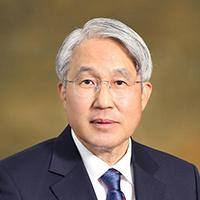
By Hong Hyun-Ik
Former chancellor of Korea National Diplomatic Academy
Summit with China early in new year
The core of Korea's foreign policy undoubtedly lies in its alliance with the U.S. China, however, holds equal significance considering its major influence on peace and stability on the Korean Peninsula and the economy. As the peninsula's closest neighbor for millennia, China shares a border with North Korea and accounts for over 90% of the latter's trade and supplies cheap energy. While cooperation with Washington is crucial for resolving Pyeongyang's nuclear issue, that with Beijing is also simultaneously essential for reasserting peace on the peninsula and achieving nonviolent reunification.
Since 2016, Seoul's ties with Beijing have been strained due to the Chinese ban on Korean cultural content following South Korea's installation of the Terminal High Altitude Area Defense, aka THAAD, an anti-ballistic missile defense system. Relations further deteriorated to the point of near hostility under the former Yoon administration's diplomacy of biased ideology.
Thankfully, President Lee Jae Myung used Chinese President Xi Jinping's recognition of the importance of the Asia-Pacific Economic Cooperation forum in Gyeongju, Gyeongsangbuk-do Province, inviting him as a state guest and holding talks with him in November last year, opening a window toward restoring bilateral ties. Seoul sought to maintain this momentum and quickly pushed for a reciprocal state visit by President Lee to China. Beijing is usually reluctant to receive foreign guests early in a new year but recognized the country's strategic value and hosted a summit two months later.
Laying basis for restoring trust and normalizing ties
China showed unprecedented courtesy in President Lee's visit, upgrading the level of his reception at the airport from vice ministerial to ministerial and having President Xi go there first to greet the state visitor. Beijing's top three officials -- President Xi, the prime minister and the chairman of the National People's Congress Standing Committee (equivalent to the National Assembly speaker) --- attended the summit as a gesture of high-level treatment.
The talks produced major outcomes. Seoul focused not only on normalizing bilateral ties but also boosting mutual respect and symbiotic cooperation, setting the basis for peace on the Korean Peninsula and in Northeast Asia and creating new engines for development. The biggest achievement was the deepening of trust between both leaders on inter-Korean affairs. The talks were initially scheduled for half an hour but ran 90 minutes thanks to the personal rapport between the two presidents, who shared heartfelt and candid dialogue as well as discussions focused on agenda.
President Lee first proposed maximizing mutually beneficial and win-win cooperation in economy, industry and livelihood. This resulted from the Lee administration's pragmatic diplomacy of prioritizing national interests, finding a harmonious connection with China's policy stances of "acknowledging differences but pursuing the same point" and "practical-seeking facts." Seeing how high-tech Chinese advances have transformed economic relations from a vertical division of labor to a competitive partnership, the two sides agreed on forming new horizontal partnerships in cutting-edge industries such as artificial intelligence.
Seoul and Beijing this time also concluded 14 memorandums of understanding (MOU), double that in their previous summit in November last year. The figure reached 15 if a certificate on the donation of a pair of stone lion statues, part of Chinese cultural heritage purchased in the 1930s by a Korean art collector, to China was included. The agreements included regular meetings between the trade ministers of both sides, promotion of investment between industrial complexes and collaboration in digital technology.
China this time issued no joint or concrete statement on its commitment toward the denuclearization of the peninsula or inter-Korean dialogue. President Lee said expecting a clear stance from Beijing was difficult considering the latter's ties with Pyeongyang. Yet he asked his Chinese counterpart to help broker inter-Korean peace, especially on the North's nuclear program.
Praising Seoul's efforts, President Xi said, "We need patience." Though his specific comments were not made public, the two countries encouragingly agreed to continue exploring "creative solutions." This raises China's scope to play a "constructive role" such as helping foster a desirable environment for inter-Korean dialogue and communication between the North and the U.S. and supporting their success.
President Lee appears to have reached the tentative conclusion that a more realistic short-term measure is a compromise involving corresponding compensation or payment for the North's suspension of its nuclear program while maintaining the long-term goal of a nuclear-free peninsula. Beijing also expressed its sympathy by pledging to convey his sincerity to Pyeongyang.
More time is needed to lift the Chinese ban on Korean cultural content, but under a gradual and phased approach, the two sides are likely to expand exchanges first in the traditional game baduk (go) and soccer and further discuss K-dramas and films to be shown in China. On illegal Chinese structures installed in the Yellow Sea, vice ministerial-level talks this year are expected to set a median line as proposed by President Lee.
Essence of pragmatic diplomacy
Above all, the essence of the summit lies in both leaders agreeing to fully restoring bilateral ties as well as building a strong basis for trust. Their pledge to overcome adversarial sentiment between their countries is predicted to emerge as important momentum to lay the basis for practical cooperation.
Stressing the principle of mutual respect and prioritizing each side's core national interests, President Lee said he respects Beijing's "One China" policy. He also stressed Seoul's need for nuclear-powered submarines and proposed a joint rescue training between the navies of both countries. This demonstrated strategic autonomy, maintaining cooperation with neighboring countries while keeping Korea's bilateral alliance with the U.S. as the cornerstone of foreign strategy.
Both leaders agreed on their shared history of fighting off foreign invaders. President Lee, however, maintained a balance by refraining from making unnecessary provocative comments on Japan with careful diplomatic rhetoric. His pragmatic diplomacy of pursuing "peace and prosperity together" while minimizing conflict with other countries and stressing mutually beneficial cooperation is expected to continue proving its worth in a bilateral summit with Japanese Prime Minister Sanae Takaichi in Japan's Nara Prefecture and President Lee's North Korea policy.
Hong Hyun-ik is a former chancellor of the Korea National Diplomatic Academy and has researched since 1997 national security and strategy at the Sejong Institute, focusing on North Korea's nuclear program, inter-Korean relations, Seoul-Moscow ties and formation of a peace regime on the Korean Peninsula. He recently served as the head of the foreign affairs and security subcommittee of the Presidential Commission on Policy Planning.
arete@korea.kr