By Aiden J. Hwang
Adjunct professor of global music industry
Graduate School of Culture and Arts at Dongguk University
2026 marks an important watershed for the Korean cultural sector, determining if it evolves from a passing fad to a structural standard on the global cultural market. K-dramas and K-pop enjoy worldwide popularity through unprecedented distribution on platforms across the globe. But the question for the industry now is no longer "Did it succeed?" No, the fundamental question is if this success is sustainable.
Over the last 10 years, Korean content has been the quintessential example of compressed growth. It rapidly developed a massive fan base worldwide and saw remarkable achievements on global charts and awards ceremonies. But these qualitative results also exposed new limits. The number of works and investment scale have increased, but the profit structure is proving unstable and creator fatigue is rising. The challenge facing Hallyu (Korean Wave) is to achieve "qualitative growth after quantitative expansion."
Korean content is in a state of prosperity and chaos. Domestic content producers were subcontractors for global platforms in the past, but are now co-producers and competitors. This shows the industry's maturation but also poses the structural problems of surging production costs and worsening profitability. In particular, the distribution structure centered on over-the-top services provides stable capital, but also raises issues of ownership of intellectual property (IP) and profit distribution.
The full-fledged adoption of artificial intelligence (AI) that started this year is fundamentally restructuring the content industry. Generative AI maximizes production efficiency and lowers barriers to entry, while questioning the fine line between the uniqueness of creativity and copyrights. The global market is no longer content with the "refined perfection" of Korean content; it has also started to assess the underlying ethical attitudes, human values and narrative philosophy of Hallyu.
The main problem preventing the sustainable growth of Korean content lies in its IP structure. Capital from global platforms fuels the short-term growth of the industry but also risks Korea's creative assets being reliant on profit structures abroad. This recurring dilemma sees the content remain while assets and control are lost. A prime example is "KPop Demon Hunters" produced last year by Sony Pictures Animation and distributed by Netflix. This IP was a global megahit but left a bittersweet aftertaste.
An alternative to this situation is an industrial redesign focused on IP. A domestic multilayered revenue model (one-source multi-use) is needed based on the original IP of works such as webtoons, web novels and games that is expandable to TV dramas, cinema, performances and licensing. Also crucial is an "attachment capital" strategy that recognizes fandoms as industrial partners as well as customers. Emotional connections with fans will fuel long-term market stability and brand loyalty, not just box office success over the short term.
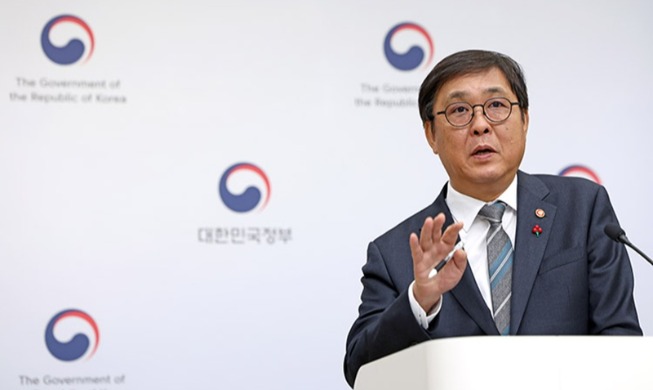
The government is also clearly aware of the strategic value of the cultural industry. In his first news conference of the new year, President Lee Jae Myung called Korean culture the core of the country's brand and future growth strategy, saying culture is an important asset connecting the economy and diplomacy. The Ministry of Culture, Sports and Tourism's business plan for 2026 also embraces the goal of developing the sector as an independent growth engine. This policy commitment was symbolically demonstrated by the ministry's budget of KRW 7.8 trillion and a considerable funding hike for content.
From a diplomatic perspective, Hallyu content is a critical soft power that makes Korea an "attractive country." The diffusion of culture, however, is always double-sided. Unilateral propagation can fuel cultural fatigue or backlash, so a hyper-localization strategy based on coexistence with other cultures is needed alongside an inclusive narrative embracing universal human values like the climate crisis, human rights and diversity.
For Korea, 2026 is a "golden age" for its content to take a major leap forward. To do so, three requirements are needed.
First, balance between technology and humanity is crucial. AI should be actively used as a tool to assist in creative activity but should not replace the emotional depth and human-centric perspective of Korean content. The second condition is a balanced industrial ecosystem. Beyond a blockbuster-focused structure, a framework is needed to allow the coexistence of small and mid-budget content and independent creations. And the third is heightened global sensitivity. The inability to read sentiments worldwide will make it impossible to create universal empathy, and a balanced approach that still preserves a work's Koreanness is also required.
K-content is now a cultural language shared by people around the world. So the remaining task is to ensure the quality and sustainability of that language. By raising the depth of content through qualitative growth, the influence of Korean culture will evolve from trend to structure and from phenomenon to standard. Perhaps 2026 could be the year Hallyu reaches the next level.
Since 2022, Aiden J. Hwang has taught the global music industry at Dongguk University in Seoul. His previous jobs include public relations manager at JYP Entertainment and journalist for the daily JoongAng Ilbo.
arete@korea.kr