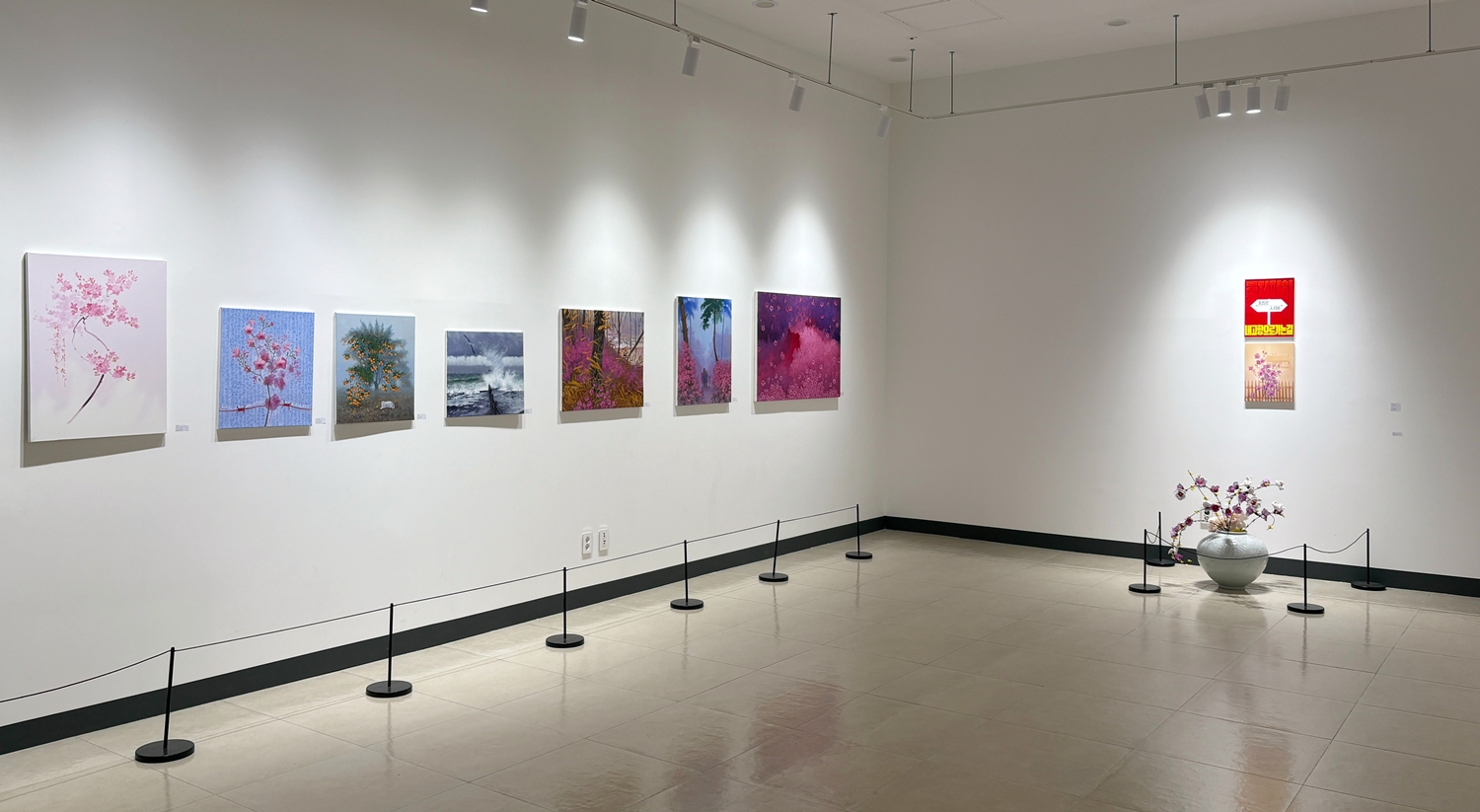
This is a scene from the solo exhibition "My Thoughts" by Sun Mu, a former propaganda artist for the North Korean government who defected to South Korea in the 1990s, on the first floor of the Inter-Korean Cultural Integration Center of the Ministry of Unification in Seoul's Gangseo-gu District.
By Charles Audouin
Video = Inter-Korean Cultural Integration Center
"Azaleas blooming in spring are a natural sight to me and a familiar presence. When talking about inter-Korean exchange, reconciliation and peace, I think of azaleas as a symbol embodying this meaning."
Korea.net on Nov. 25 visited the solo exhibition "My Thoughts" by artist Sun Mu at the Inter-Korean Cultural Integration Center of the Ministry of Unification in Seoul's Gangseo-gu District. He explained the symbolism in his paintings in a calm but strong voice.
"Just as winter passes and spring comes, my work reflects my desire for cold to pass and warmth to return," he said in expressing his wish to overcome the reality of the divided Korean Peninsula.
Defecting from North Korea in the 1990s and settling in South Korea in 2002, the artist never shows his face.
His firm philosophy is no boundaries in art. With "Sun Mu" meaning "no boundaries," he has strived to live up to his moniker by removing boundaries between both Koreas and between ideology and political systems.
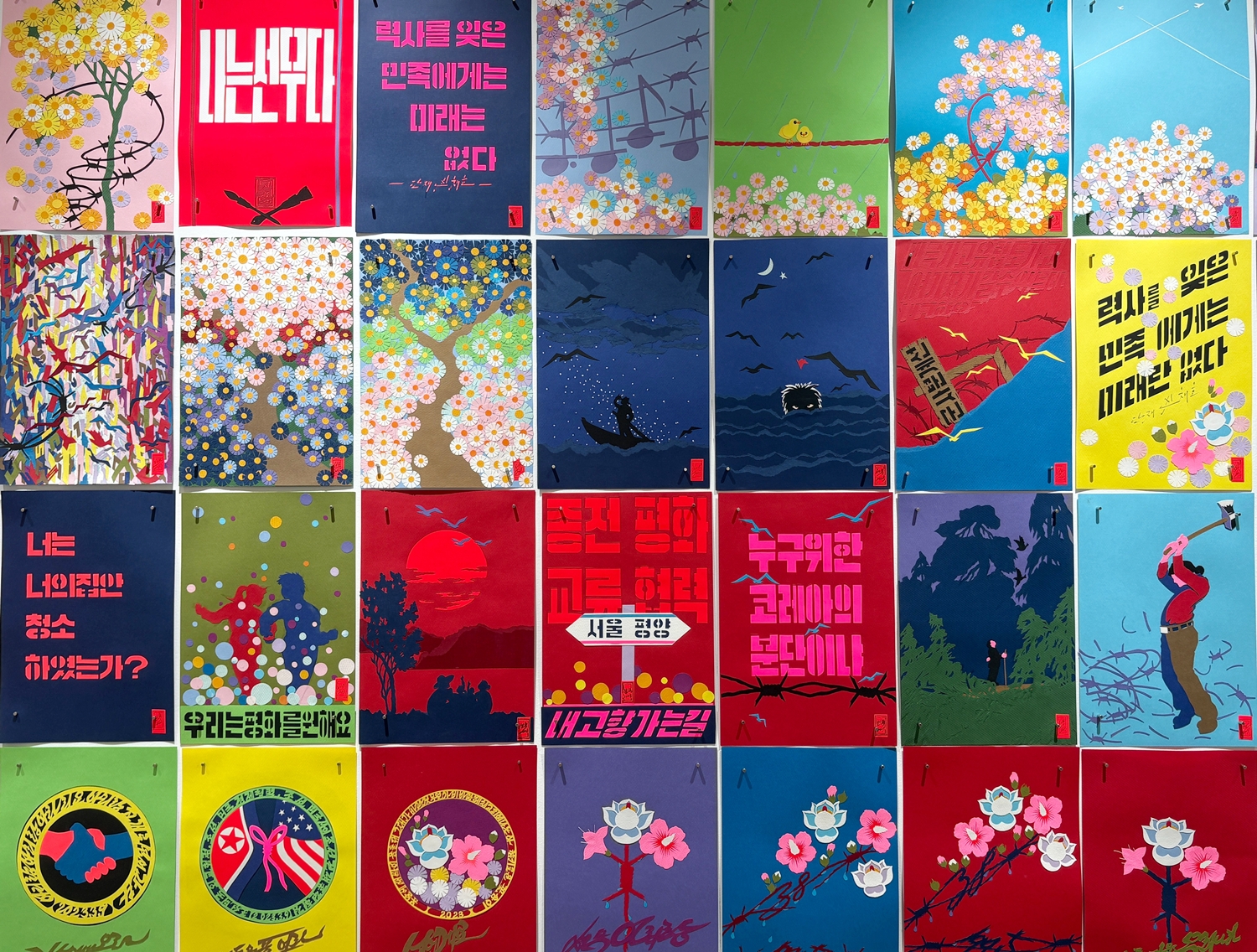
These oil paintings are part of Sun Mu's 92 "Colored Paper Works."
Since his first solo exhibition in 2007 in Korea, Sun Mu has expanded his activities by holding shows in global cities such as New York, Los Angeles, Beijing and Munich. He plans a large-scale display in Paris next year based on the Demilitarized Zone, which divides the two Koreas.
His latest exhibition "My Thoughts" is the culmination of the artist's introspection by reflecting Korean society's deep-rooted prejudices and stereotypes while depicting the beauty and hope he discovered amid the pain of inter-Korean division.
This explains the presence of the themes of peace, reunification, hometown and yearning in his works.
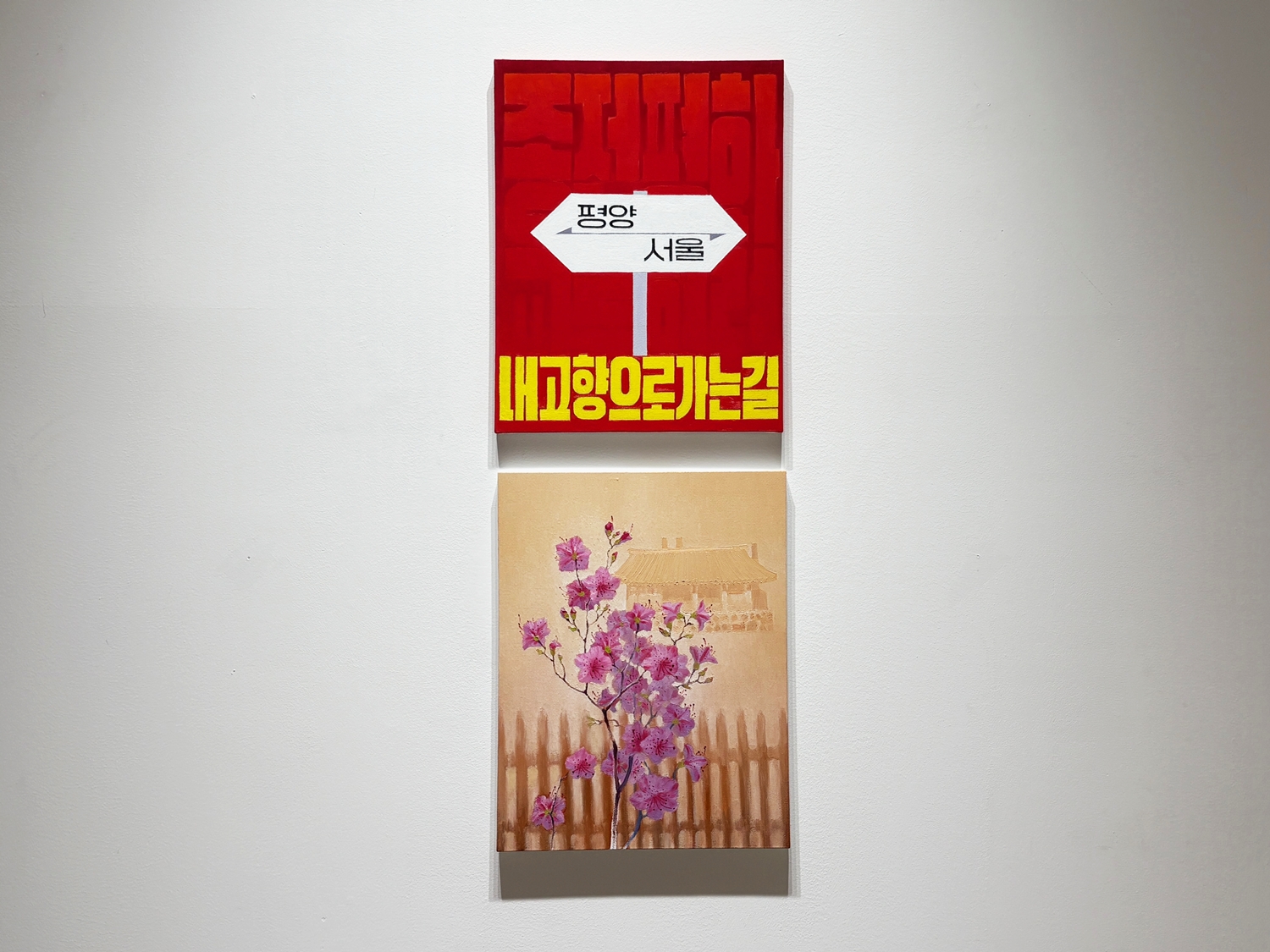
Sun Mu's main works are displayed at the center of the exhibition.
The artist's yearnings are embedded in diverse works like an azalea series on the themes of longing and hospitality through azaleas, a flower familiar in both Koreas, and paintings featuring the vivid landscapes and serenity of Jeju Island through tangerine trees and the sea.
Of these, a paper art series stands out. By adding barbed wire, a symbol of heavy weight and rigidity, to everyday items like colored paper, Sun Mu conveys the reality of division and longing for reconciliation.
"Before discussing unification, we need sufficient inter-Korean exchange. We must understand what the other side thinks. By conducting actual exchange, we will naturally realize that we're not much different from each other. I believe that the day will come when we ask ourselves 'Why must we live separately like this?'"
Launched in 2020, the Inter-Korean Cultural Integration Center has collected and displayed artworks by North Korean defectors to integrate the cultures of both Koreas. The center has expanded its scale by installing an exhibition hall on its first floor.
As Sun Mu's third invitational exhibition this year, "My Thoughts" displays 108 artworks through Dec. 31.
caudouin@korea.kr