- 한국어
- English
- 日本語
- 中文
- العربية
- Español
- Français
- Deutsch
- Pусский
- Tiếng Việt
- Indonesian
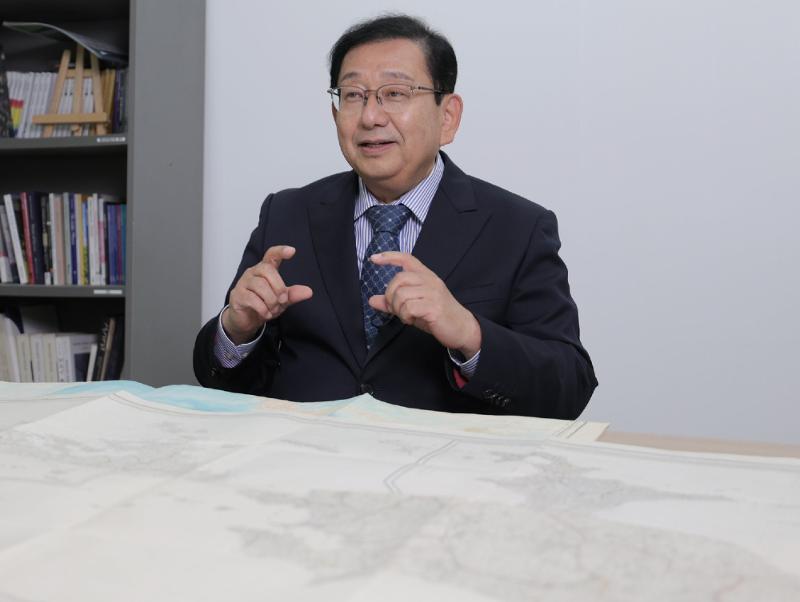
Yuji Hosaka, special professor at the Graduate School of Public Administration of Korea University, on Oct. 19 stresses the need for greater public interest in Dokdo Island and more education and research on the subject. In an exclusive interview at Korea.net's newsroom in Seoul, Korea's leading researcher on the island presented official Japanese maps as evidence that Dokdo is not Japanese territory.
By Yoon Sojung & Jeong Euiseok
Photos & video = Park Dae Jin
Maps = Yuji Hosaka & Dokdo Research Institute at Sejong University
Oct. 25 is Dokdo Day. On this day in 1900, Emperor Gojong of the Korean Empire promulgated Imperial Decree No. 41, proclaiming to the world that the islands of Ulleungdo and Dokdo were territories of his empire.
Dokdo Day commemorates this proclamation made 126 years ago.
Why is Dokdo important enough to Korea to get its own national day of commemoration?
To answer this question, Korea.net interviewed Yuji Hosaka, special professor at the Graduate School of Public Administration of Korea University and Korea's leading researcher on Dokdo. He is also honorary director of the Dokdo Research Institute at Sejong University, the only think tank dedicated to the study of the island in the capital.
The scholar previously told the media that a student's unexpected question in his class -- "Which country does Dokdo belong to?" -- made him a lifelong devotee to researching Dokdo. On the day of the interview, he presented old maps from his personal collection and those from his institute to share with Korea.net readers.
The following are excerpts from the Oct. 19 interview with Hosaka at Korea.net's newsroom in Seoul.
You will soon visit Dokdo. How many trips to the island will that be for you?
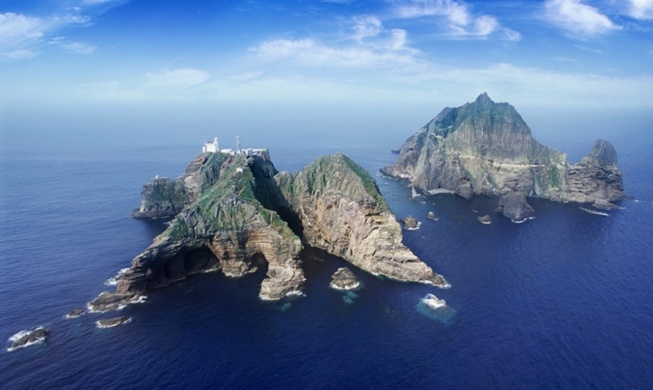
This will be my 12th visit to Dokdo, an island I've been researching since 1998. I've frequently held educational programs and events related to Doko on Ulleungdo, so I've been to Ulleungdo about twice as many times as to Dokdo. When I land on Dokdo, I like to see Dongdo (East Island) and Seodo (West Island) standing face to face. This makes me feel that Dokdo isn't a solitary, lonely island.
Dokdo is indisputably Korean territory. So since when has Japan baselessly claimed it as own and why?
It was in 1905 that Japan began claiming Dokdo as its territory. Before that, even the Japanese people considered Dokdo an island belonging to Ulleungdo and actually wanted Ulleungdo more. Japan's prevailing view at the time was that since Ulleungdo was an island of Joseon (Korea), Dokdo, which was attached to it, was a Korean island.
But during the Russo-Japanese War in 1904, Japan built a watchtower on Dokdo and turned it into a military outpost. Japan fought Russia 10 times in the East Sea. In the final naval battle fought in waters off Dokdo, Japan crushed the Russian fleet to effectively win the war. Even today, Japan still views Dokdo as a military base.
In 1940, Japan transferred jurisdiction of Dokdo from Shimane Prefecture to its imperial navy apparently to use Dokdo as a military foothold in preparation for the Pacific theater of World War II, which broke out in 1941. After its defeat, Japan in 1949 even proposed to the U.S. that it would build radar and weather observation stations on Dokdo if the island was recognized as Japanese territory.
At the time, Dokdo was included in the Korean territory clause of the draft of the Treaty of San Francisco, something Japan tried to change. Historically, the Japanese perspective has considered that Dokdo a stepping stone to China via the Korean Peninsula.
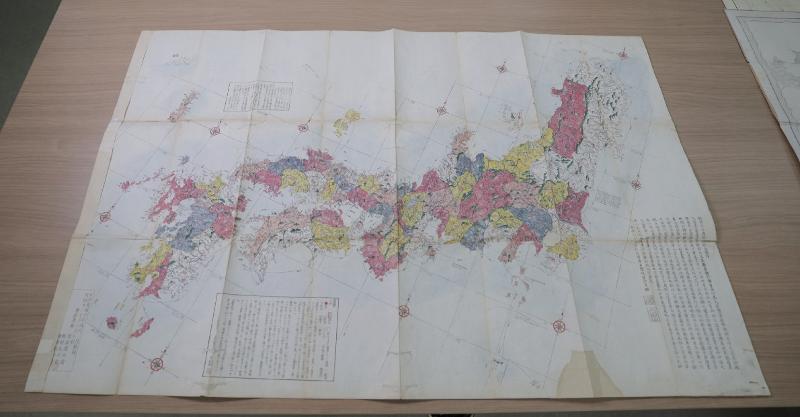
The Revised Complete Map of Japanese Lands and Roads (改正日本輿地路程全圖) is unveiled on Oct. 19 at Korea.net's newsroom in Seoul by professor Yuji Hosaka. Made in 1779 by Japanese geographer Sekisui Nagakubo, the map shows the islands of Ulleungdo and Dokdo lying with Joseon (Korea) outside the latitude and longitude lines marking Japan and left uncolored, unlike Japanese territories. The top of the photo is north.
As Korea's top researcher on Dokdo, what do you think when seeing Japan repeating its unfounded claims to the island?
At first, I considered them just absurd and unfounded claims. But the more I researched, the more I realized that Japan's arguments were deliberate and carefully planned. The international situation is bound to change, and history is full of cases in which territory changes hands.
Japan believes that if a major shift occurs in the global landscape, things could change, that if it keeps claiming Dokdo as its own, an opportunity may come someday. Of course, it realistically knows that such an opportunity will not come soon, and this is why it tries to use the Dokdo issue as a diplomatic tool.
From Japan's perspective, it has two other territorial issues: the Senkaku Islands with China and the Kuril Islands with Russia. Of these, the Dokdo situation is the most unfavorable for Japan because Korea exercises full administrative control over Dokdo and Japan's logic behind its claim is also weak.
Even within Japan, there are people who acknowledge Dokdo as Korean territory. But if Japan admits that Dokdo is Korean, this would inevitably affect the other two disputes, so Japan cannot back down.
What is your vision for research on Dokdo?
Japan holds on to its misguided beliefs and makes unfounded claims, while also increasing a budget for related initiatives. It never correctly teaches that Dokdo is Korean territory and instead conceals the facts and refines its distortions to make them appear credible. To refute such increasingly sophisticated distortions, Korea needs more efforts into research on Dokdo. Raising public interest in Dokdo and including related education in schools is also crucial.
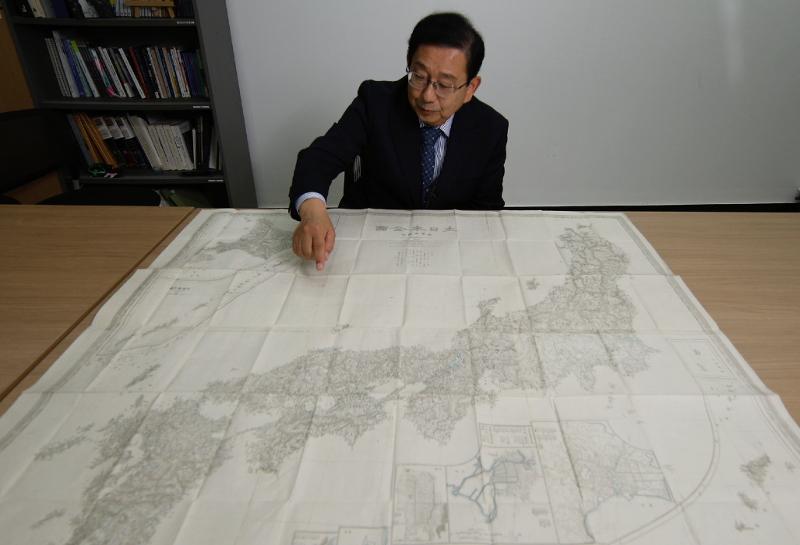
Professor Yuji Hosaka on Oct. 19 presents the Complete Map of Great Japan (大日本全圖), which was made in 1877 by the Advisory Bureau of the Japanese Army, in an interview at Korea.net's newsroom in Seoul. He said Dokdo is missing from where it should appear on the map because the Japanese government also clearly knew at the time that the island was not Japanese territory.
What do you consider your most rewarding moments as a Dokdo researcher?
I traveled a lot in Japan looking for old maps. The most rewarding moments were when I found good maps at libraries or antique bookstores. I was really happy after finding official maps made by the Japanese government that left out Dokdo or displayed it as Korean territory.
As honorary director of the Dokdo Research Institute, what message do you have for Korea.net readers?
The Dokdo issue is incredibly important to Koreans. I have many old maps, related documents and historical materials showing that Dokdo is Korean territory. Anyone interested is welcome to contact Korea.net; I would be more than happy to show them everything in my collection along with explanations of each item. I hope many people around the world will love Dokdo with the same heart with which they love Korea.
Explanations of the key old maps from the collections of professor Yuji Hosaka and the Dokdo Research Institute that he presented specifically for Korea.net readers can be seen in the video below.
arete@korea.kr