- 한국어
- English
- 日本語
- 中文
- العربية
- Español
- Français
- Deutsch
- Pусский
- Tiếng Việt
- Indonesian
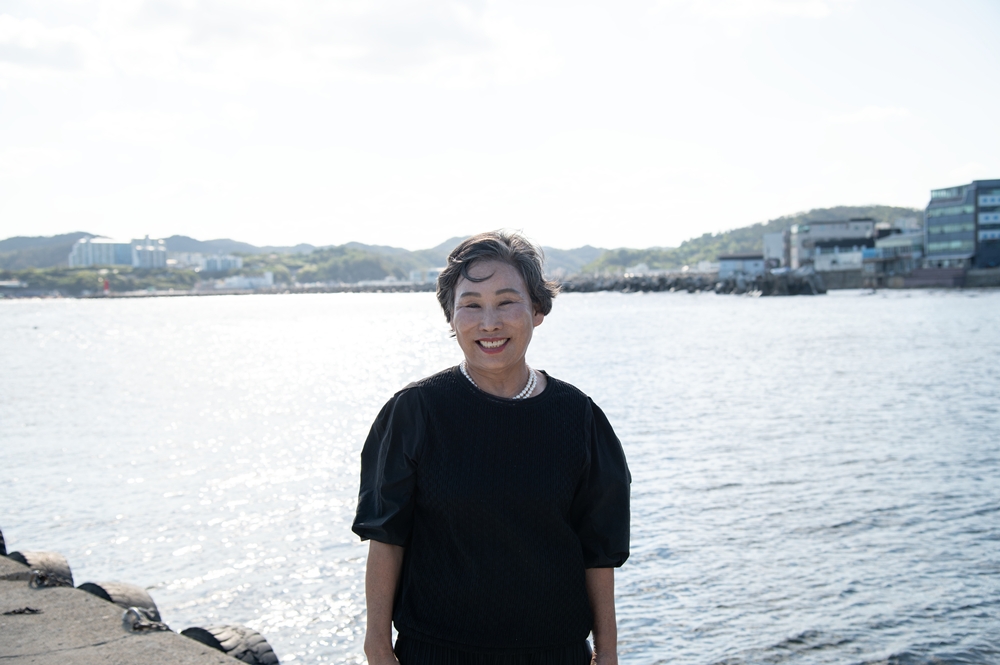
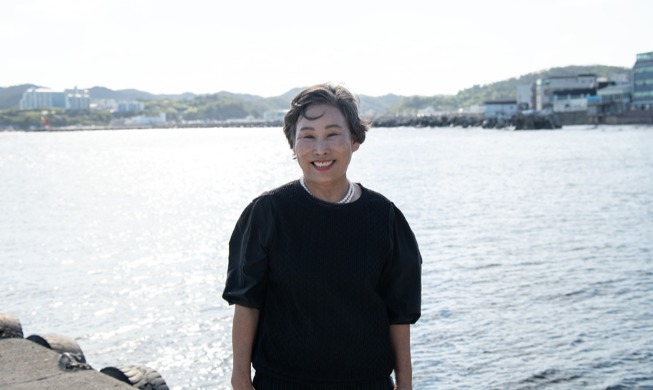
Sung Jung Hee, head of the Guryongpo Fishing Village Cooperative in the town of Guryongpo-eup in Pohang, Gyeongsangbuk-do Province, is on this year's list of "100 Women Heroes in Agrifood Systems and Rural Development" of the United Nations Food and Agriculture Organization. (Ministry of Oceans and Fisheries)
By Jeong Euiseok
"To be honest, I'm still a little dazed. I keep asking myself if I really deserve such a major honor. I think I've just been very fortunate."
Sung Jung Hee, head of the Guryongpo Fishing Village Cooperative in Pohang, Gyeongsangbuk-do Province, humbly reflected on her designation as one of the "100 Women Heroes in Agrifood Systems and Rural Development" by the Food and Agriculture Organization (FAO) of the United Nations.
To mark 2026 as International Year of the Woman Farmer, the FAO selected the 100 to highlight their leadership and innovative contributions to sustainable development in rural and fishing communities. With some 600 nominees from FAO member countries for the list, Sung was the only Korean to make it.
The veteran fisher is also a haenyeo, or a female free diver mostly associated with Jeju Island but also found in other coastal regions, who has spent nearly 40 years gathering seafood from the ocean. In addition to heading the cooperative, she is president of the Gyeongbuk Haenyeo Association.
Korea.net on Nov. 5 interviewed Sung on her thoughts on the traditions and values of haenyeo culture, including her most rewarding experiences and her message to the next generation.
The following are excerpts from an email interview with her from Oct. 29 to Nov. 5.
You have worked at sea for nearly four decades. Why did you become a haenyeo?
My first job was actually in nursing. I worked as a nurse in Daegu for about 10 years, and after getting married, I had children. But after my husband was in a traffic accident, his business began to struggle more and more. At the time, my family had a house where we could live in, so we moved back to my hometown of Guryongpo-eup (a town in Pohang, Gyeongsangbuk-do Province).
My children were still young, making it difficult for me to work full time outside the home. While I considered what to do, an acquaintance suggested becoming a haenyeo. I could spend about four hours diving and do the rest while caring for my children. That's how I began my career as a haenyeo at age 34.
What about being haenyeo is the most rewarding and challenging for you? What is your philosophy on life?
I've loved the water since childhood and was a good swimmer, but wasn't inexperienced in diving when I started. Back then, newcomers faced a lot of resistance and needed at least six months of diving experience to officially join the Guryongpo Fishing Village Cooperative.
To gain that experience, I prepared lunchboxes before my children woke up and traveled far offshore to work. After making dinner for my children and doing household chores, I was so exhausted that I once fell asleep at sea with my head on my tewak (floating buoy).
After joining as an official member of the fishing village association and starting to dive for a living, I remember how the senior divers looked after me. One day, I didn't catch any abalone and my net was empty, but a senior haenyeo quietly slipped a few of hers into my net. I was so grateful. After my skills improved and began to get more sea urchins, I felt incredibly proud when I began catching more than the senior divers.
There's something I've always believed: The sea is honest. It rewards you according to the effort you put in. I found it so rewarding when I raised my income by compensating for my weaknesses with other strengths.
My philosophy in life is to never forget your original goal. I always try to remember and appreciate the people who helped me when I was struggling and had little. I've continued working hard to this day, holding on to my original goal to help other haenyeo.
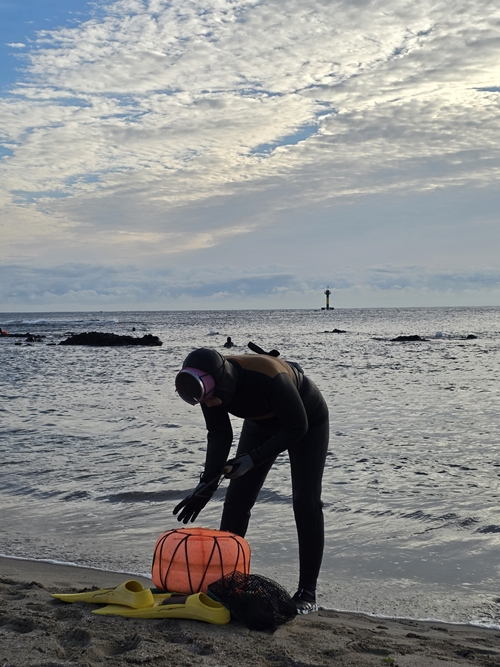
Sung Jung Hee organizes her diving equipment. (Sung Jung Hee)
What is the highest value of haenyeo fishing? How can such traditional know-how and ecological wisdom help marine conservation and sustainable fisheries?
I believe the most important value of haenyeo fishing is its eco-friendliness. We hold our breath, gather seafood with no breathing equipment and return to the surface.
For haenyeo, the sea is both our home and workplace, so we all care deeply about protecting it. We don't indiscriminately harvest marine life and instead responsibly manage it. I believe the decline in marine resources is partly due to climate change, but overfishing and inadequate management are also causes.
If haenyeo are properly trained and supported, they can protect coastal environments and harvest marine resources while managing them sustainably.
What initiatives have overseen as head of the cooperative and the association?
I was elected head of the cooperative in 2021 as the first haenyeo to hold such a position on the mainland.
I'm doing my best to make things safer for haenyeo and help them earn more. I raised the proportion of the seafood they harvest and reduced commission fees to boost their earnings.
But rising sea temperatures have led to the dwindling of marine resources. With the haenyeo population shrinking and aging, I thought long and hard about how to raise incomes for both the divers and the cooperative.
With help from people around me, I secured the project Haenyeo Welfare & Business Town for the community. Our plan is to set up a system that allows consumers to purchase seafood directly from haenyeo and run a space where visitors can experience haenyeo culture with a media exhibition hall and cafe with beautiful sea views.
The Gyeongbuk Haenyeo Association was launched in 2023 as a nonprofit organization and officially incorporated in 2024. It now focuses on promoting haenyeo culture. With support from the Gyeongsangbuk-do government, we organize the annual Gyeongbuk Haenyeo Festival.
We've also attended forums at the National Assembly to propose better working conditions and more government support for haenyeo.
How can fishing villages woo younger residents? Any message for them?
The most important thing for youth is to be financially stable if living in fishing villages. They should be able to earn incomes comparable to those in cities and have no problem in raising children or engaging in cultural activities. I believe public support for fishing communities is relatively less than that for farming villages. I hope the government takes a more proactive role in promoting support and incentives to help the younger generation settle in fishing villages.
I want to tell future generations that fishing villages offer endless opportunities. Of course, trying something new and taking on a new path can be extremely difficult. But I hope that young people take on the challenge anyway. The greater the challenge, the greater the rewards can be.
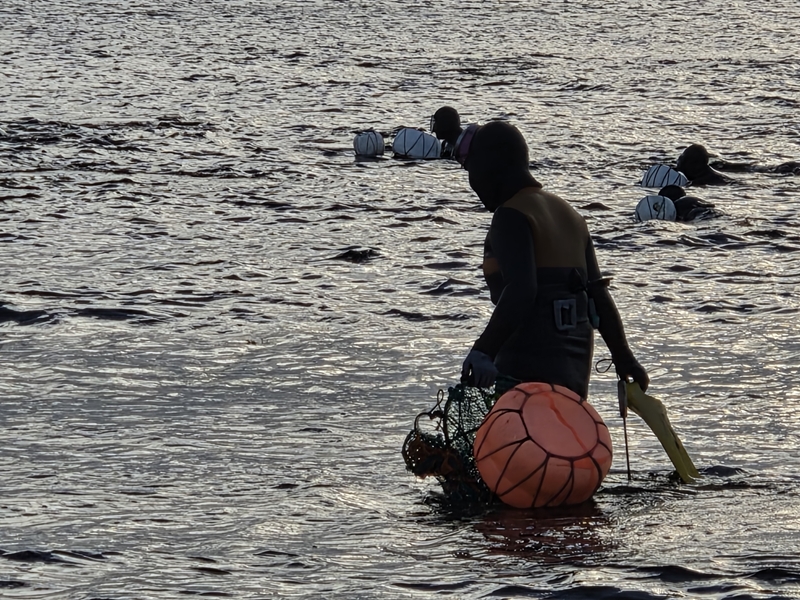
Sung Jung Hee and her fellow haenyeo gather seafood obtained underwater. (Sung Jung Hee)
innocence@korea.kr