Korea and Mongolia have shared solar system monitoring technology with the opening of a new space telescope.
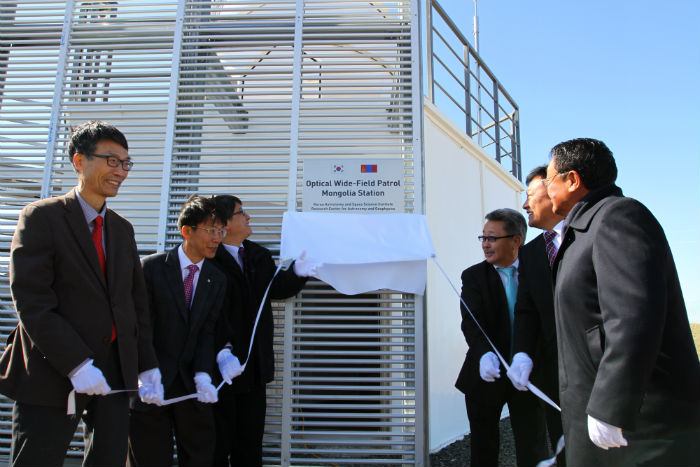
The Ministry of Science, ICT & Future Planning and the Korea Astronomy and Space Science Institute (KASI) formally launched the Optical Wide-Field Patrol Mongolia Station near Ulaanbaatar, Mongolia, on September 23.
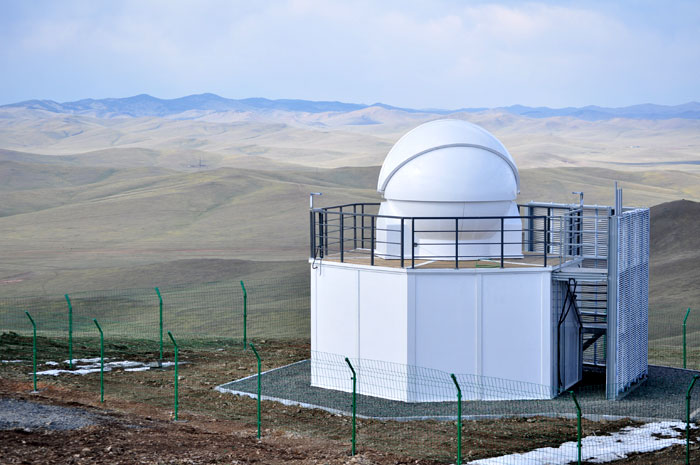
The new research center was jointly built by the KASI and the Research Center for Astronomy and Geophysics of Mongolia, part of the National Research Council of Science and Technology of Mongolia. The telescope is equipped with an automated optical patrol system to follow space objects. This system controls the observation of an object by planning the object's course and analyzing the results. The Korea Astronomy and Space Science Institute can manage the whole observation procedure by remote control.
Thanks to the establishment of the new telescope, Korea can obtain information about satellites and other cosmic bodies using its own technology and trace the space objects across multiple trajectories.
The KASI and the Korea Aerospace Research Institute plan to inject KRW 16.5 billion into the project by 2016. They aim to patrol the near-space around the Earth in order to secure the location of satellites and other space-bound objects.
The Korean science ministry and the KASI plan to open more such telescope centers at more locations overseas. It will build the next one in Morocco this November and another one in Kazakhstan in the first half of next year. They further plan to open two more centers in the southern hemisphere in order to set up a 24-hour space observation system.
The ministry said the 24-hour space observation system will help Korea have better capabilities to respond to space-based dangers by tracing the routes of all cosmic bodies, both man-made and natural.
By Yoon Sojung
Korea.net Staff Writer
arete@korea.kr

The Ministry of Science, ICT & Future Planning and the Korea Astronomy and Space Science Institute (KASI) formally launched the Optical Wide-Field Patrol Mongolia Station near Ulaanbaatar, Mongolia, on September 23.
Representatives of the KASI and the Research Center for Astronomy and Geophysics of Mongolia unveil the new telescope.
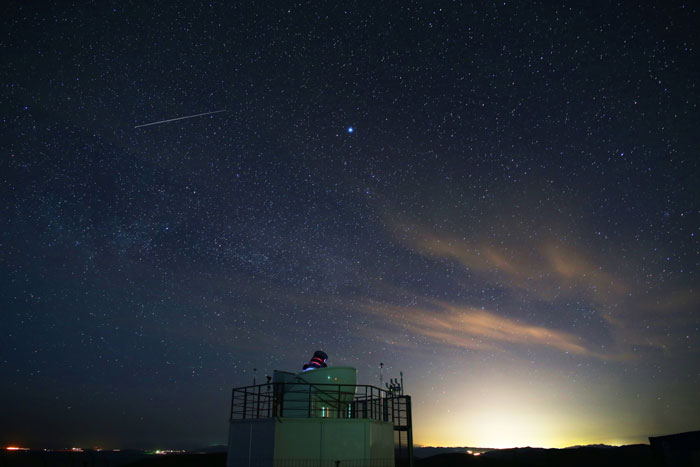
A day and night view of the Optical Wide-Field Patrol Mongolia Station. (photos courtesy of the KASI)
The new research center was jointly built by the KASI and the Research Center for Astronomy and Geophysics of Mongolia, part of the National Research Council of Science and Technology of Mongolia. The telescope is equipped with an automated optical patrol system to follow space objects. This system controls the observation of an object by planning the object's course and analyzing the results. The Korea Astronomy and Space Science Institute can manage the whole observation procedure by remote control.
Thanks to the establishment of the new telescope, Korea can obtain information about satellites and other cosmic bodies using its own technology and trace the space objects across multiple trajectories.
The KASI and the Korea Aerospace Research Institute plan to inject KRW 16.5 billion into the project by 2016. They aim to patrol the near-space around the Earth in order to secure the location of satellites and other space-bound objects.
The Korean science ministry and the KASI plan to open more such telescope centers at more locations overseas. It will build the next one in Morocco this November and another one in Kazakhstan in the first half of next year. They further plan to open two more centers in the southern hemisphere in order to set up a 24-hour space observation system.
The ministry said the 24-hour space observation system will help Korea have better capabilities to respond to space-based dangers by tracing the routes of all cosmic bodies, both man-made and natural.
By Yoon Sojung
Korea.net Staff Writer
arete@korea.kr