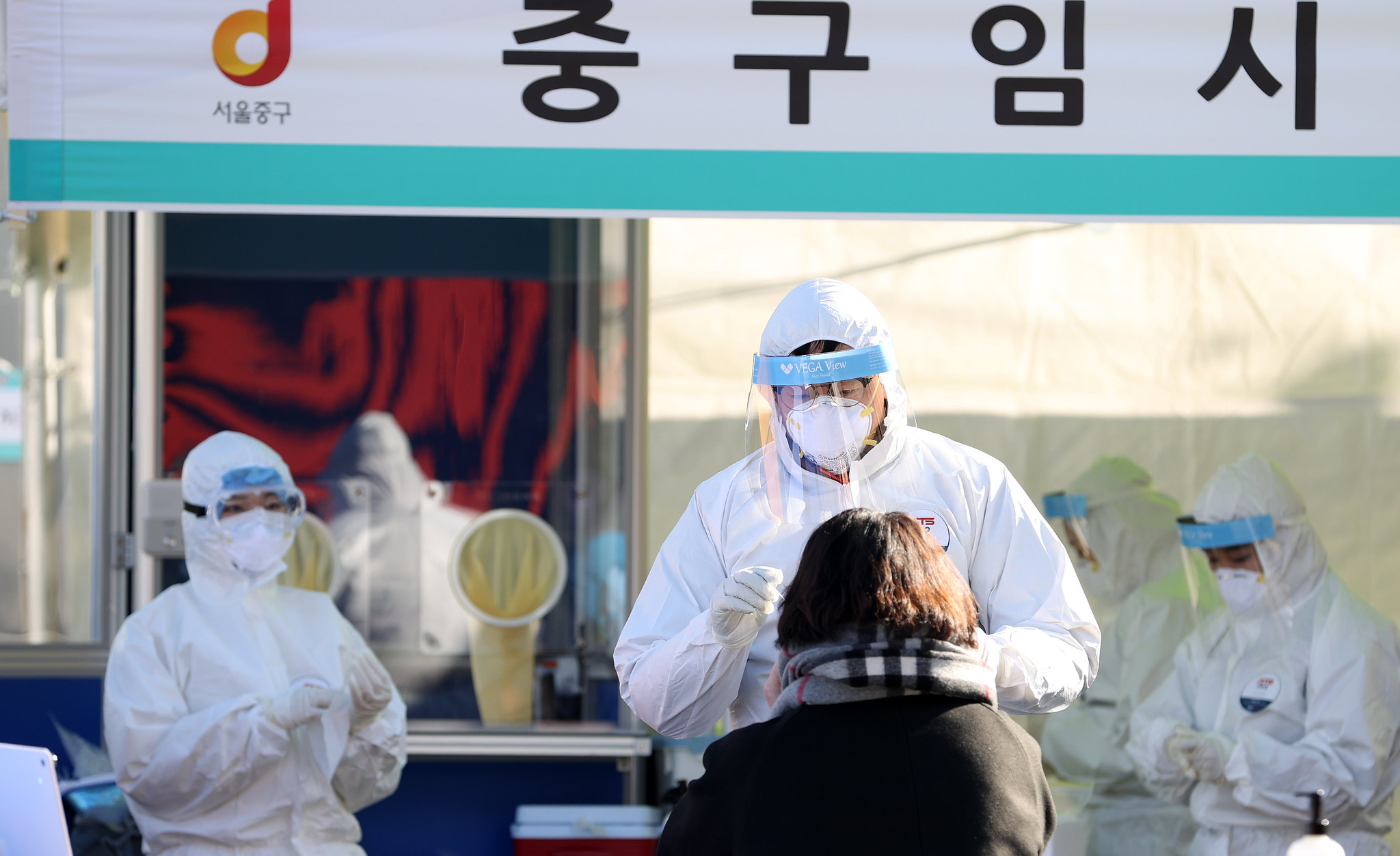
The National Institute of Health of the Korea Disease Control and Prevention Agency, on Dec. 10 said its experiments on animals found the causes of cognitive impairment such as lower concentration and memory reported after patients caught COVID-19. Shown is someone on Dec. 17, 2020, being tested for COVID-19 at a temporary screening clinic in front of Seoul Station in Seoul's Jung-gu District. (Korea.net DB)
By Charles Audouin
A COVID-19 virus protein reduces synaptic plasticity and causes cognitive dysfunction by inducing the accumulation of degenerative neuroproteins, a study has found.
The National Institute of Health of the Korea Disease Control and Prevention Agency (KDCA) on Dec. 10 said its experiments on animals identified the causes of cognitive impairment such as lower concentration and memory reported after infection with the coronavirus.
Administering the SARS-CoV-2 spike protein (S1) into the noses of mice resulted in cognitive decline similar to that seen after infection with COVID-19 like reduced learning capacity and memory, more time needed to find hidden platforms and increased anxious behavior in unfamiliar environments.
The analysis showed that the S1 protein disrupted the synaptic function between neurons after reaching the brain and lowered the gene expression of NMDA receptors, which are crucial to form memories. The number of neurons of the mice fell six weeks after the protein's administration.
The study also found that higher accumulation of toxic proteins that cause dementia and Parkinson's disease can lead to long-term brain damage.
The anti-diabetes drug metformin was shown to suppress these pathological changes as a potential treatment for cognitive impairment that follows COVID-19. Mice given the metformin under the same conditions showed recovery of neural functions and reduction in toxic protein accumulation.
The KDCA said on the study's results, "Metformin is a widely used medication, and these results are the first scientific evidence on its potential for use in treating cognitive impairment following COVID-19."
Through clinical trials, the agency will review the drug's potential to treat the aftereffects of the coronavirus.
Since August 2022, the KDCA has conducted research and clinical trials to find the patterns and causes of the chronic aftereffects of COVID-19 and find potential treatments.
KDCA Commissioner Lim Seung-Gwan said, "We will continuously support research on neurological disease to devise an infectious disease policy on based on scientific evidence."
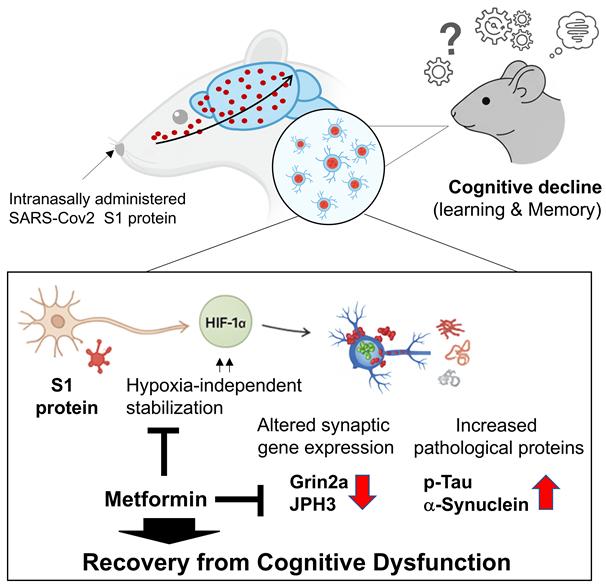
Summary of study's findings. (KDCA)
caudouin@korea.kr