- 한국어
- English
- 日本語
- 中文
- العربية
- Español
- Français
- Deutsch
- Pусский
- Tiếng Việt
- Indonesian
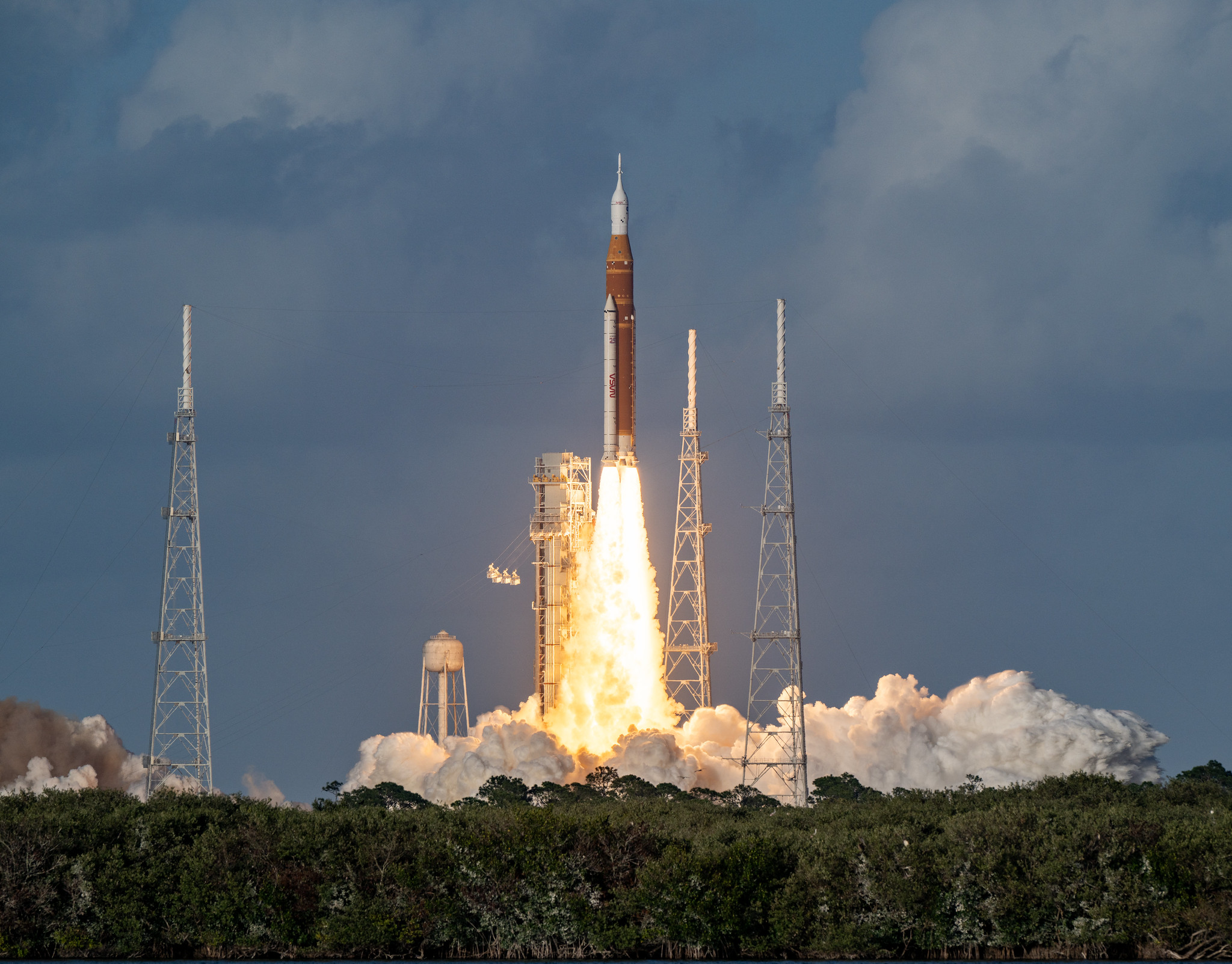
NASA's Space Launch System rocket for the manned lunar mission Artemis II, carrying Korea's K-RadCube, on April 1 at 6:35 p.m. is launched from the Kennedy Space Center in Florida.
By Charles Audouin
Photos = NASA
K-RadCube, a domestically developed cube satellite to measure space radiation, on April 1 at 6:35 p.m. was launched aboard the Space Launch System rocket for the Artemis II lunar mission from the Kennedy Space Center in Florida.
The Korea AeroSpace Administration (KASA) said that at 11:58 p.m. that day, K-RadCube successfully separated at an altitude of about 40,000 km and entered a high orbit around Earth.
The K-RadCube observes the conditions of space radiation from a highly elliptical orbit to secure basic data for radiation risk assessment, a key element in future manned explorations of the moon and deep space. This is Korea's first cube satellite put into space with a manned NASA crew.
The cube satellite flies in an orbit ranging in altitude between 200 km and 70,000 km, moving in and out of the Van Allen belts to observe the distribution and characteristics of high-energy particles in radiation environments.
Equipped with semiconductors from Samsung Electronics and SK Hynix, K-RadCube will also confirm the durability of such chips exposed to radiation in extreme space conditions.
KASA announced its attempts to communicate with the ground station in Maspalomas, Spain, to obtain data from the satellite from K-RadCube's mission control center. It was also tracking satellite signals by linking with other stations in Punta Arenas, Chile, Hawaii and Singapore.
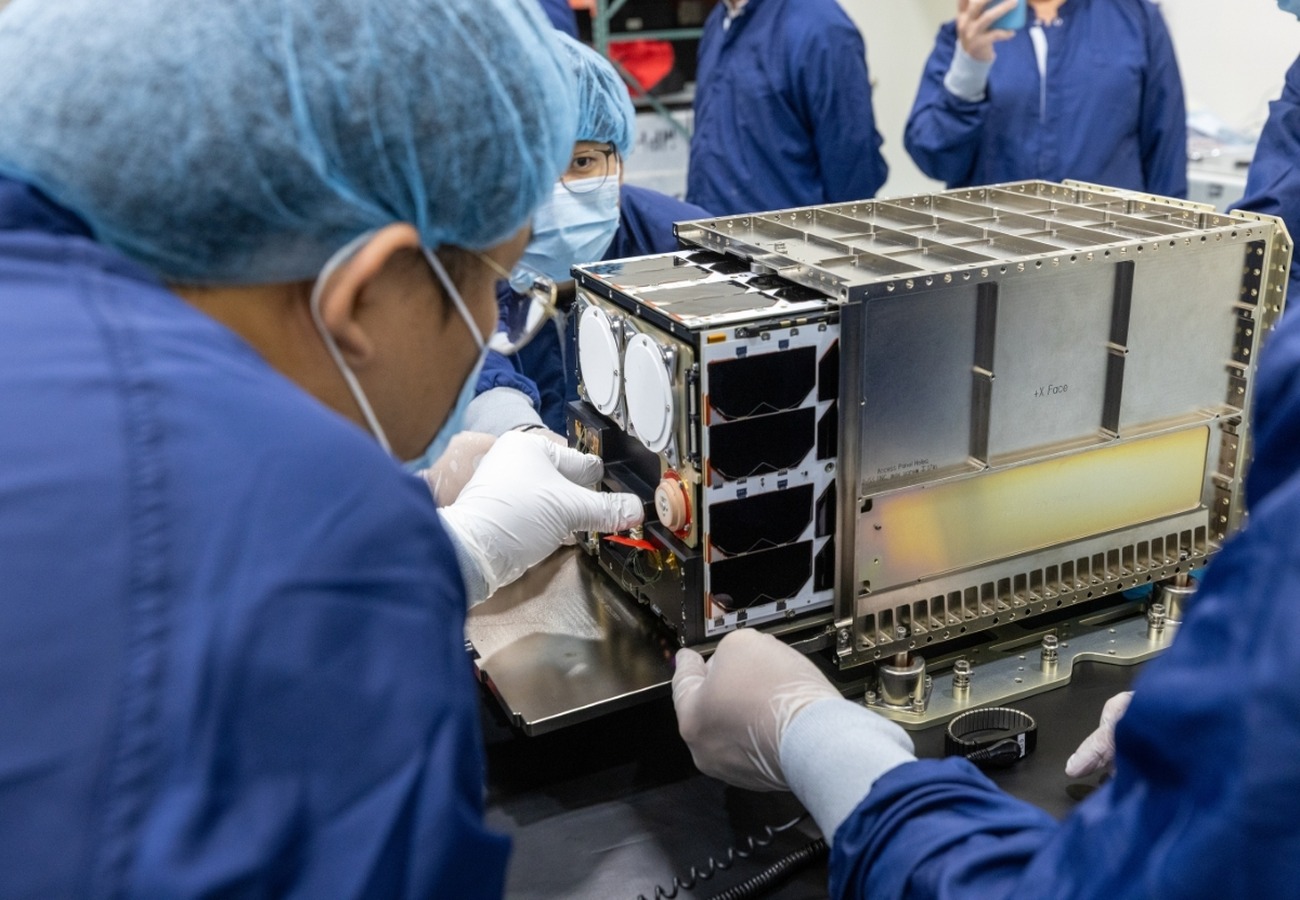
The K-RadCube is a cube satellite of 12 units measuring a shoebox-size 10 cm in width, length and height and weighing 19.6 kg.
caudouin@korea.kr