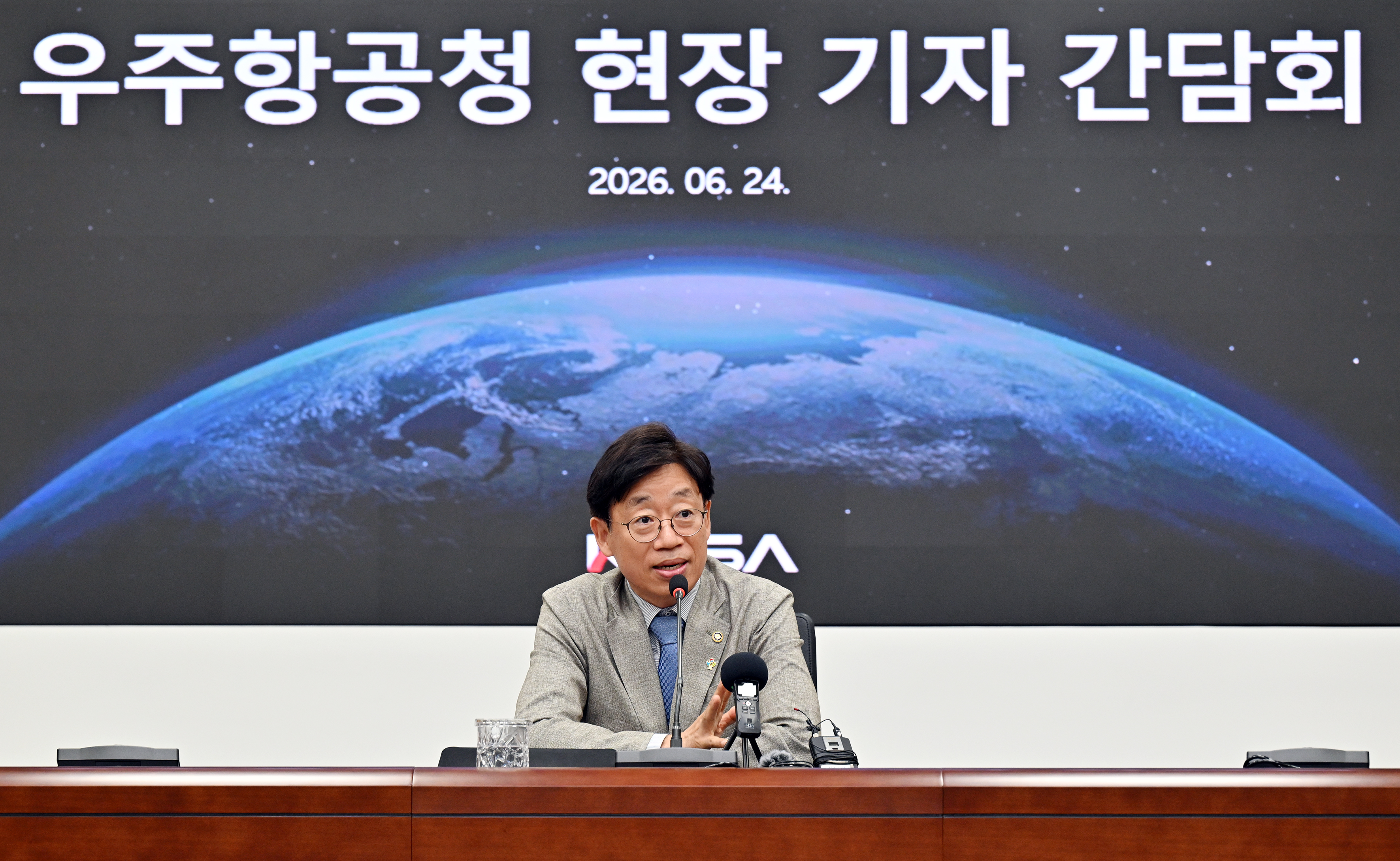
Korea AeroSpace Administration (KASA) Administrator Oh Taeseog on June 24 discusses pending issues at a news conference held at his agency's headquarters in Sacheon, Gyeongsangnam-do Province. (KASA)
By Charles Audouin
Photos = Charles Audouin
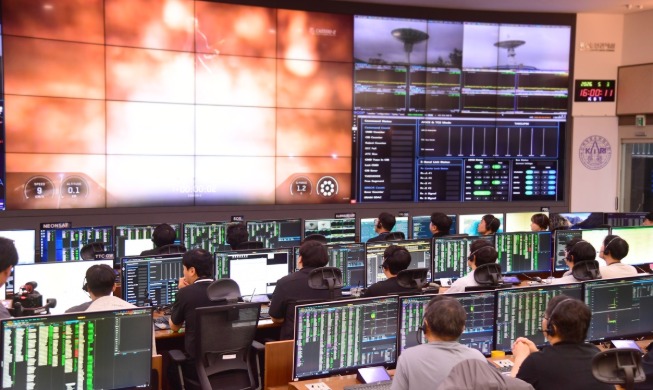
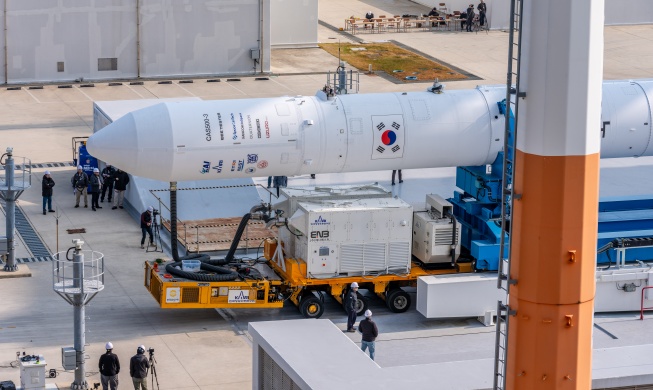
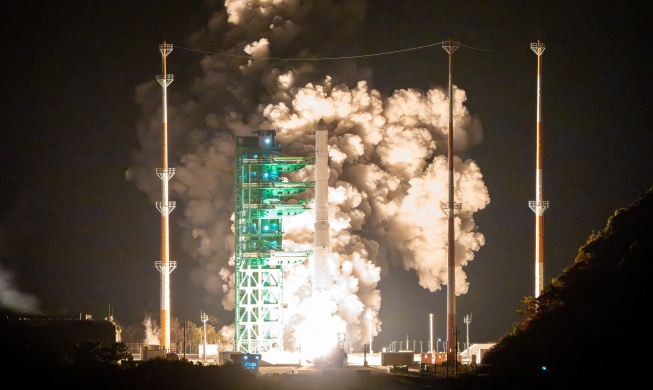
As the fifth launch of the domestically developed rocket Nuri (KSLV-II) is set for September, the Korea AeroSpace Administration (KASA) is pushing ahead with the construction of a second space center.
"The assembly of the three stages of the Nuri-5 rocket is complete and final assembly of the launch vehicle starts next month," KASA Administrator Oh Taeseog on June 24 told a news conference at his agency's headquarters in Sacheon, Gyeongsangnam-do Province. "Preparation for the fifth launch of the Nuri-5 is proceeding step by step on schedule, and the exact launch date will be finalized in early August."
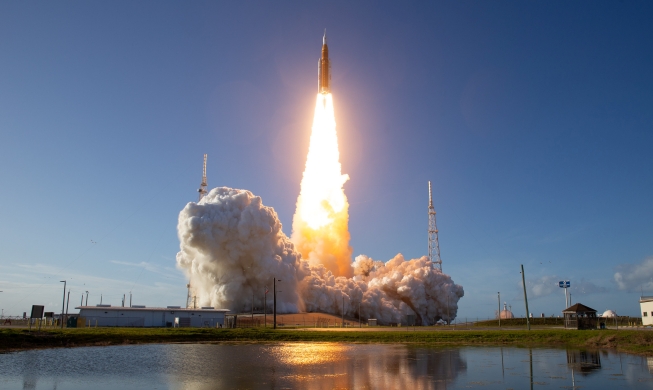
A series of satellite launches is also scheduled for the second half of the year. The CAS500-4 (Compact Advanced Satellite 500), a next-generation medium satellite to be jointly used by the Rural Development Administration and Korea Forest Service, will be launched on July 9 at Vandenberg Space Force Base in California.
As a 500 kg-class Earth observation satellite, the CAS500-4 will analyze crop growth and monitor wildfires.
The multipurpose satellite Arirang-6, however, is unlikely to be launched as scheduled due to extenuating circumstances. The plan was to have the device enter orbit in the second half of the year through a launch vehicle of European ArianeSpace.
"We will delay the launch schedule to the second quarter of 2027 and find an alternative as soon as possible," Administrator Oh said. "I again realize the importance of securing independent accessibility to space."
KASA is also speeding up infrastructure expansion to meet rising launch demand from both the public and private sectors. The final candidate site for the second center, which will follow Naro Space Center in Goheung-gun County, Jeollanam-do Province, will be selected in October and construction will start in 2028.
Completion of the new center will mean that by the mid-2030s, Korea will have space launch infrastructure utilizing reusable rockets.
Plans are underway to open next year the first phase of a private launch site and the second in 2031. KASA has devised guidelines for use and shared them with companies.
Global cooperation in expanding space territory is also taking shape. KASA is mediating projects with NASA of the U.S. in key infrastructure for lunar bases such as communications, power and mobility.
As part of this effort, both agencies will jointly host a workshop in Korea from July 29-31 on the Artemis lunar exploration project.
caudouin@korea.kr