- 한국어
- English
- 日本語
- 中文
- العربية
- Español
- Français
- Deutsch
- Pусский
- Tiếng Việt
- Indonesian
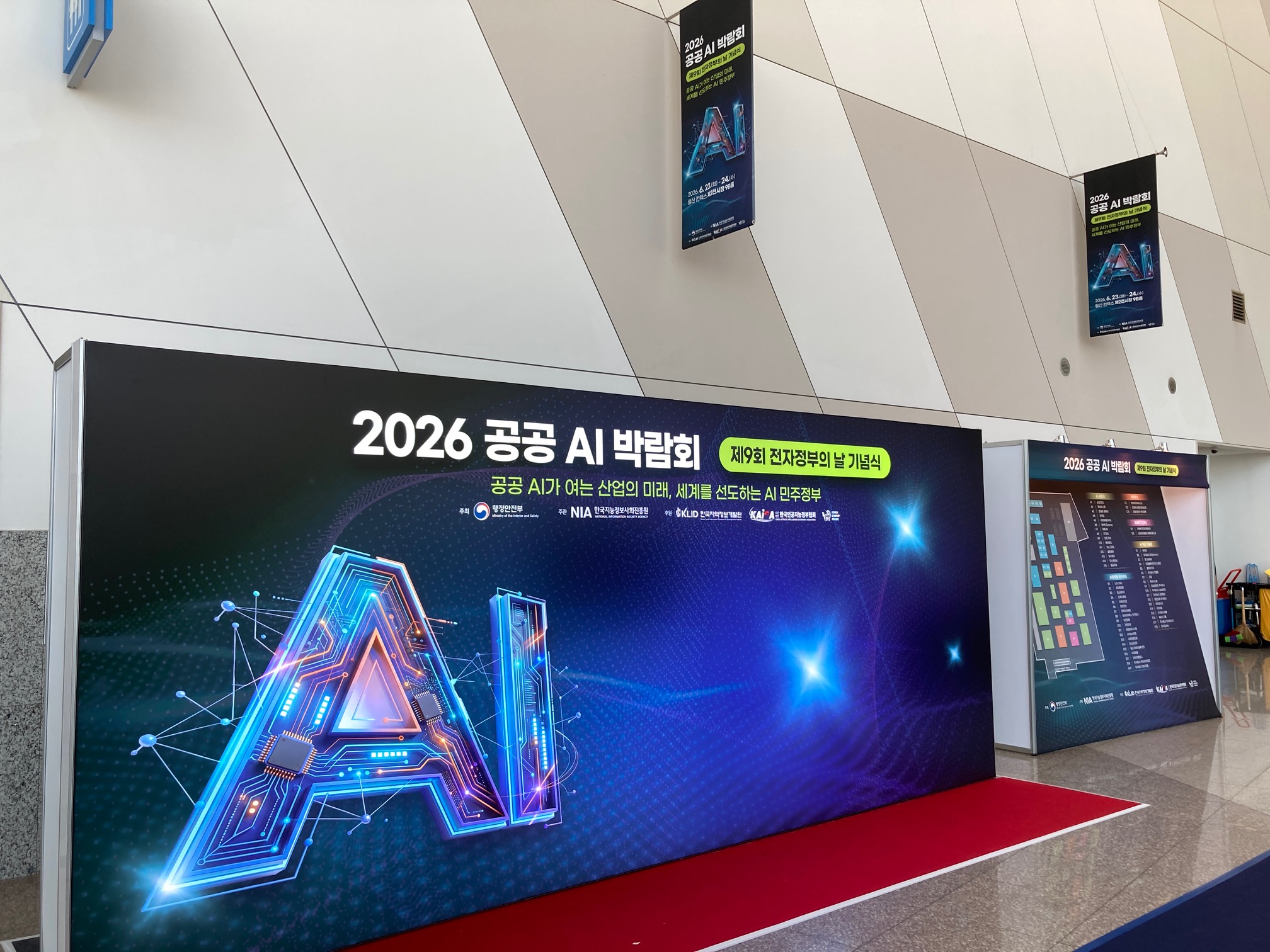
Entrance to Korea Public AI Expo 2026 at KINTEX in Goyang, Gyeonggi-do Province (Jeong Euiseok)
By Jeong Euiseok
A wave of change is hitting the public sector as artificial intelligence (AI) drives innovation throughout society.
The Ministry of the Interior and Safety from July 23-24 hosted this year's Korea Public AI Expo at the convention center KINTEX in Goyang, Gyeonggi-do Province, offering a glimpse into the future of public services.
Korea.net on June 23 visited KINTEX to join a foreign media tour comprising the finals of an AI hackathon, docent-led tour of the expo, visit to exhibition halls and the opening ceremony.
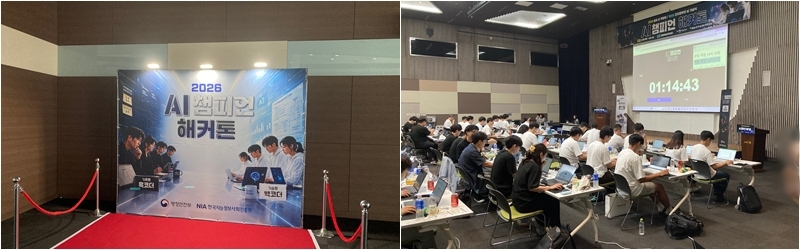
The final of an AI hackathon is seen by staff from public institutions and civil servants. (Jeong Euiseok)
At the venue of the AI hackathon final at 1 p.m., a palpable atmosphere of tension was evident. A hackathon is a competition in which participants must devise an idea and complete a programming project within a time limit.
The contestants stared intently at their monitors, engrossed in their work. The tournament-style contest of interactive coding pitted information and communications technology employees against administrative staff.
Two hundred teams nationwide vied for the final, with only 24 making it. The competition ratio of 8.3:1 showed how AI development, dubbed the "domain of experts," has spread to civil service.
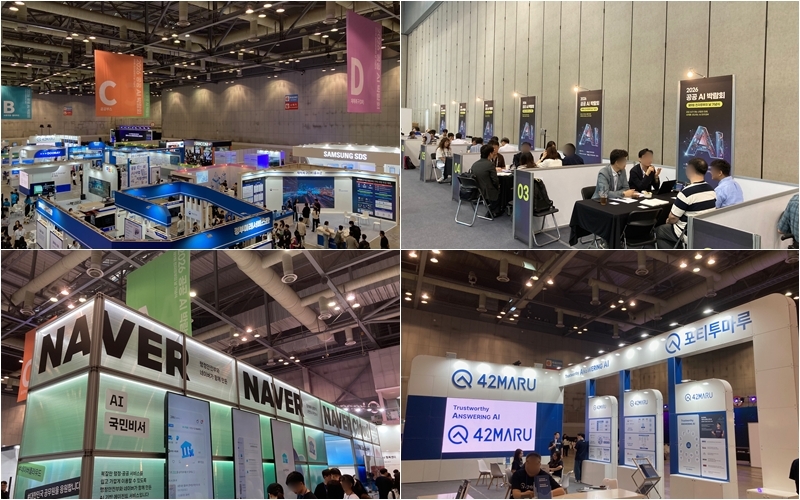
Staff from major companies to AI startups crowd the Korea Public AI Expo, trying interactive services and business matching. (Jeong Euiseok)
After the hackathon was a visit to the packed exhibition hall, which had 56 booths set up by companies and public organizations.
A highlight was the AI National Secretary (Guppy), an AI-powered assistant at the Naver booth using private apps to help users more easily access public services. Asking Guppy can help users get electronic certificates or make reservations at public facilities.
The process was simple. Just scan the QR code using the Naver app and click on "AI National Secretary." A window pops up asking the user to enter a message, similar to a mobile messenger app.
After inputting "Please issue a copy of my resident registration certificate," a message appeared asking for the user to agree to the terms and conditions. Staff there said the user merely needs to follow the steps to complete the issuance, a reminder of how much easier and faster access to public services in daily life has become.
With the help of a docent, Korea.net visited the booth of 42MARU, an AI company specializing in public sector solutions. Security and accuracy are the two biggest obstacles to the adoption of AI by public institutions.
To alleviate both fears, 42MARU has an in-house system that does not transmit data externally to protect information security and generates reliable answers based on verified sources and supporting evidence.
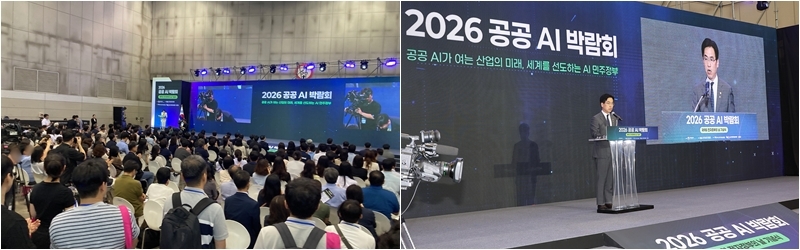
A crowd (left) attends the opening ceremony for Korea Public AI Expo 2026 and Vice Minister of the Interior and Safety Kim Min Jae gives the welcoming speech. (Jeong Euiseok and Ministry of the Interior and Safety)
The final event of the media tour was the expo's opening ceremony. Vice Minister of the Interior and Safety Kim Min Jae said in his welcoming speech, "We seek to evolve beyond an e-government to become an AI democratic government that embodies the democratic value of 'by the people and for the people' in all public administrative sectors."
The Lee administration's "AI democratic government" initiative of integrating AI into the public sector has shown that public AI systems are shifting administrative workflows rather than simply updating hardware. As this trend continues, the primary metrics for success will be quantifiable changes in public sector efficiency and the impact on public access to government services.
innocence@korea.kr