- 한국어
- English
- 日本語
- 中文
- العربية
- Español
- Français
- Deutsch
- Pусский
- Tiếng Việt
- Indonesian
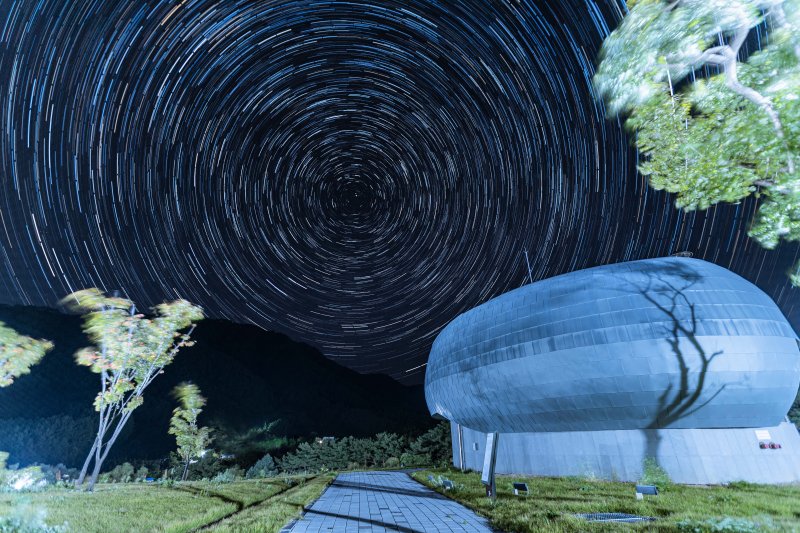
Baekdudaegan Global Seed Vault in Baekdudaegan mountain range of Bonghwa-gun County, Gyeongsangbuk-do Province (Baekdudaegan National Arboretum's website)
By Oh Jung Eun
Bonghwa-gun County, Gyeongsangbuk-do Province, is at the heart of the Baekdudaegan mountain range, the backbone of the Korean Peninsula. Here, a building resembles a spaceship right out of a science-fiction movie.
Lying deep beneath it lies a massive underground tunnel reminiscent of a bomb shelter.
This is the Baekdudaegan Global Seed Vault (BGSV), the last line of defense to safeguard humanity's future.
Access to this high-security national facility is strictly restricted, but a foreign media group on Nov. 3 got to tour the facility.
The Baekdudaegan National Arboretum, home to the vault, is the largest arboretum in Asia and second biggest in the world. But what makes it truly exceptional is that this is the world's lone venue that houses a vault and a bank for seeds.
While the bank is a depository for seeds used in research and for practical purposes, the vault is a secure, permanent storage as a safeguard against threats to humanity such as natural disasters, climate change and war.
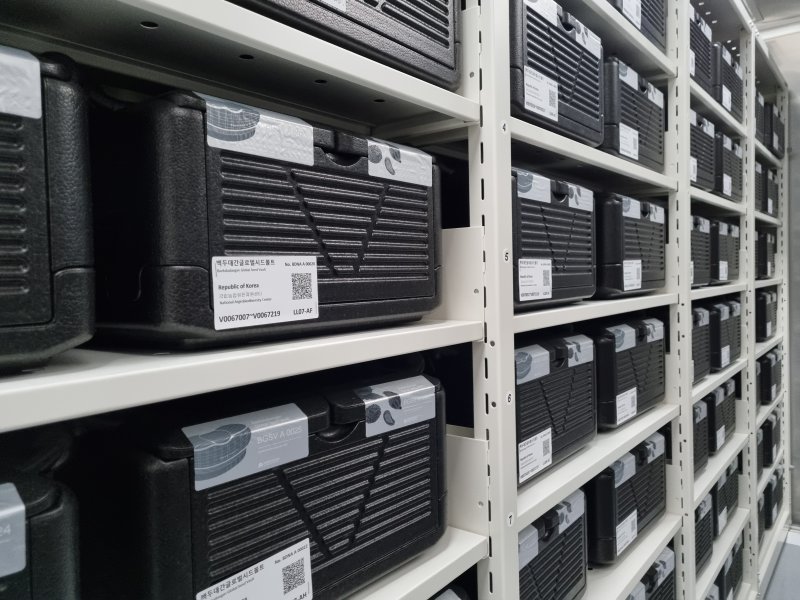
These black boxes hold seeds at the Baekdudaegan Global Seed Vault in the Baekdudaegan mountain range of Bonghwa-gun County, Gyeongsangbuk-do Province. (Korea Arboreta and Gardens Institute)
Korea and Norway are the only two countries with such seed vaults. While Norway's focuses on food crops, Korea's specializes in the seeds of wild plants, accepting deposits from individuals, companies, think tanks and governments both at home and abroad at no storage cost.
A depositor seals seeds in aluminum pouches, places them inside a black box, attaches a security label and sends the box. He or she maintains ownership of the seeds and the right to open the box.
Inside the vault, seeds are stored at minus 20 Celsius degrees and relative humidity of 40% to prevent deterioration. Much like humans, seeds struggle to adapt to rapid temperature changes, thus an antechamber is maintained at 0 degrees outside the main storage area. Seeds are kept for about a week in this space before being transferred to the main vault.
The BGSV stores 297,955 seed units representing 6,410 species. Each unit comprises a batch of about 500 seeds, meaning over 100 million individual seeds are preserved underground.
The arboretum eyes conservation of 30% of the world's wild plant seeds by 2050. Among its holdings are the seeds of the Ara red lotus, a variety propagated from a 700-year-old lotus seed dating back to the Goryeo Dynasty (918-1392) found in 2009 at an archaeological site in Haman-gun County, Gyeongsangnam-do Province.
This finding is especially significant because its shape and color closely resemble those of lotus flowers depicted in Buddhist murals from the Goryeo era.
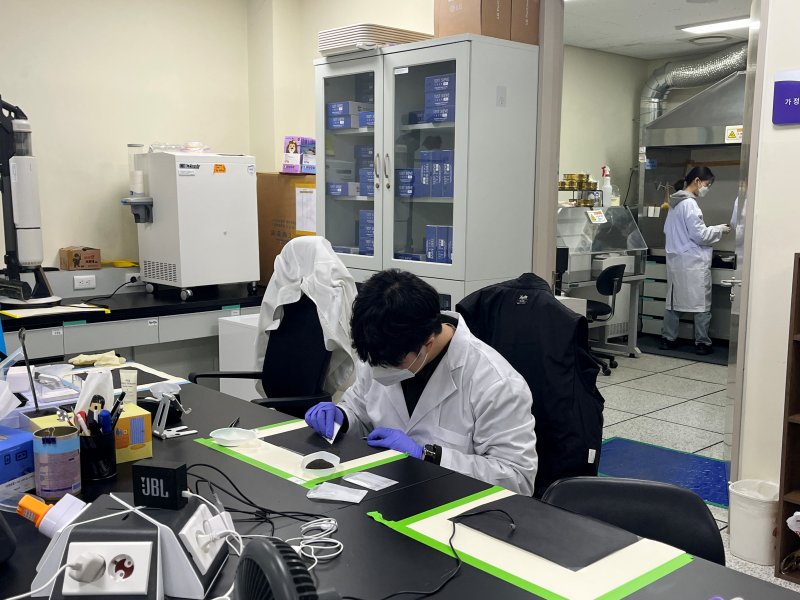
A researcher at the Baekdudaegan Global Seed Bank performs sorting, a pretreatment step in seed storage involving the removal of impurities from the seeds. (Oh Jung Eun)
A seed bank has the same facilities as a vault, but its primary role is to collect and propagate native, rare or endemic plant species found domestically and store their seeds. It also stores duplicate seeds of certain species stored at the vault to monitor their viability.
Seeds preserved in the bank are used for research into their traits or plant restoration. Those from oak species such as acorns are especially difficult to store; they cannot survive for more than one to two years even under storage conditions of minus 20 degrees and relative humidity of 40%.
The bank is conducting research to extend the storage lifespans of these seeds.
The collection of plans indigenous to Korea is largely complete, with 18,756 specimens representing 3,093 species in storage.
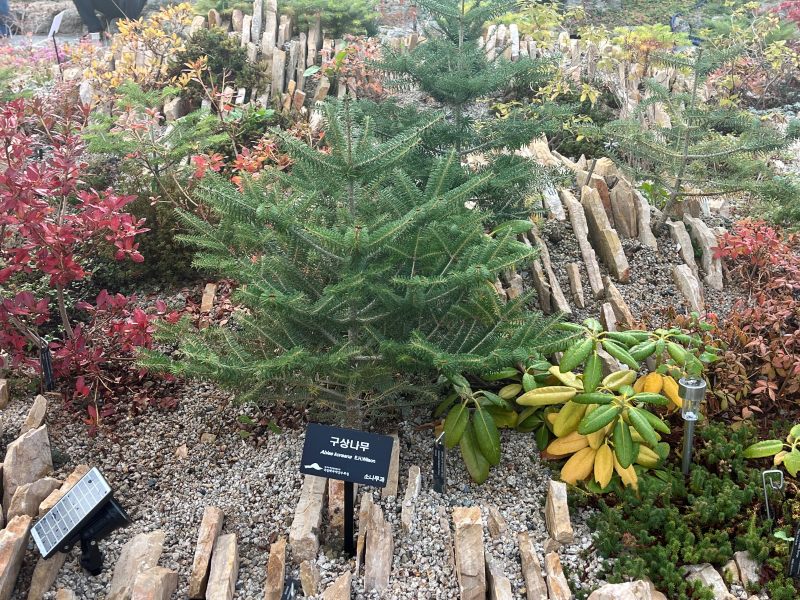
The Korean fir is an endangered conifer species. (Oh Jung Eun)
The arboretum's efforts to conserve forest biological resources extend beyond its seed vault and bank.
Korea has designated seven conifer species as endangered due to threats from the climate crisis and human-caused damage, and is acting to manage them. A prime example is the Korean fir (Abies koreana), widely known as a Christmas tree species indigenous to Korea.
The arboretum goes beyond storing Korean fir seeds in its vault and bank by conducting both "in situ" conservation, or replanting seeds in their natural habitats where the trees are disappearing, and "ex situ" conservation, or allocating a dedicated area within the arboretum for their intensive care and management.
Key conservation facilities at the facility include the Alpine House, the world's largest cold greenhouse for preserving alpine plants, and the Tiger Forest, which covers an area the size of about six soccer fields.
From seeds to fully grown trees to an entire forest, the arboretum safeguards every stage of a plant's life cycle deep in the foothills of the Baekdudaegan range, quietly but effectively preserving the future of such plants.
cloveroh@korea.kr