- 한국어
- English
- 日本語
- 中文
- العربية
- Español
- Français
- Deutsch
- Pусский
- Tiếng Việt
- Indonesian
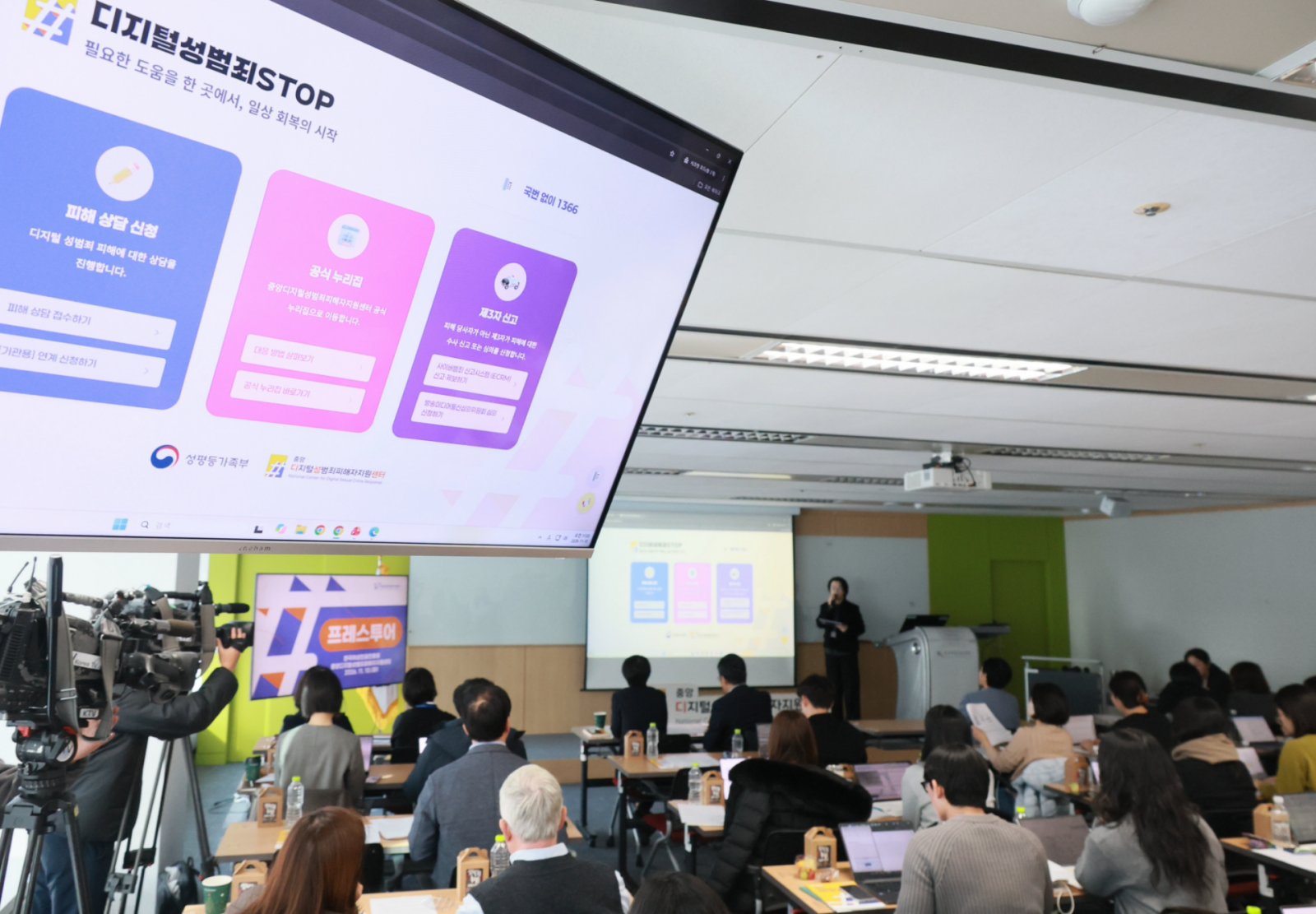
Park Seonghye, head of the Deletion Technology Team at the National Center for Digital Sexual Crime Response, on Nov. 10 explains the facility's one-stop integrated support service for victims of such crimes at a news conference held at the Women's Human Rights Institute of Korea in Seoul's Jung-gu District.
By Uyen Nguyen
Photos = Ministry of Gender Equality and Family
"Just because you trim your nails doesn't mean you become a different person."
Park Seonghye, head of the Deletion Technology Team at the National Center for Digital Sexual Crime Response, used this analogy to explain her organization's "video DNA" technology.
Detecting illegal footage through conventional searches based on matching hash values can be difficult when the footage has been altered, such as by flipping the image or adding subtitles or ads. Video DNA technology, however, analyzes a clip's traits to spot illegal footage even after alteration.
Technological advances are also expanding the scope of detection. Artificial intelligence (AI) collects online posts using specific keywords and analyzes their text and images, but in the future, it will go a step further by interpreting the context of conversations.
"You're pretty. How old are you?"
This seemingly ordinary question could be the start of grooming, a tactic used to build trust with a potential victim before gradually steering the conversation toward more personal exchanges. Even if messages appear harmless, warning signs can emerge if the flow of the conversation is examined.
From next year, the center will apply technology that can analyze conversational context to identify attempts to lure children and adolescents into sexual exploitation.
The center on Nov. 10 displayed this know-how at a news conference following a tour for domestic and foreign media at the Women's Human Rights Institute of Korea in Seoul's Jung-gu District.
The Ministry of Gender Equality and Family outlined the center's operations and demonstrated its integrated one-stop service for victims of digital sex crimes. It also showcased the use of AI to proactively detect and respond to sexually exploitative materials involving children and adolescents.
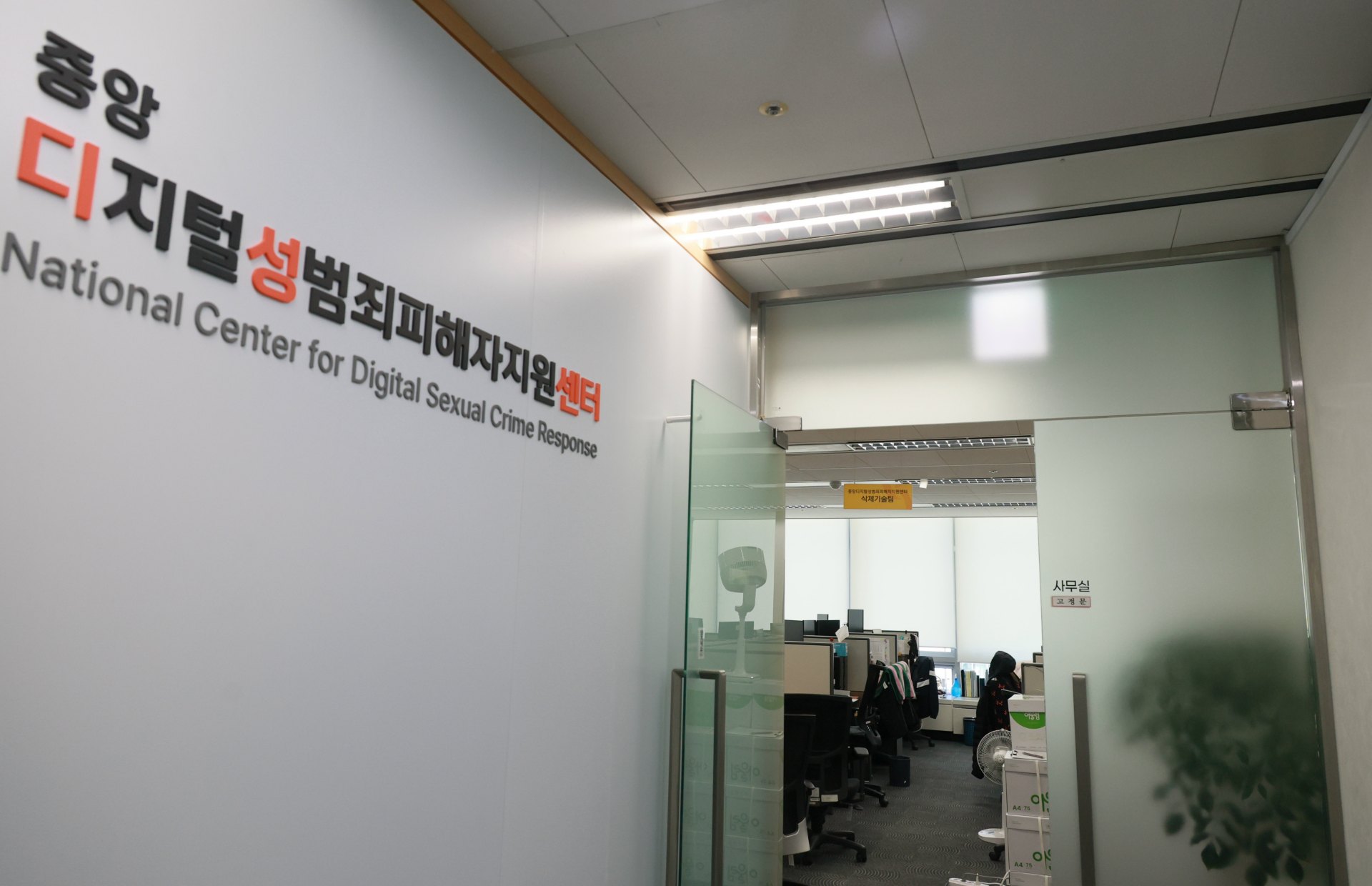
The National Center for Digital Sexual Crime Response removes dangerous images and takes action to prevent the redistribution of sexually exploitative material featuring children and teens.
The center provides counseling for victims of digital sex crimes, assists in the removal of videos or content with harmful images, and offers referrals for investigative, legal and medical services. Even after such content is removed, it monitors for any redistribution and helps victims return to daily life.
For child sexual abuse material (CSAM), the center takes a proactive approach by identifying and helping remove such content even without a request from the victim. This helps prevent further harm, especially if a victim is unaware that the material has been distributed or struggles to report it.
Stronger international cooperation seeks to remove the distribution of such content overseas. The center works with organizations such as the National Center for Missing and Exploited Children of the U.S. to automate the process for submitting removal requests and verify the results by integrating application programming interfaces.
AI has greatly boosted the speed and processing efficiency of content removal. Previously, staff had to manually search for and analyze online posts, greatly limiting real-time monitoring and large-scale data processing and suffering mental duress due to constant exposure to harmful content.
Today, the center uses about 220 keywords to collect suspicious posts around the clock from 14 online platforms like Google, X and Telegram. AI analyzes texts and images to identify potential CSAM and provide preliminary assessments later reviewed by staff.
From detection to deletion requests, the automated process has slashed the workload to enable employees to focus more on helping the victims.
The center said that from April to September this year, it proactively handled 96,210 cases of removing child and adolescent sexual exploitation material, more than double the 45,438 for all of last year. The daily average per staff member also rose about 9.7-fold, from 20.8 to 202.1.
But AI does not make all the decisions. Staff make the final determination on whether to grant a deletion request and directly verify its removal.
"AI helps identify and connect victims faster to the support they need," the center's director Kim Misoon said. "But understanding each victim's circumstances, determining the appropriate course of action, and supporting their return to daily life remain the responsibility of human staff."
The ministry plans to keep applying the latest technologies, strengthening cooperation among relevant ministries and improving systems to create a safer digital environment, under the goal of tracking the distribution of illegally filmed content to the very end and ensuring its deletion and blocking.
uyen81@korea.kr

