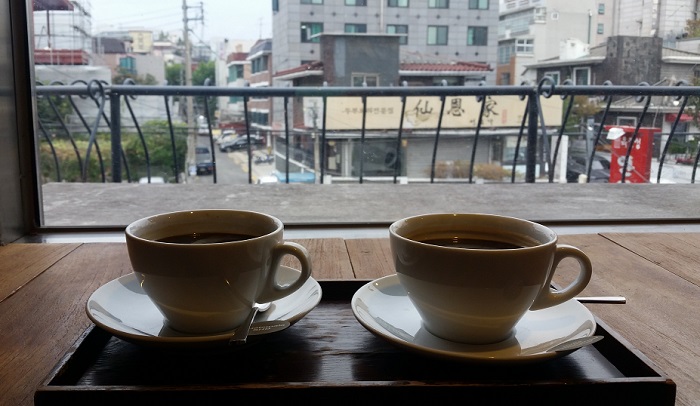
Coffee is an everyday culinary delight for many people these days.
The delight that people find in coffee shows no signs of abating. According to trade reports released by the Korea Customs Service on Oct. 25, the nation’s imports of coffee beans and coffee products will hit a record high this year, already topping 102,500 tons by the third-quarter.
As shown in the statistics, many people here revel in the hot, black beverage. Coffee shops have sprung up across the nation over the past few years. As a variety of coffee brands are now available across a wide range of prices, an after-meal sip of caffeine has become part of a full-course dinner for many.
About 100 or so years ago, however, coffee was not for the masses. Dating back to the 1890s, only the royal household enjoyed what is now called ggeopi in Korean and which used to be called gabe. King Gojong (1852-1919) enjoyed the drink. If history is any indication, when Gojong took refuge in the Russian legation in 1896 and 1897, he sipped coffee for the first time. When he returned to his palace in 1897, the king never forgot the taste of coffee and ever since enjoyed the drink.

So-called ‘coffee mix,’ a pack of instant coffee mixed with sugar and powdered creamer, is beloved among coffee-lovers who prefer sugary, milky coffee over black coffee.
Coffee, a luxury enjoyed only by courtiers, started to reach more ordinary people during the early 20th century, a time when coffee shops, so-called dabangs, opened for business across the nation. When World War II (1939-1945) broke out in East Asia, however, most dabang coffee houses had to shut their doors. By the time the war ended, U.S. soldiers started to be stationed in the country and instant coffee, included in the soldiers’ rations, started to captivate people’s taste buds.
Until the 1970s, coffee was usually served to guests at home. During the 1980s, instant coffee mixes -- packs of instant coffee mixed with sugar and powdered creamer, dissolved in hot water -- hit markets and automatic coffee machines showed up on street corners. Since then, drinking coffee has caught on.
In the late 1990s, coffee shops appeared exponentially across Korea, and foreign coffee shop brands, such as Starbucks, made successful inroads into domestic markets and boomed.
More than 100 years after its first introduction, coffee is now one of people’s favorite delicacies. Many workers don’t miss out on drinking a cup of coffee after a meal. For that reason, neighborhoods home to companies and industries are also crowded with coffee shops.
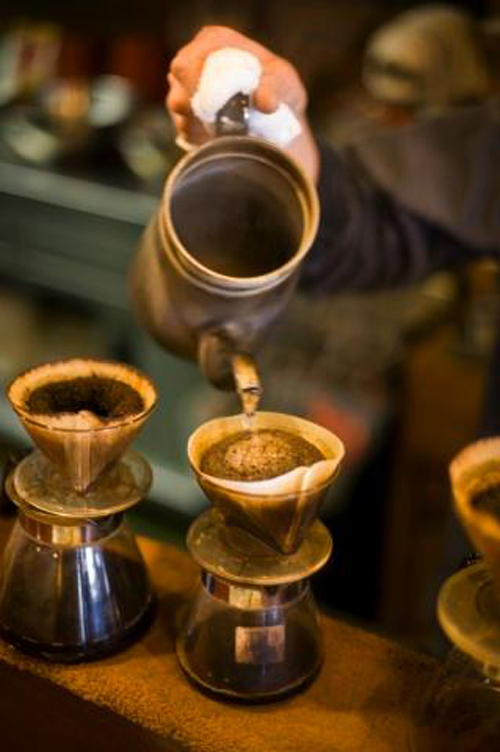
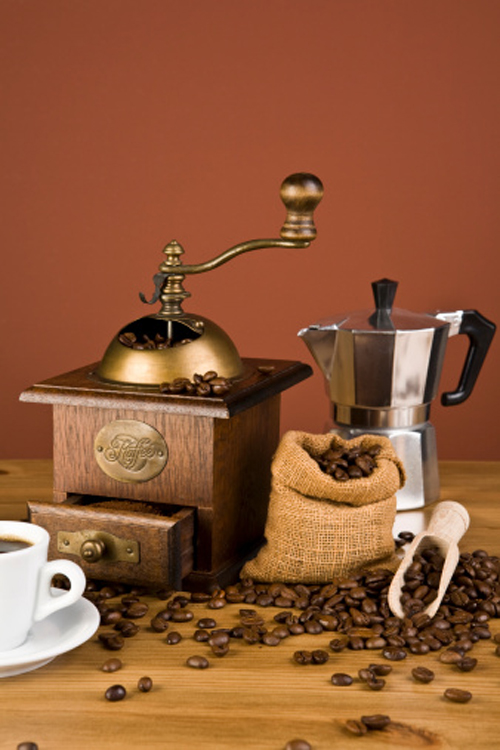
Coffee-brewing equipment is sought after by people at both home and work. Coffee sippers enjoy their cup brewed with special tools. First, grind the coffee beans using a grinder (bottom). Use a filter over a funnel (top), and pour in the hot water slowly.
Korea has now reached a point where it creates its own coffee shop brands, like Caffebene and Ediya Coffee, and has even begun to export them to global markets, including the U.S. and Russia. In particular, sales of “Frima,” an instant powdered coffee with creamer and sugar produced by the nation’s leading coffee manufacturer, Dongsuh, saw exports of USD 53 million last year, about KRW 62.1 billion. That figure is expected to hit USD 60 million, or some KRW 70 billion, this year.
The Korean coffee industry, so far only advancing into markets in Southeast Asia, Central Asia and Russia, will by the end of the year or early next year be ready to expand its business into Africa and the Middle East. Domestic coffee businesses have even reached a level where they import coffee beans from around the world, roast the beans domestically and then re-export the flavored beans to coffee-lovers around the world.
By Sohn JiAe
Korea.net Staff Writer
Photos: Sohn JiAe, Yonhap News and Nescafe
jiae5853@korea.kr