Korea.net has 3,432 Honorary Reporters from 105 countries who share news and stories on Korea in nine languages. They send Korea-related news from their neighborhoods to Korea.net and share articles posted on our site through their social media accounts. The following are three highlighted stories posted by such reporters last week.
By Lee Jihae
Several Honorary Reporters in the second week of December wrote about institutes and events abroad where participants learned about the Korean language and culture. The stories attested to the unwavering fervor for Hallyu despite the COVID-19 pandemic.
■ Meeting with principal of Korean School of Rouen (Chiron Millie from France in French)
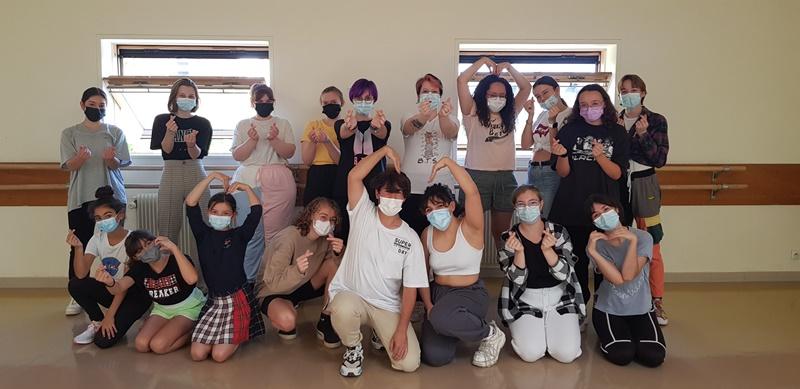
Participants of the K-pop dance course pose for a photo at Korean School of Rouen in northern France. (Korean School of Roeun)
Honorary Reporter Chiron Millie from France described the Korean School of Rouen in northern France. Millie on Oct. 5 interviewed in person the school's principal Cho Ji-sook for the article.
Established in 2011, the private school offers courses on Korean culture including the language, pop dance and cooking. Cho said she founded the school after moving to France in 2009 and witnessing the immense popularity of Hallyu (Korean Wave).
"Every year, about 100 students enroll in the school," she said. "I directly feel rising interest in Korean culture given the jump in demand for Korean-language courses."
■Fun Hanji artifacts during Korean culture week in Egypt (Esraa Elzeny from Egypt in Arabic)
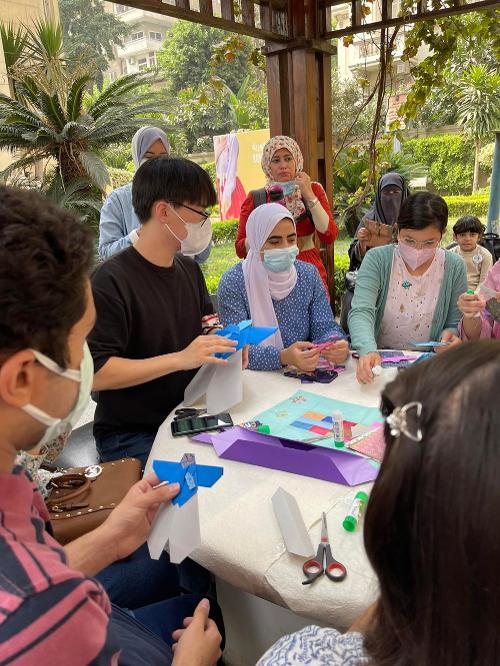
Participants in a Korean cultural event hosted by the Korean Cultural Center in Cairo, Egypt, make Hanbok out of colored paper. (Esraa Elzeny)
Honorary Reporter Esraa Elzeny from Egypt wrote about participating in the "K-Art Experience" in October hosted by the Korean Cultural Center in Cairo. Participants wrote on Hanji (traditional Korean paper), decorated masks, and created traditional fans and lanterns.
Elzeny said Hanji is used to make various items and recalled the Seoul Lantern Festival in Cheonggyecheon Stream, where she visited when she was in Seoul.
"I realized Hanji is not only pretty but also practical," she said. "Hanji is used in major festivals such as Buddha's Birthday."
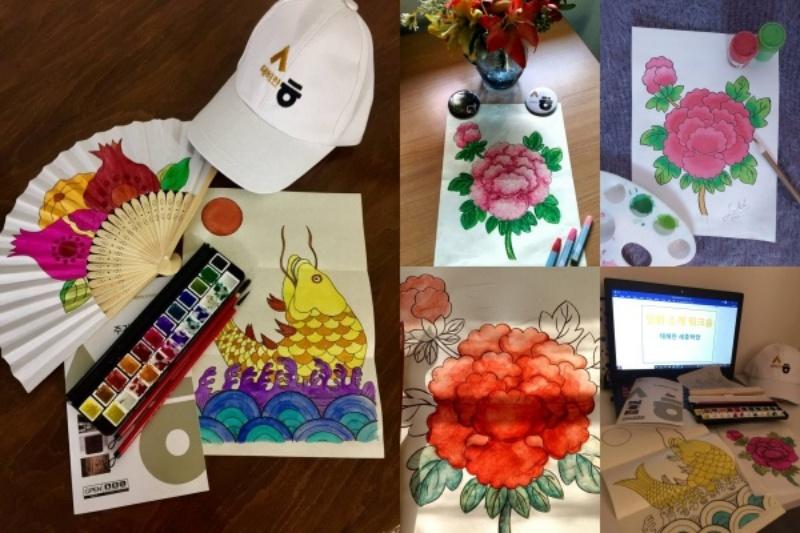
Minhwa, a form of traditional folk painting often drawn by ordinary people with no art training or background, sees a variety of interpretations by participants in an online program from Nov. 21-25 hosted by the Tehran branch of King Sejong Institute in Iran. (Helia Nikzaddinan)
Honorary Reporter Helia Nikzaddinan from Iran reported on an event held by the Tehran branch of King Sejong Institute from Nov. 21-25. Korean cultural workshops were held for 150 participants including those on minhwa, a form of traditional painting drawn by ordinary people with no art training or background, Hanbok, calligraphy and handicrafts. Participants colored and created norigae, a decorative accessory attached to the lace of a Hanbok's upper attire or the waistline of the dress, and traditional wallets. They also wrote calligraphy and learned about Korean artifacts.