By Kim Hyelin
2025 has seen the country achieve major changes and results in sectors such as technology, diplomacy, culture and economy, and Korea.net has extensively covered all of them. The following are Korea.net's top 10 news stories of the year.
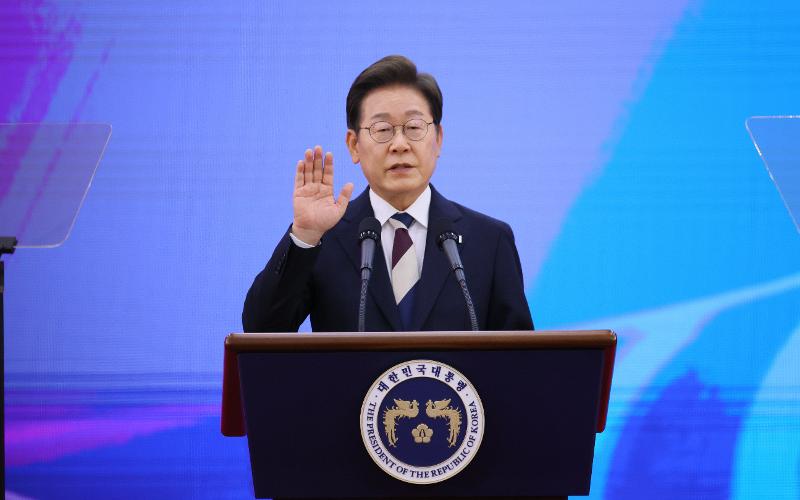
President Lee on June 4 speaks at his inauguration at Rotunda Hall of the National Assembly in Seoul's Yeongdeungpo-gu District. (National Assembly Photographers' Pool)
Election of 21st President Lee Jae Myung ushers in new era
President Lee on June 4 delivered his inauguration speech as the nation's 21st head of state at Rotunda Hall of the National Assembly in Seoul's Yeongdeungpo-gu District, saying, "I will become 'everyone's president' who embraces and serves all the people."
I will become a "president for all, embracing and serving all citizens."
He also laid out his five-point vision for his administration to build a country "where the people are sovereign," "where brisk growth and development are constant," "where everyone prospers together," "where culture flourishes," and "a safe and peaceful nation."
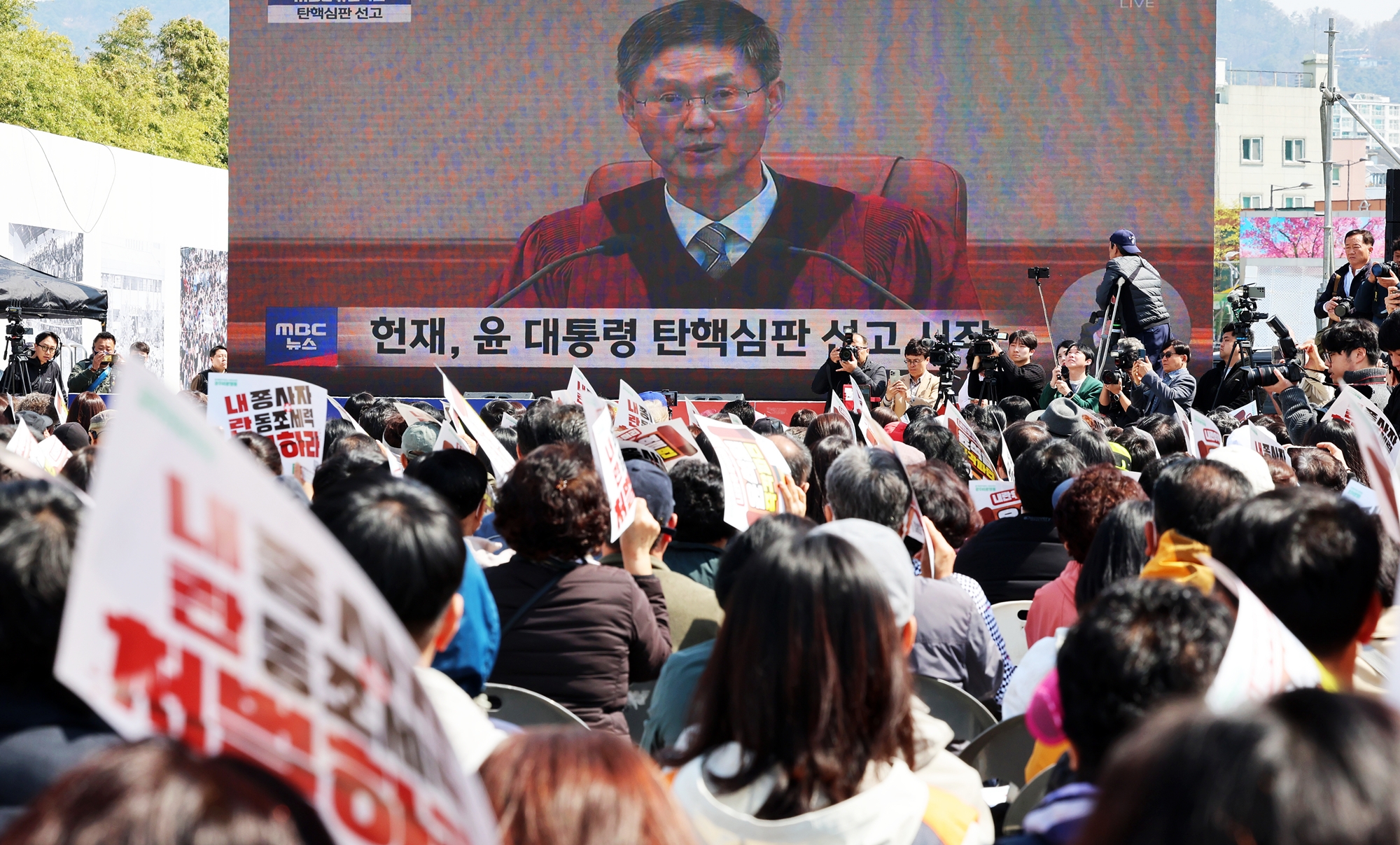
Crowds on the morning of April 4 gather to watch a live broadcast of the Constitutional Court's ruling on the impeachment motion against President Yoon Suk Yeol at May 18 Democracy Square in Gwangju's Dong-gu District.
Impeachment of President Yoon Suk Yeol
In a unanimous 8-0 decision, the Constitutional Court on April 4 upheld the National Assembly's impeachment motion against President Yoon Suk Yeol over his failed bid to declare martial law. The verdict took effect immediately and officially stripped him of his position.
The verdict came 122 days after his declaration of martial law on Dec. 3 last year and 111 days after the motion was filed that Dec. 14.
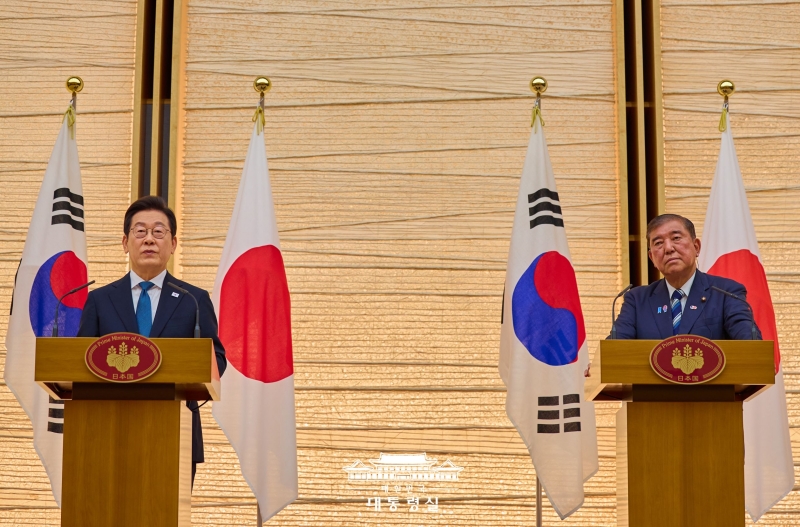
President Lee (left) and Japanese Prime Minister Shigeru Ishiba on Aug. 23 hold a joint news conference after their bilateral summit at the latter's official residence in Tokyo. (Office of the President)
Restoration of summits paves way for global cooperation
Since taking office, President Lee Jae Myung has held a series of summits with the leaders of major allies and neighboring countries to restore diplomacy. He held his first talks with U.S. President Donald Trump on Aug. 25 at the White House in Washington, discussing a possible summit between President Trump and North Korean leader Kim Jong Un and stronger bilateral ties including in shipbuilding.
After his June 17 summit with Japanese Prime Minister Shigeru Ishiba on the sidelines of the G7 summit of advanced economies in Canada, President Lee held a second on Aug. 23 in Tokyo. To mark the 60th anniversary of the normalization of their relations, the two countries agreed to lay the groundwork for practical cooperation and resume shuttle diplomacy.
On Nov. 1, President Lee on Nov. 1 held his first meeting with Chinese President Xi Jinping, who was on his first state visit to Korea in 11 years. They agreed to "fully" restore bilateral ties.
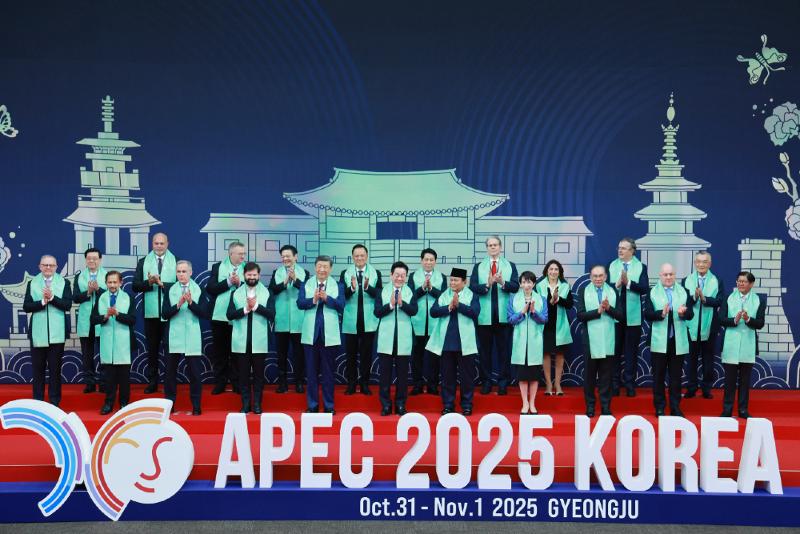
Leaders of APEC member countries on Nov. 1 take a group photo at Gyeongju Hwabaek International Convention Center in Gyeongju, Gyeongsangbuk-do Province. (Yonhap News)
Gyeongju APEC forum shines global spotlight on Korea
From Oct. 31 to Nov. 1, the APEC (Asia-Pacific Economic Cooperation) Economic Leaders' Meeting was held in Gyeongju, Gyeongsangbuk-do Province. Leaders of member states reaffirmed their shared understanding of major agenda such as free trade protection, digital and green transitions, response to changes in demographics, and cooperation in the ethics and use of artificial intelligence (AI).
They also unanimously adopted the Gyeongju Declaration, which contained the roadmap for the Asia-Pacific region's future.
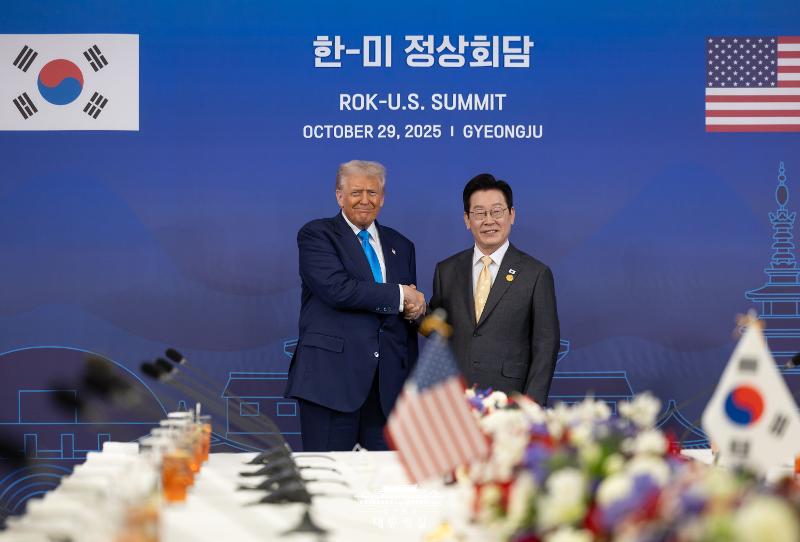
President Lee (right) on Oct. 29 shakes hands with President Trump at their bilateral summit in Gyeongju, Gyeongsangbuk-do Province, on the sidelines of the APEC gathering. (Office of the President)
Conclusion of tariff negotiations with U.S.
Presidents Lee and Trump on Oct. 29 dramatically concluded tariff negotiations at their bilateral summit in Gyeongju. Both sides agreed to scrap or reduce tariffs linked to Korea's pledge to invest USD 350 billion. in the U.S.
Tariffs on Korean cars and parts were reduced to 15% while select items such as generic pharmaceuticals and aircraft components received most-favored-nation treatment.
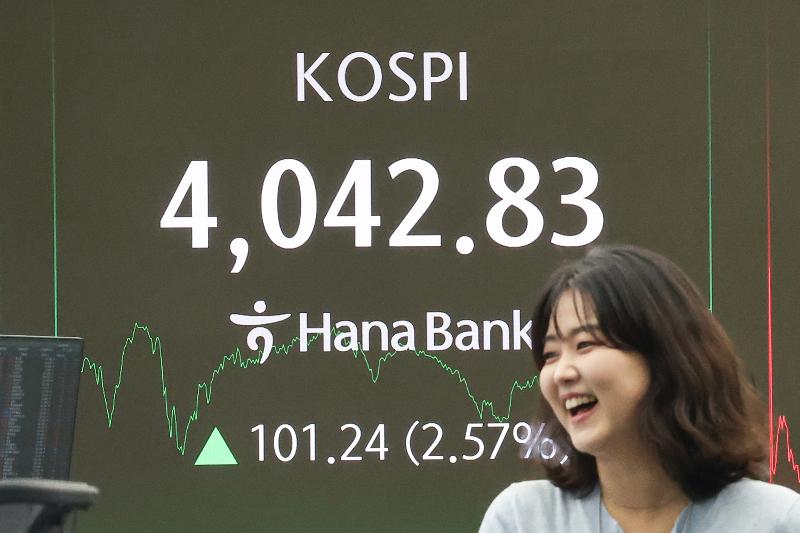
The main stock market KOSPI is displayed on Oct. 27 on an electronic bulletin board at the dealing room of Hana Bank headquarters in Seoul's Jung-gu District. (Yonhap News)
4,000-point era of main stock market begins
The main Korea Composite Stock Price Index on Oct. 27 surpassed 4,000 for the first time just four months after conquering 3,000 on June 20. Government stimulus measures, robust performance by cutting-edge sectors such as semiconductors and batteries, higher investment in AI and green technology, and foreign capital inflows were cited as factors, leading to restored sentiment among domestic and international investors.
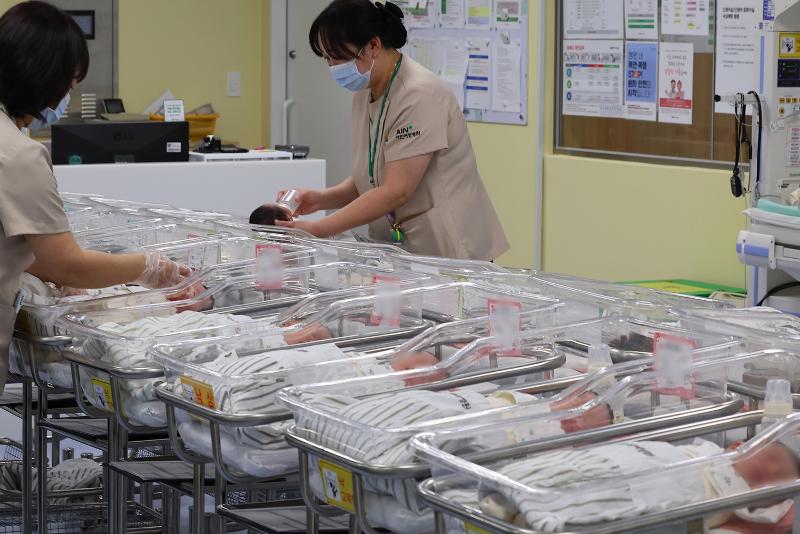
Staff on Feb. 26 tend to newborns at Ain Hospital in Incheon's Michuhol-gu District. (Yonhap News)
Birth rate sees first rise in nine years
The total fertility rate (TFR) saw its first rise in nine years. The Ministry of Data and Statistics on Feb. 26 in a report on birth and death data said the number of babies born last year was 238,300, up 3.6% or 8,300 from 2023. The rate last year also rose three-tenths of a point to 0.75, the first time since 2015 for both the number of births and the TFR to rise.
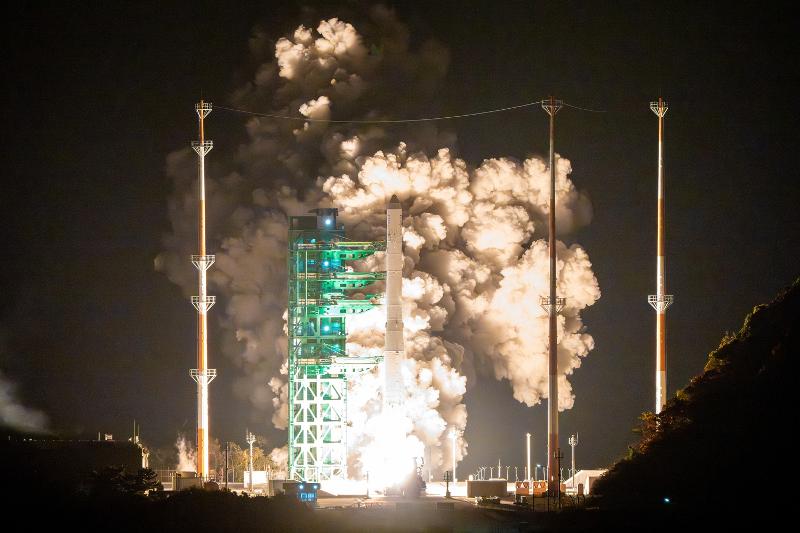
The homegrown launch vehicle Nuri (KSLV-II) blasts off on Nov. 27 at 1:13 a.m. from the Naro Space Center in Goheung-gun County, Jeollanam-do Province. (Korea Aerospace Research Institute)
Fourth launch of homegrown rocket opens space era
The domestically developed space rocket KSLV-II, aka Nuri, for the fourth time blasted off in the early morning of Nov. 27 from the Naro Space Center in Goheung-gun County, Jeollanam-do Province. It carried the CAS500-3, a next-generation mid-size satellite for observing the space environment and conducting bio-verification missions, and 12 cube satellites to their target orbits. Hanwha Aerospace oversaw the entire process from manufacturing and assembly of the launch vehicle to management of participating companies, launching an era of private sector-led space development.

Scene from "KPop Demon Hunters" (Netflix)
Hallyu takes world by storm
Domestic content such as movies and K-dramas, performing arts and music reasserted its global popularity this year. Netflix on Sept. 3 said the animated blockbuster "KPop Demon Hunters" was the streaming site's most watched title of all time 11 weeks after its release.
In May, the musical "Maybe Happy Ending" cowritten by Hue (Chun-hue) Park swept numerous honors such as the Outer Critics Circle Awards, Drama League Awards and Tony Awards for Best Musical, Best Direction of a Musical, Best Book and Best Original Score.
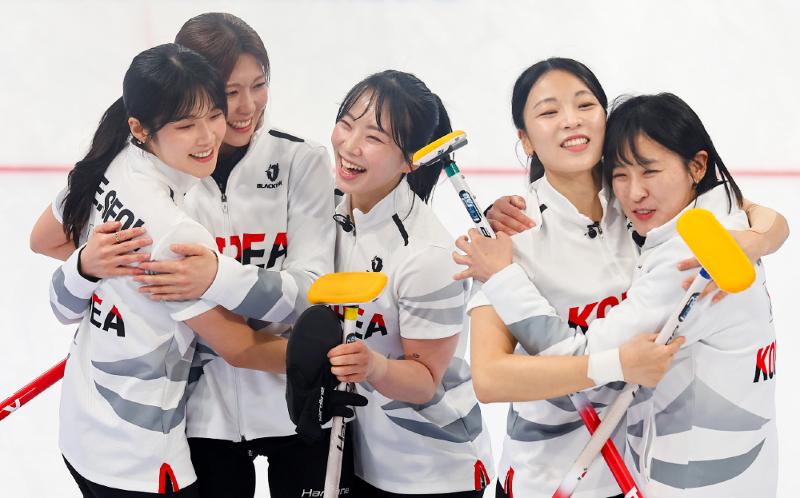
The national women's curling team on Feb. 14 celebrate after winning the gold medal of the Asian Winter Games by defeating China, 7-2, at Harbin Pingfang District Curling Arena in Harbin, China. (Yonhap News)
National team finishes 2nd at Winter Asiad
The national team finished second in overall medal standings from Feb. 7-14 at the Asian Winter Games in Harbin, China, with 45 -- 16 gold, 15 silver and 14 bronze. The country also matched its record for golds at the tournament set during the 2017 edition in Sapporo, Japan.
kimhyelin211@korea.kr