- 한국어
- English
- 日本語
- 中文
- العربية
- Español
- Français
- Deutsch
- Pусский
- Tiếng Việt
- Indonesian
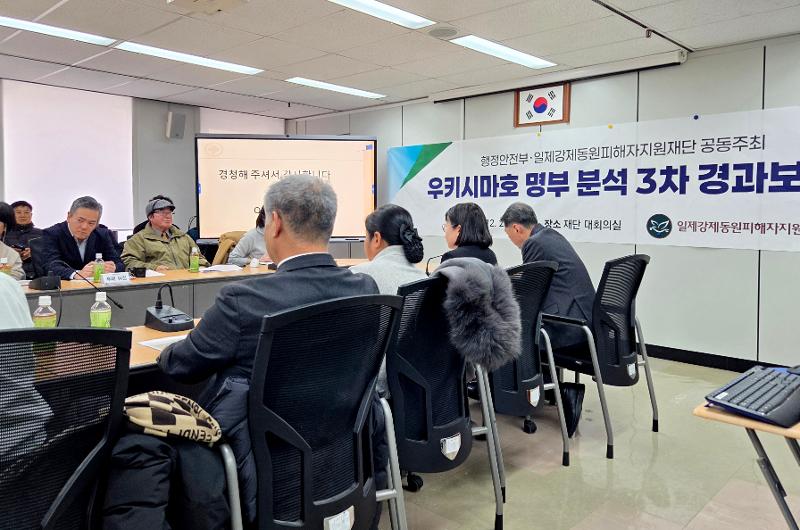
The relatives of the victims of the 1945 sinking of the Ukishima Maru, a Japanese transport vessel for repatriating Korean victims of forced labor, on Dec. 29 hold the third meeting on the first government analysis of the ill-fated ship's passenger list at the Foundation for Victims of Forced Mobilization by Imperial Japan in Seoul's Jongno-gu District. (Yonhap News)
By Margareth Theresia
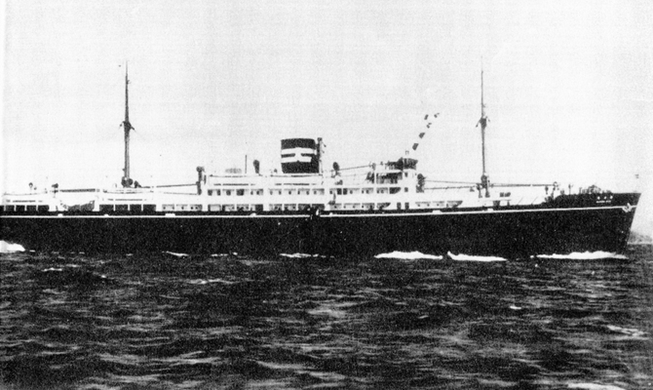
The government's first analysis of the 1945 sinking of the Japanese transport vessel Ukishima Maru, a ship that was repatriating Korean victims of forced labor in Japan when it sank after an explosion, was unveiled on Dec. 29.
The Foundation for Victims of Forced Mobilization by Imperial Japan under the Ministry of the Interior and Safety that day said 528 of the vessel's 3,542 passengers died in the accident based on the list it received from the Japanese government. This was announced in the third meeting on the analysis of the passenger list at the foundation's office in Seoul's Jongno-gu District.
These figures differ from those released by Tokyo in 1945 and 1950 of 3,735 passengers and 524 deaths, showing the inaccuracy of related data kept by Japan.
The Ukishima Maru on Aug. 22, 1945, left for Busan from the port of Ominato in Japan's Aomori Prefecture, carrying Korean victims of forced labor and their families right after Korea's liberation. The ship sank two days later off its scheduled route from an explosion of unknown cause off the coast of the port of Maizuru in Kyoto Prefecture.
The explosion's cause and exact extent of the damage are not yet known.
The Japanese government previously denied having a passenger list but the latter's existence was confirmed in May last year after a Japanese journalist filed a request for information disclosure. Afterward, the Korean Ministry of Foreign Affairs through negotiations with its Japanese counterpart received 53 documents in two installments -- one in September last year and the other that October.
The addition of 22 documents that Tokyo acknowledged it had brought the total to 75.
Seoul made it clear that this was its first analysis based only on the list of recorded passengers. This is because both academics and the victims' families agreed that the number of victims will likely exceed that on the list.
The ministry will first individually inform the relatives of victims who requested confirmation if their family member was on the list, pursue additional verification by comparing and reviewing data from past investigations, records on returnees and other data held by the government. Depending on the results, follow-up measures will be expedited for identifying more victims and performing in-depth studies on the circumstances of death.
margareth@korea.kr