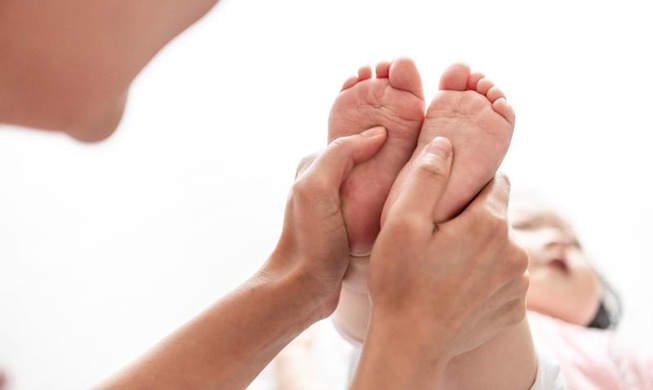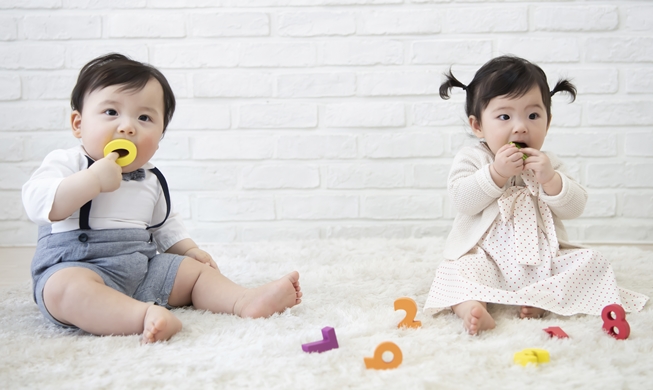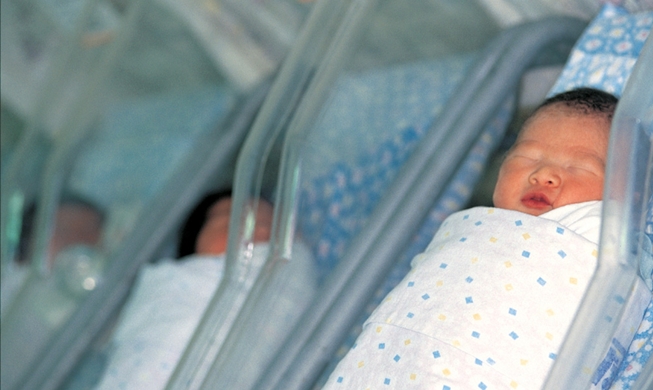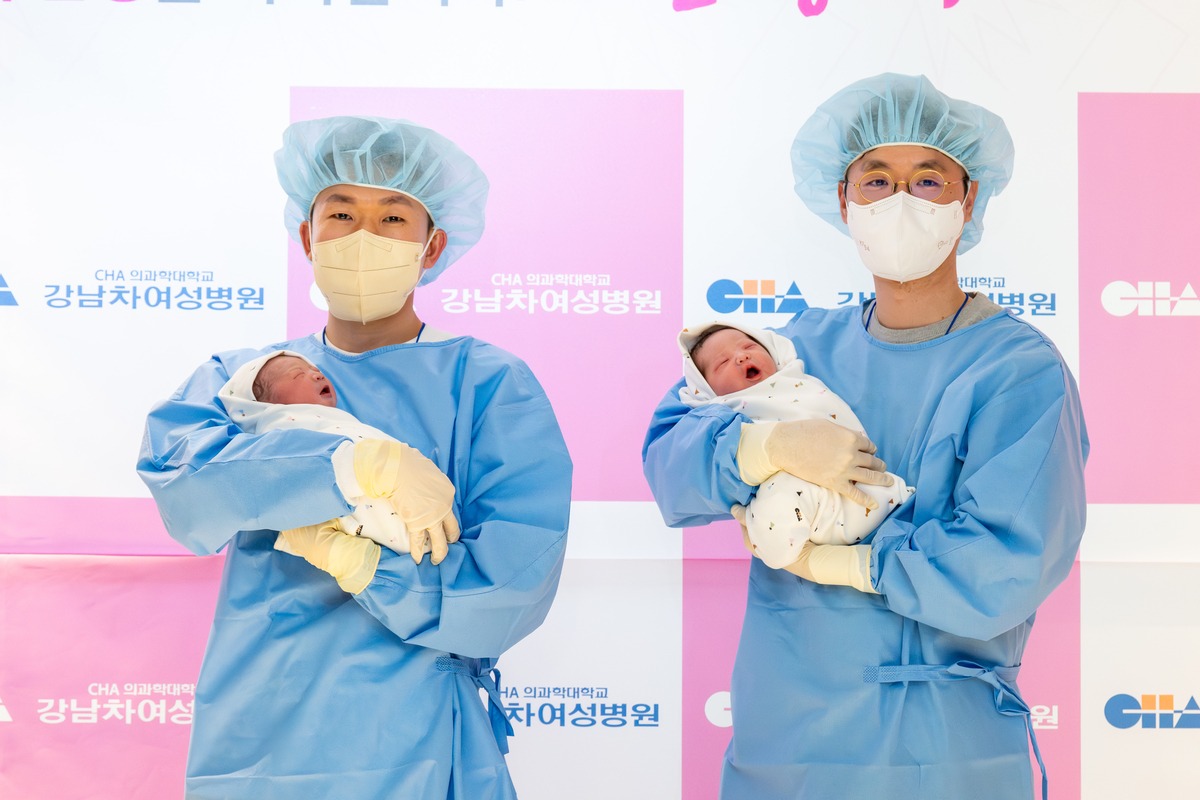
The fathers of the first babies born in 2026 in the country on Jan. 1 pose with their newborns at Gangnam CHA Women's Hospital in Seoul's Gangnam-gu District. (CHA University Gangnam CHA Women's Hospital)
By Charles Audouin
The Ministry of Data and Statistics on Jan. 28 said 233,708 births were reported nationwide last year from January to November.
The figure is up 6.2% from the same period of 2024. November saw 20,710 births, so the annual number could break 250,000 for the first time since 260,562 in 2021.
The number of births had kept falling since reaching 302,676 in 2019, plunging to 230,028 in 2023. It returned to positive growth from 2024 with 238,317.
By region, Seoul saw the highest rise of 8.7% in the cited period, followed by Incheon (8.4%), Chungcheongbuk-do Province (8.3%) and Gwangju (7.7%).
The number of marriages also saw recovery with 214,843 from January through November last year, up 7.5% year on year.
As of November, the total fertility rate, or the average number of children a woman is expected to have in her lifetime, was 0.79, up from 0.77 in 2024. The figure is expected to recover to the 0.8 range.
caudouin@korea.kr