The public perception of animals in Korea is fundamentally changing. The surge in pet owners and rising awareness of animal welfare have led to related changes in policy and daily life. This series covers societal shifts surrounding the relationship between animals and humans by examining the legal status of animals, examples of sanctuaries and animal-friendly policies by local governments.
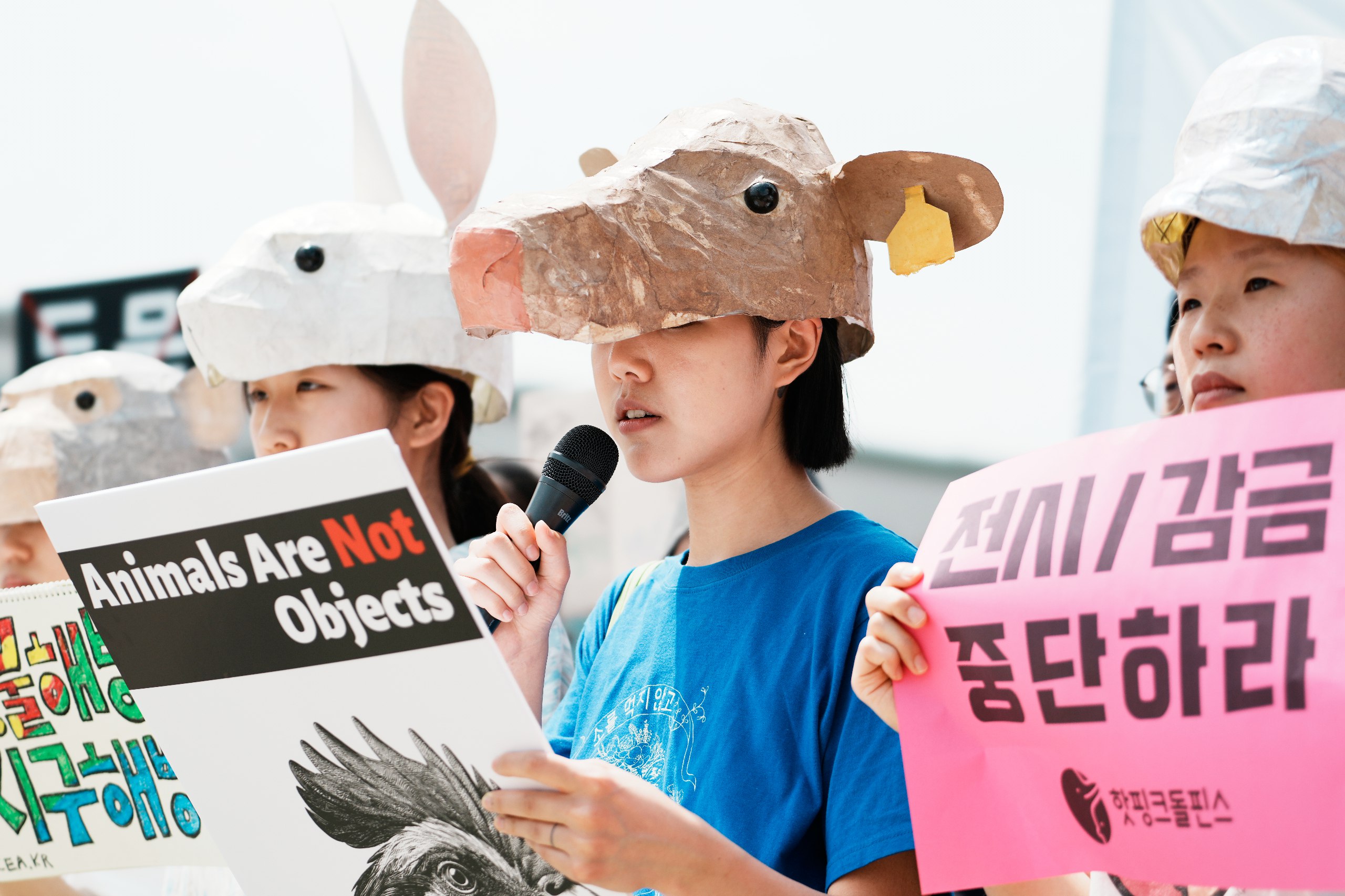
Activists from Animals are Not Objects Solidarity, a coalition of members from about 20 civic groups, on May 30, 2023, stand in front of the National Assembly to urge the swift passage of a partial amendment to the Civil Code on the "de-objectification of animals." (Animals are Not Objects Solidarity)
By Kim Hyelin
Animals have long been legally considered "objects." Article 98 of the Civil Code stipulates an object as a "tangible thing and natural forces that can be managed such as electricity."
Under this provision, animals are classified as items that can be bought, sold and discarded but recent policy has rapidly shifted to how animals should be treated rather than used.
Discussions on revising the Civil Code gained momentum in 2021, when the Ministry of Justice made a legislative proposal saying animals are not objects. Though the proposal was automatically rejected by the 21st National Assembly, a similar bill is under deliberation by the Legislation and Judiciary Committee of the 22nd legislature.
Animals are not yet legally recognized as subject to having rights, but persistent legislative attempts reflect a fundamental shift in policy direction.
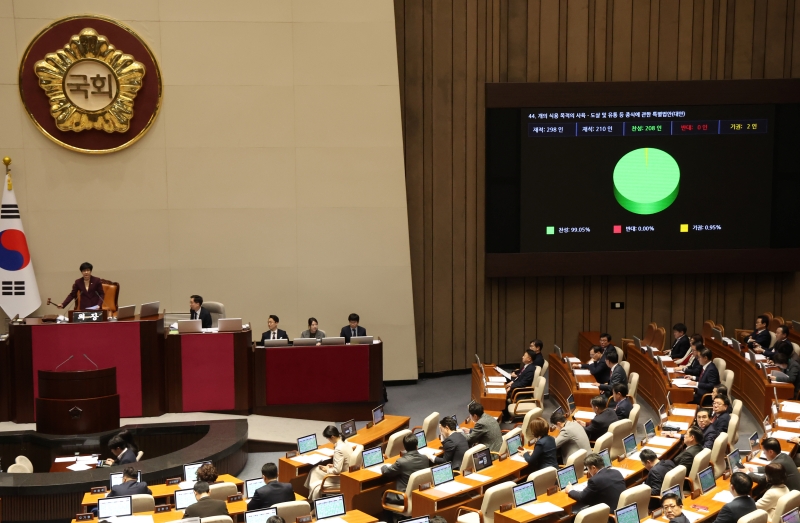
The National Assembly in a plenary session on Jan. 9, 2024, passes the Special Act on the Termination of Breeding, Slaughter, and Distribution of Dogs for Consumption. (Yonhap News)
Despite ongoing debate over legal status, institutional progress has seen progress in select areas. The most emblematic case is the consumption of dog meat.
Passed by the National Assembly in January 2024, the Special Act on the Termination of Breeding, Slaughter, and Distribution of Dogs for Consumption from February next year will ban the breeding, slaughter and distribution of dogs for meat consumption. As of Feb. 9 last year, 623 (40%) of 1,537 dog breeding farms had been closed.
The exhibition of animals is also changing. In 2022, the passage of a comprehensive revision to the Act on the Management of Zoos and Aquariums shifted the system for facilities for such displays from one of registration to that of licensing. The amendment took effect in December 2023.
Also in December that year, the marine mammal family cetacean was designated a "species prohibited from being kept for viewing purposes," thus banning aquariums from bringing in new cetaceans. Facilities other than zoos were also prohibited from displaying wild animals, with zoos limited to bringing them only for research and educational purposes.
The improvement of animal welfare also includes prohibition of activities inducing stress in animals such as mounting.
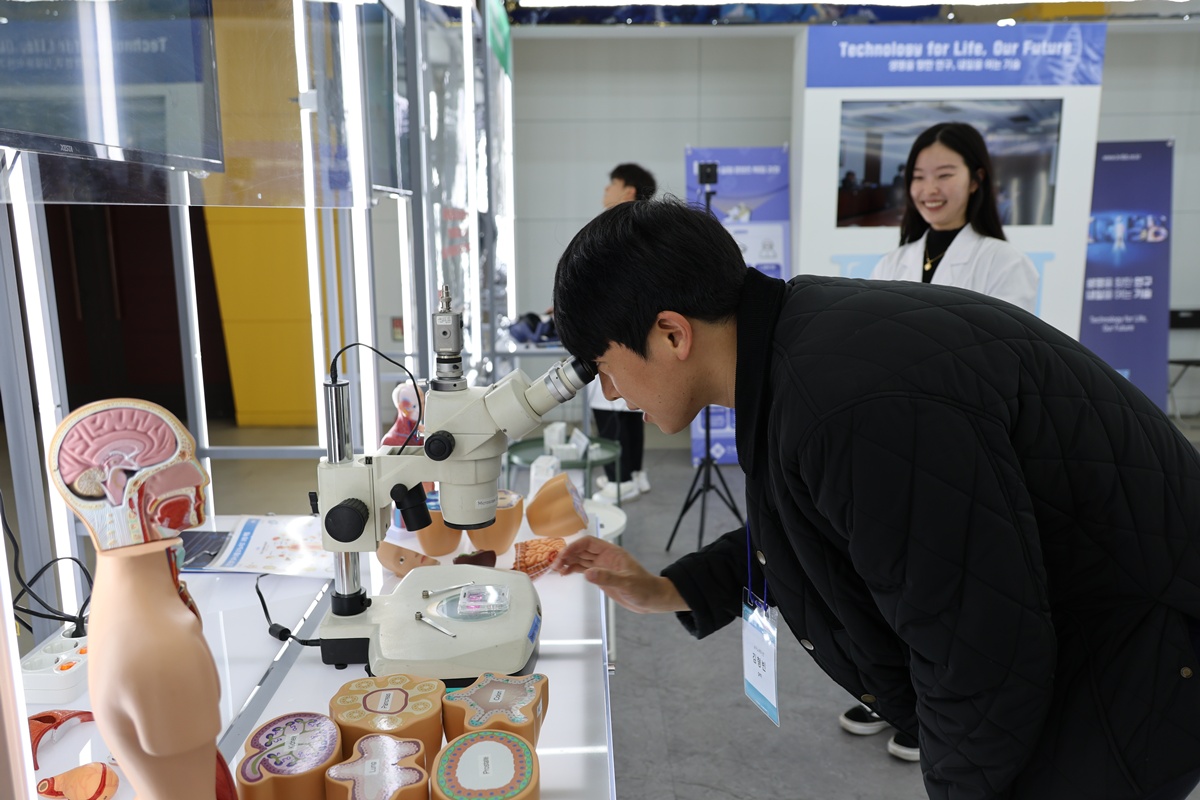
A visitor on Oct. 20, 2023, observes human organoids on display at an expo marking the 50th anniversary of the commercial application of technology at Daedeok Convention Center in Daejeon's Yuseong-gu District. Organoids are three-dimensional cellular structures created via the use of stem cells and other materials to resemble real organs and could emerge as next-generation alternatives to replace animal testing. (Yonhap News)
In animal testing, a parallel approach of investment in alternative technologies and using ethical controls has been adopted instead of a blanket ban. In June last year, the Ministry of Trade, Industry and Energy, Ministry of Science and ICT, and Ministry of Health and Welfare jointly launched a council on assessing the effectiveness of advanced biopharmaceutical and non-clinical technologies and dissemination of a project for developing relevant know-how and items.
The focus now is on helping the development of alternative methods to replace animal testing such as the microphysiological system.
In January this year, the Ministry of Agriculture, Food and Rural Affairs released a guide to devising animal testing to help researchers conduct ethical experiments that minimize animal suffering, thus raising awareness of ethics in the field.
The text of Article 98 remains unchanged but the social foundation and the environment that this provision operates in have shifted. Thus the language of public policy toward animals is shifting from how to use to how to coexist with them.
kimhyelin211@korea.kr