- 한국어
- English
- 日本語
- 中文
- العربية
- Español
- Français
- Deutsch
- Pусский
- Tiếng Việt
- Indonesian
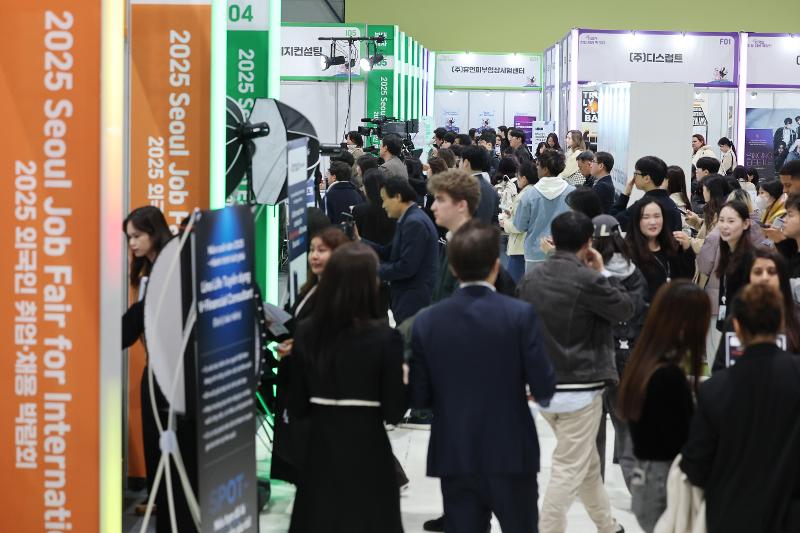
The Korea Employment Information Service on April 30 released a report on employment trends this year saying the number of foreign workers aged 15 or older was 1,109,000 as of May last year. Shown are job seekers on Nov. 20, 2025, at the Seoul Job Fair for Internationals held at SETEC (Seoul Trade Exhibition and Convention) in Seoul's Gangnam-gu District. (Yonhap News)
By Margareth Theresia
As the number of expats has steadily increased since the COVID-19 pandemic, that of foreign workers is also rising.
The Korea Employment Information Service on April 30 released a report on employment trends this year saying the number of employed expats aged 15 or older was 1,109,000 as of May last year.
The labor participation rate for foreign residents rose 1.4% percentage points to 70% year on year, while employment rate grew eight-tenths of a point to 65.5%.
By age group, those in their 30s accounted for the largest percentage at 33.2%, followed by the 15–29 demographic at 25.7%, 40-somethings 18.7%, 50-somethings 13.5% and 60 and older 8.9%.
By sector, 44.9% of foreign workers were in mining and manufacturing. From 2023 to last year, an analysis showed that the number of such laborers greatly rose in agriculture, forestry and fisheries; mining and manufacturing; and wholesale, retail, accommodations, and food service.
The number of those working on student visas (D-2, D-4-1 or D-4-7) surged 71.8% from 2024 to 56,000.
Amid the rising number of foreign workers, efforts are going toward streamlining the residency system to attract talent from abroad and help them settle in the country.
The Ministry of Justice on May 4 announced eight proposals that it adopted at the third consultative meeting on visa and stay policy on April 24.
First, the ministry eased visa requirements for those on the D-4 (student) visa for study at Sura School, which teaches Korean cooking and is designated by the Ministry of Agriculture, Food and Rural Affairs.
Digital nomads who enter Jeju Island visa free for "workcation" can triple their period of stay from 30 to 90 days if they receive a recommendation from the Jeju governor.
Outstanding foreign nationals who completed education or certification abroad are also exempt from work experience requirements for the professional worker visa (E-7-1). The Korea Chamber of Commerce and Industry received the authority to grant them employment recommendations.
margareth@korea.kr