- 한국어
- English
- 日本語
- 中文
- العربية
- Español
- Français
- Deutsch
- Pусский
- Tiếng Việt
- Indonesian
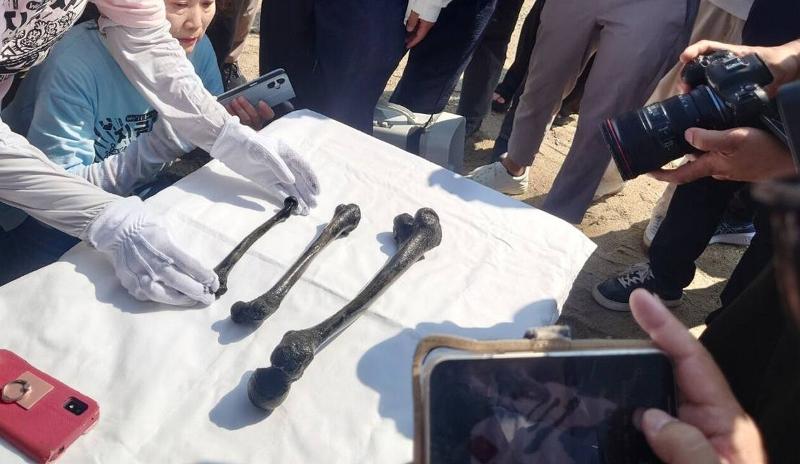
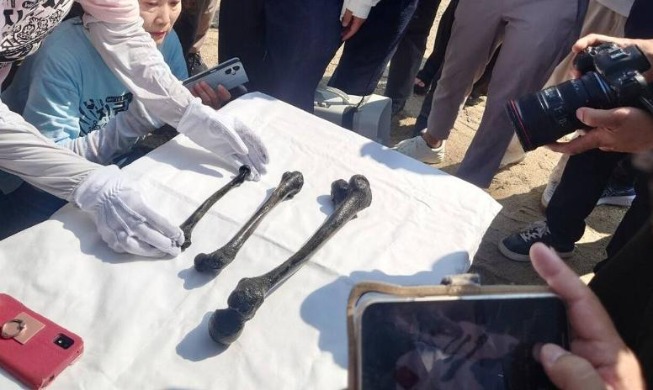
A Japanese civic group that honors the victims of the 1942 flooding of the Chosei coal mine in Ube, Yamaguchi Prefecture, on the Japanese island of Honshu on Aug. 25 announced its discovery of what appears to be the femur bones of a victim in an underwater study. (Korean Buddhist Avalokitesvara Order)
By Kang Gahui
A joint government investigation with Japan has launched DNA analysis to identify the remains of bodies excavated from the Chosei coal mine in Ube, Yamaguchi Prefecture, on the Japanese island of Honshu.
The flooding of the mine in 1942 killed nearly 200 laborers, mostly Koreans forced to work there.
The Ministry of Foreign Affairs in Seoul on May 18 said, "We will proceed with DNA analysis of the remains found at the Chosei Coal Mine in August last year and February this year."
Since their bilateral summit in Japan's Nara Prefecture in January, Seoul and Tokyo have held working-level consultations between diplomatic authorities on specific procedures and methods for DNA testing.
Cheong Wa Dae said, "The decision to cooperate in DNA analysis of the remains found at the Chosei Coal Mine is a meaningful step forward to resolving historical issues."
In 1942, a tunnel collapse at the undersea mine killed 136 Korean workers forced to work there and 47 Japanese. Four sets of human remains were discovered in August last year by a diving survey led by a Japanese civic group, and another was found in February this year.
kgh89@korea.kr