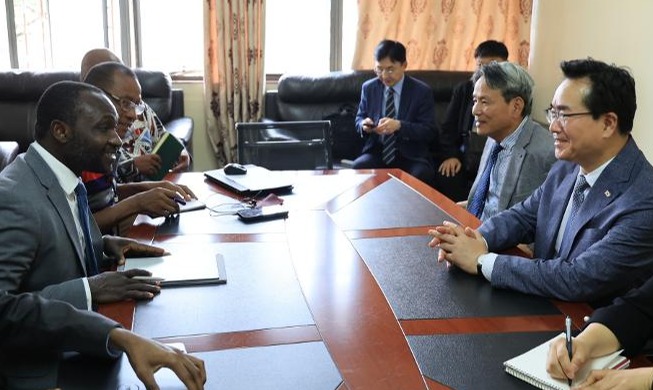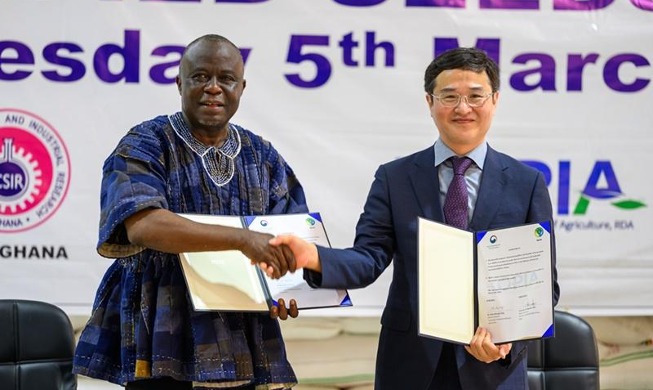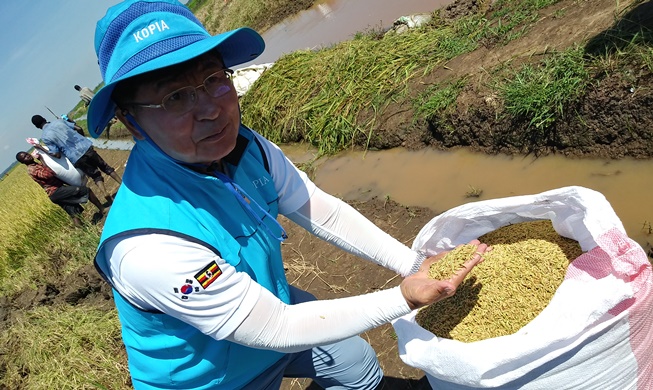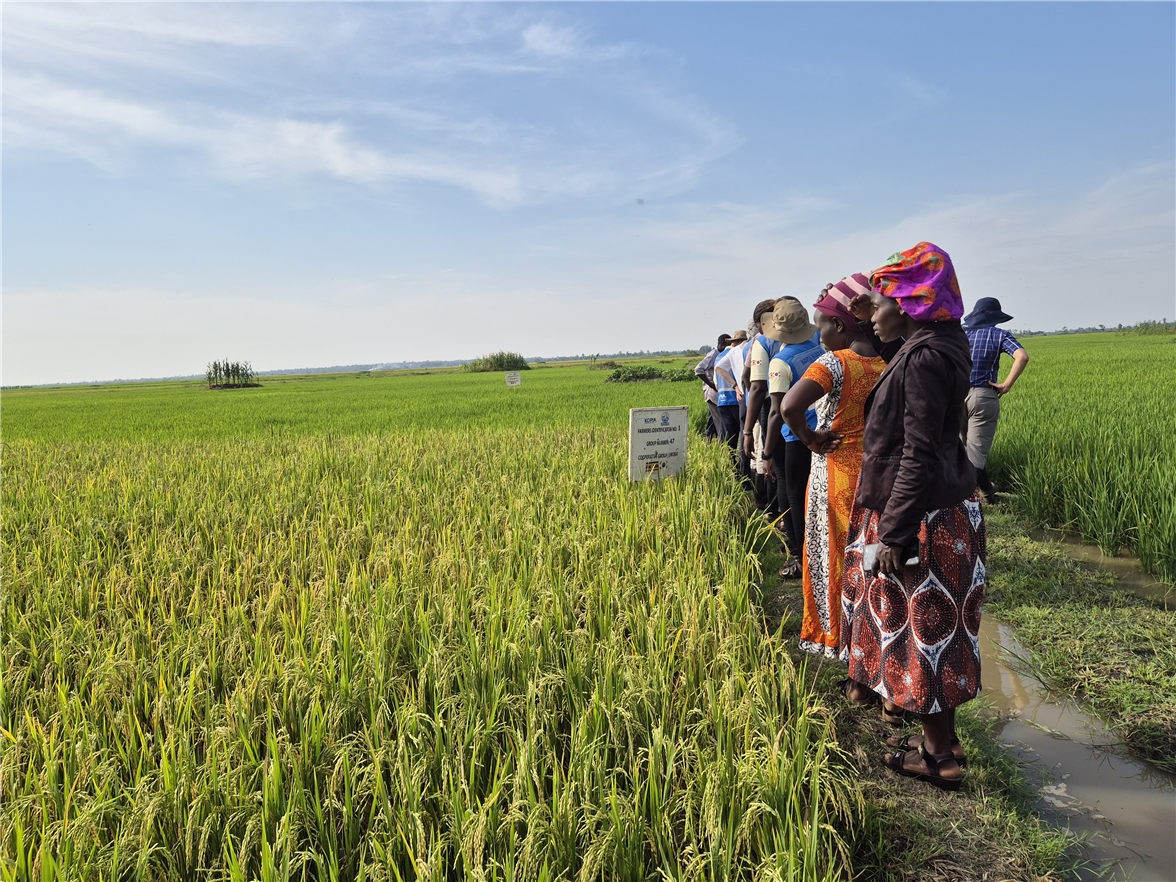
Marking its third year, the K-Rice Belt project last year produced 6,365 tons of high-quality, high-yield rice seeds in seven African countries. Shown is training for farmers in Uganda. (Ministry of Agriculture, Food and Rural Affairs)
By Margareth Theresia
K-Rice Belt, an official development assistance (ODA) project in agriculture, is helping Africa fight food shortages.
The program has more than doubled harvests from conventional farming methods and the seeds planted in Africa are assisting the fight there against hunger.
The Ministry of Agriculture, Food and Rural Affairs and the Rural Development Administration on May 22 said the initiative, now in its third year, has produced 6,365 tons of high-quality, high-yield rice seeds in seven African countries, 34% more than its initial goal of 4,752.
Uganda had the highest output with 3,670 tons, followed by Ghana with 739, Guinea 723, Senegal 587, Gambia 431, Kenya 155 and Cameroon 60.
Production has surged every year from 2,321 tons in 2023 to 3,562 in 2024 and 6,365 last year, yielding 12,248 over the past three years.
The average harvest per hectare last year was 4.6 tons, more than double that of the yield in Africa of 2.2 and 15% more than the average of four last year.
The ministry said such data demonstrates the high productivity and quality competitiveness of Korean rice seeds in Africa, projecting demand for such seeds to rise on the continent.
K-Rice Belt is a Korean-style agricultural ODA project that boosts food security in African countries with weak rice production bases that raises food security and helps establish a stable production base by producing and distributing high-quality, high-yield Korean rice seeds.
The addition of Sierra Leone to the program this year raised the number of participating countries to eight.
margareth@korea.kr