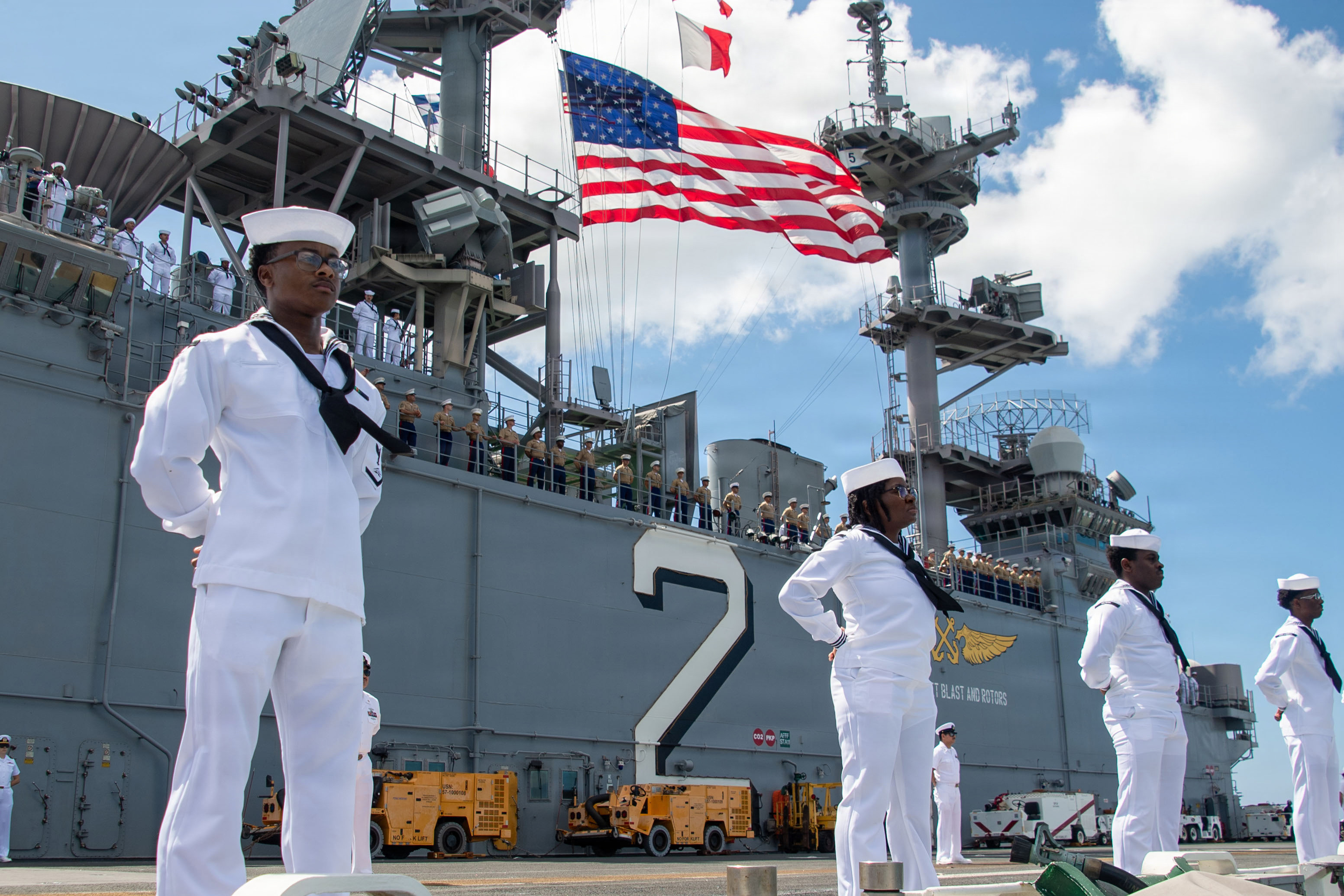
U.S. Navy and Marine personnel on June 21 line up on the amphibious assault ship USS Essex as it arrives at the port of Pearl Harbor, Hawaii, to participate in the Rim of the Pacific exercise. (U.S. Department of War)
By Margareth Theresia
This year's Rim of the Pacific (RIMPAC) exercise, the world's largest multinational naval drill, began on June 24 in Hawaii.
The U.S. Department of War said the 30th edition of the operation officially began with the opening ceremony in Hawaii that day.
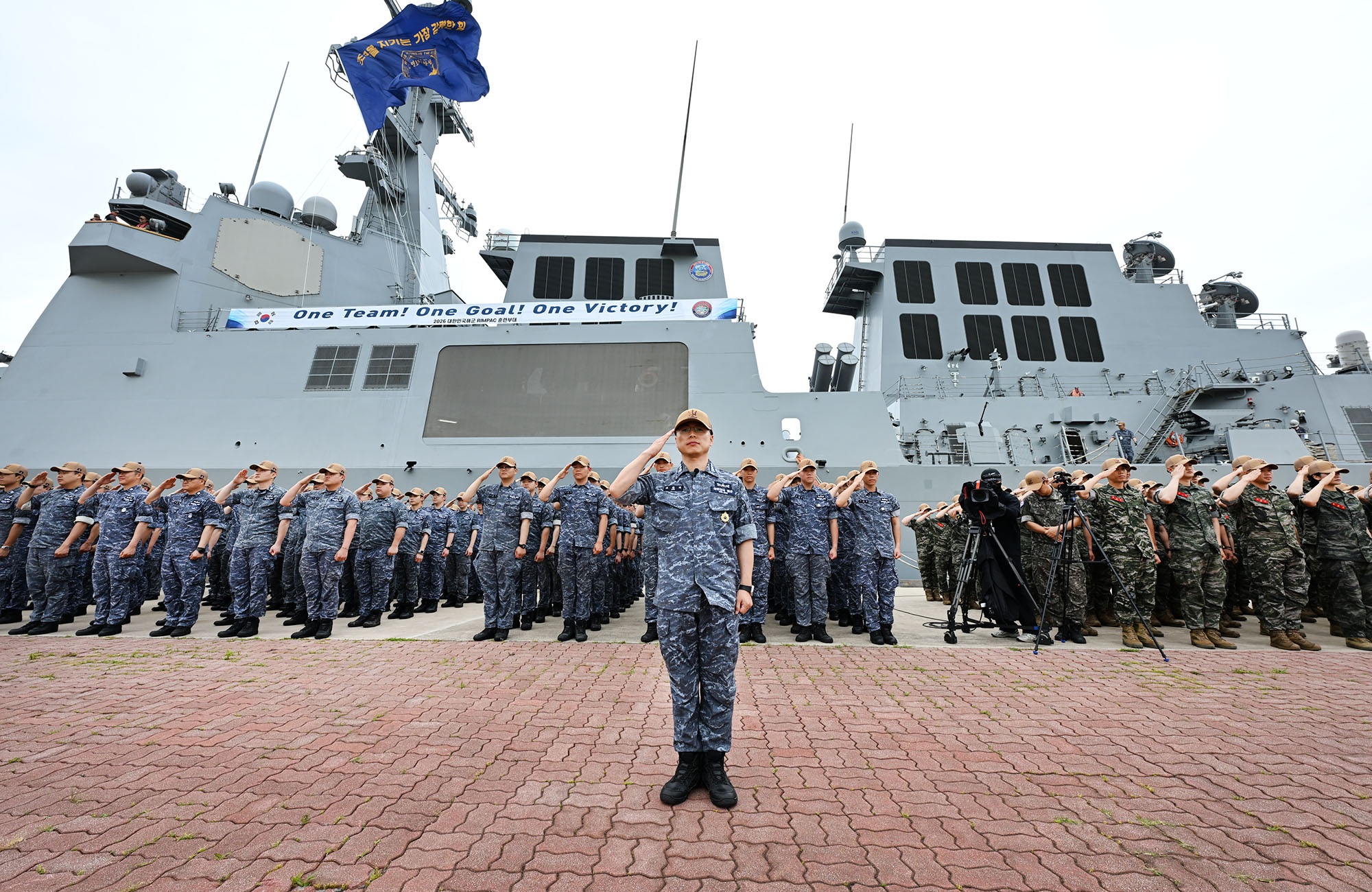
The Republic of Korea Navy has assumed the role of commander of the Combined Forces Maritime Component for the first time since the country joined RIMPAC in 1990. Rear Admiral In-Ho Kim, who leads the Navy's Mobile Fleet Command, will head naval forces during this exercise.
The Navy's Pacific Rim Training Task Force comprises about 700 naval and Marine personnel, as well as the 8,200-ton (metric) Aegis destroyer Jeongjo the Great, 3,000-ton submarine Dosan Ahn Chang-ho, 4,900-ton amphibious assault ship Cheon Jabong, 3,100-ton frigate Daejeon, P-8A maritime patrol aircraft, AW-159 maritime operations helicopters and Korean-made amphibious assault vehicles.
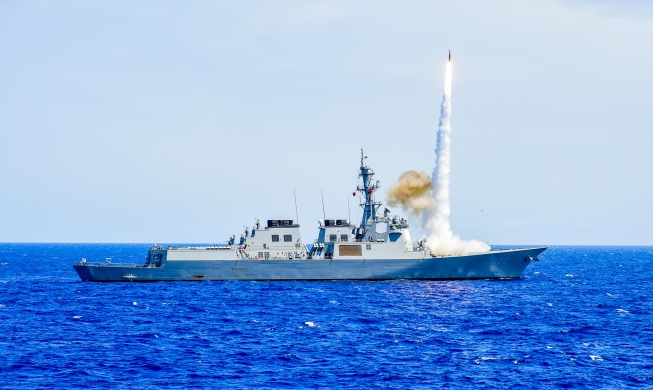
Korea's Aegis destroyer Jeongjo the Great on June 1 left Jeju Island to participate in this year's Rim of the Pacific exercise. (ROK Navy)
This year's RIMPAC will last through July 31 in waters near Hawaii. About 30 amphibious vessels, five submarines, 15 ground force units, over 206 aircraft and about 30,000 personnel from 30 countries will participate.
Launched in 1971, RIMPAC is a multinational naval exercise held every two years. Participating countries conduct joint training under a variety of scenarios with the objective of ensuring the safety of sea transportation routes, maintaining stability in the Indo-Pacific region and enhancing interoperability among allied forces.
margareth@korea.kr
![[Korea in photos] First 3,000-ton sub built with domestic technology ready for duty](/upload/content/image/2b0f770bfa0e476498eeaafd6890696b_20210813163806.jpg)