- 한국어
- English
- 日本語
- 中文
- العربية
- Español
- Français
- Deutsch
- Pусский
- Tiếng Việt
- Indonesian
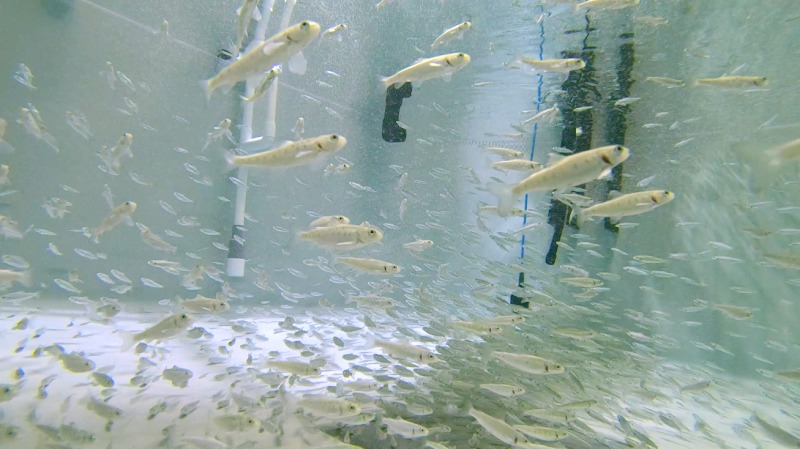
These salmon are grown in the fry production facility of Eco Aqua Farm in Busan's Gijang-gun County.
By Charles Audouion
Photos = Eco Aquafarm
Most salmon consumed in Korea is imported, with imports of the fish last year estimated at over 44,000 metric tons.
From the second half of this year, however, homegrown salmon will be available.
Eco Aquafarm, the country's largest land-based Atlantic salmon farm, was founded in 2024 in Busan's Gijang-gun County as part of the Smart Aquaculture Cluster project led by the Ministry of Oceans and Fisheries. GS Engineering & Construction operates the facility as a subsidiary.
Korea.net on Aug. 13 visited the farm, which uses a huge recirculating aquaculture system (RAS). Instead of discarding the water used by the fish, RAS purifies it in a multi-stage process before returning it to the fish tanks, thus recycling up to 99% of the water.
This is the nation's first facility to utilize RAS of this kind.
Dong Sang Jun, head of the farm's business development team, said RAS plays the role of a water purifier.
"A drum filter removes solids and debris while a biofilter eliminates toxic substances such as ammonia," he said. "The water is then treated with ultraviolet (UV) light and ozone to eliminate microorganisms and bacteria that can cause disease. Once the carbon dioxide is removed, oxygen is added before the purified water is recirculated back into the fish tanks."
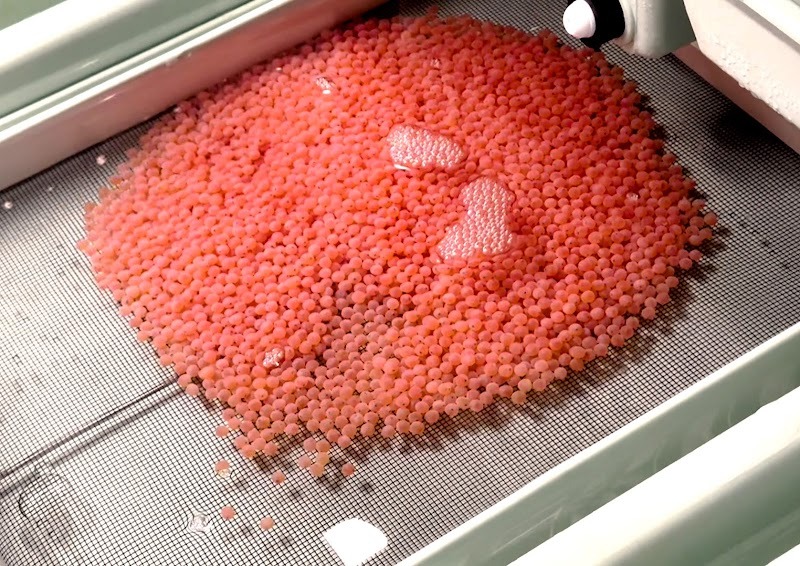
These are eyed eggs, or eggs in which the developing eyes are visible, harvested at Eco Aquafarm in March 2025.
The farm raises salmon roe imported from Iceland until maturity, a process that takes around two years.
The first stage of the farming process is hatching. Some 40,000 salmon roe are raised each quarter at hatcheries that replicate the winter conditions of Norway, maintaining low water temperatures of 4–8 degrees Celsius and a dark environment.
Once the eggs have fully absorbed their yolk sacs after about three months, the fry are transferred to a specialized cultivation room and fed for the first time.
After growing to 30 g each, the fry are transferred to the smolt production room to undergo a seawater acclimation process.
After growing to about 450 g, they are transferred to an intermediate cultivation facility filled with seawater, where they grow to about 2 kg over about six months. After maturing to the market size of 5 kg in the adult tanks, they are shipped.
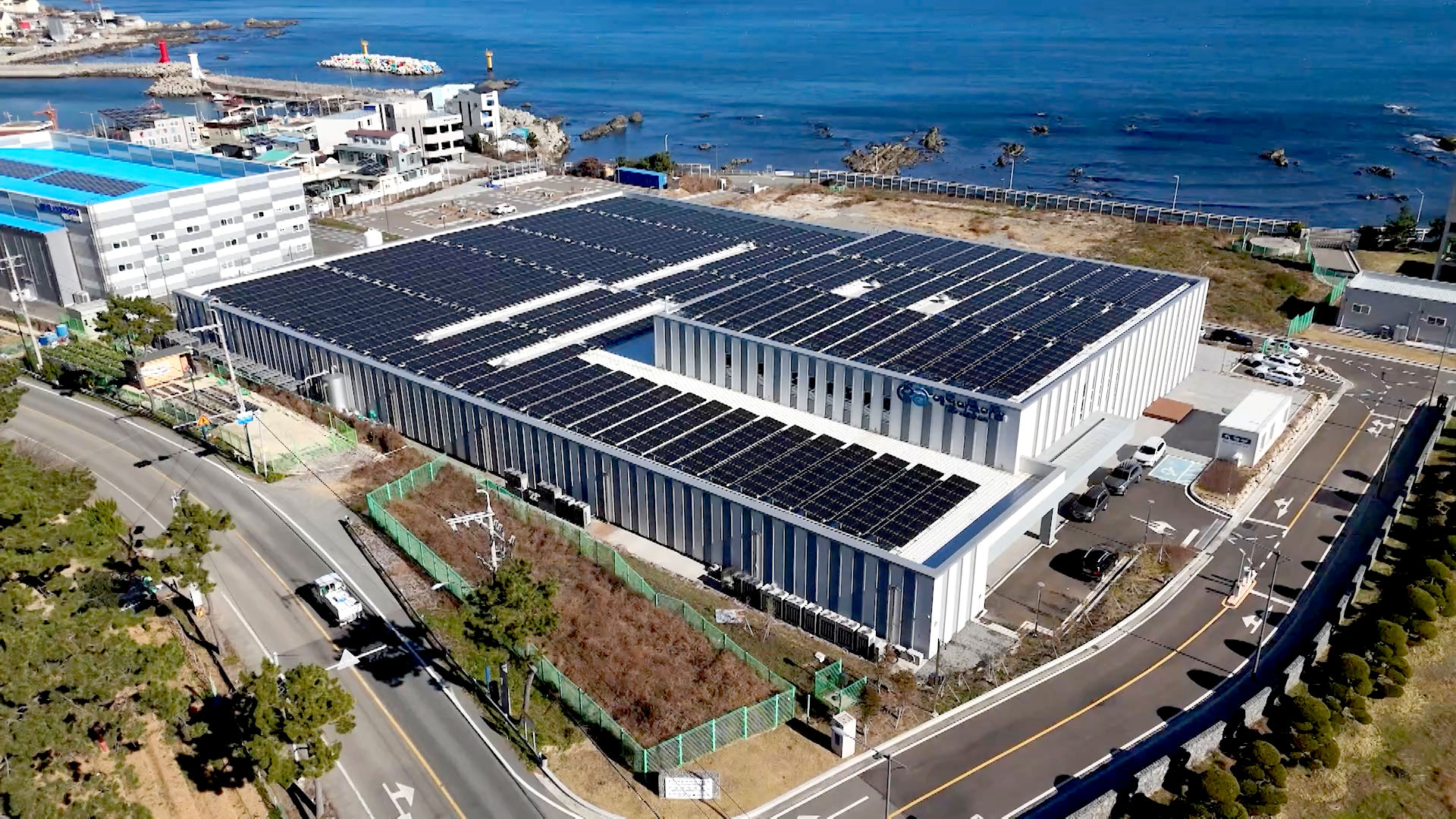
This is an aerial view of Eco Aquafarm, the nation's largest Atlantic salmon farm established in December 2024, in Busan's Gijang-gun County.
Corporations in Korea are generally prohibited from entering the fisheries industry. Yet amendments to relevant laws in 2019 have allowed such companies to pursue land-based aquaculture, which requires large facility investment and cutting-edge technology.
On why to invest in salmon breeding, the farm's head biologist Min Hojune said, "Salmon is a species that grows quickly, is highly profitable and consumed in vast quantities in Korea."
While certain land-based salmon farms in Europe raise fry on land before transferring them to the sea, Eco Aquafarm manages the entire process on land.
"This business isn't simply a venture eyeing sales or profits but an industry to prepare us for the future," Dong said. "As conventional offshore cage aquaculture faces limitations such as marine pollution and disease, the crucial challenge going forward is who can secure land-based aquaculture technology and how fast."
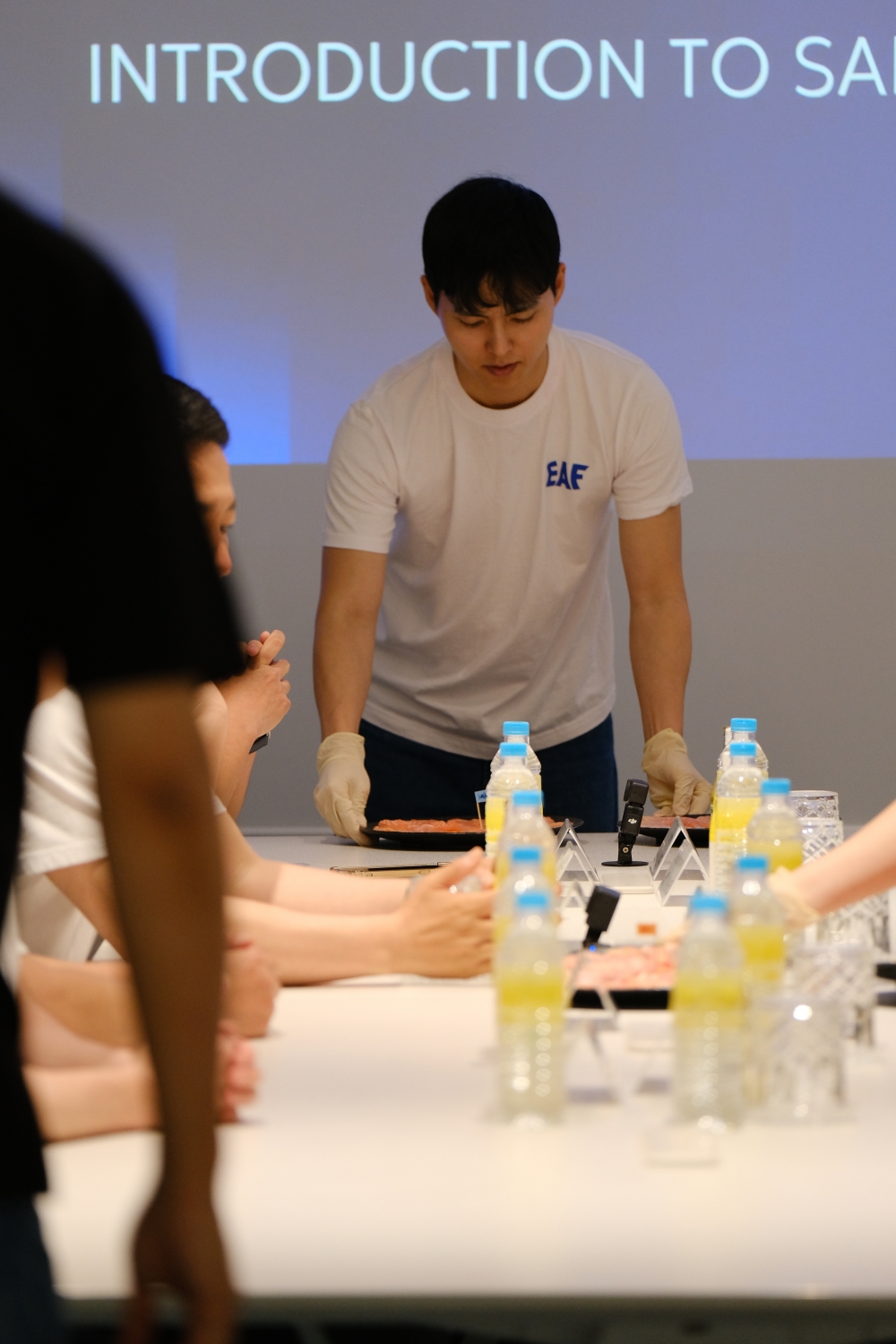
Eco Aquafarm employees in May prepare salmon raised at the farm for a tasting.
The farm said the biggest advantage of homegrown salmon is that shorter distribution times allow it to reach consumers fresher and faster than imports.
Dong said, "Imported salmon takes considerable time to reach consumers, but salmon produced here can be processed and distributed quickly after harvest, allowing noticeably greater freshness in taste."
But domestic production alone does not yet guarantee price competitiveness.
"Land-based aquaculture requires significant investment in infrastructure and technology, which inevitably drives up the price of initial products," Dong said. "For now, our focus is on aquaculture and facility technologies, but while gaining production cycle experience, we plan to identify cost-saving opportunities and lower production expenses."
From its first harvest, Eco Aquafarm has launched a Chuseok (Korean Thanksgiving) gift set of salmon. The plan is to distribute and sell around 500 metric tons of the fish every year.
Smart aquaculture infrastructure developed with ministry support is also expanding from Busan to other regions.
A 1,000-ton Atlantic salmon farm is being developed in Pohang, Gyeongsangbuk-do Province, and Dongwon Industries is preparing a massive 10,000-ton land-based aquaculture facility in Yangyang-gun County, Gangwon-do Province.
The company is considering using cold deep-sea water to reduce the cooling costs needed for salmon farming.
caudouin@korea.kr