- 한국어
- English
- 日本語
- 中文
- العربية
- Español
- Français
- Deutsch
- Pусский
- Tiếng Việt
- Indonesian
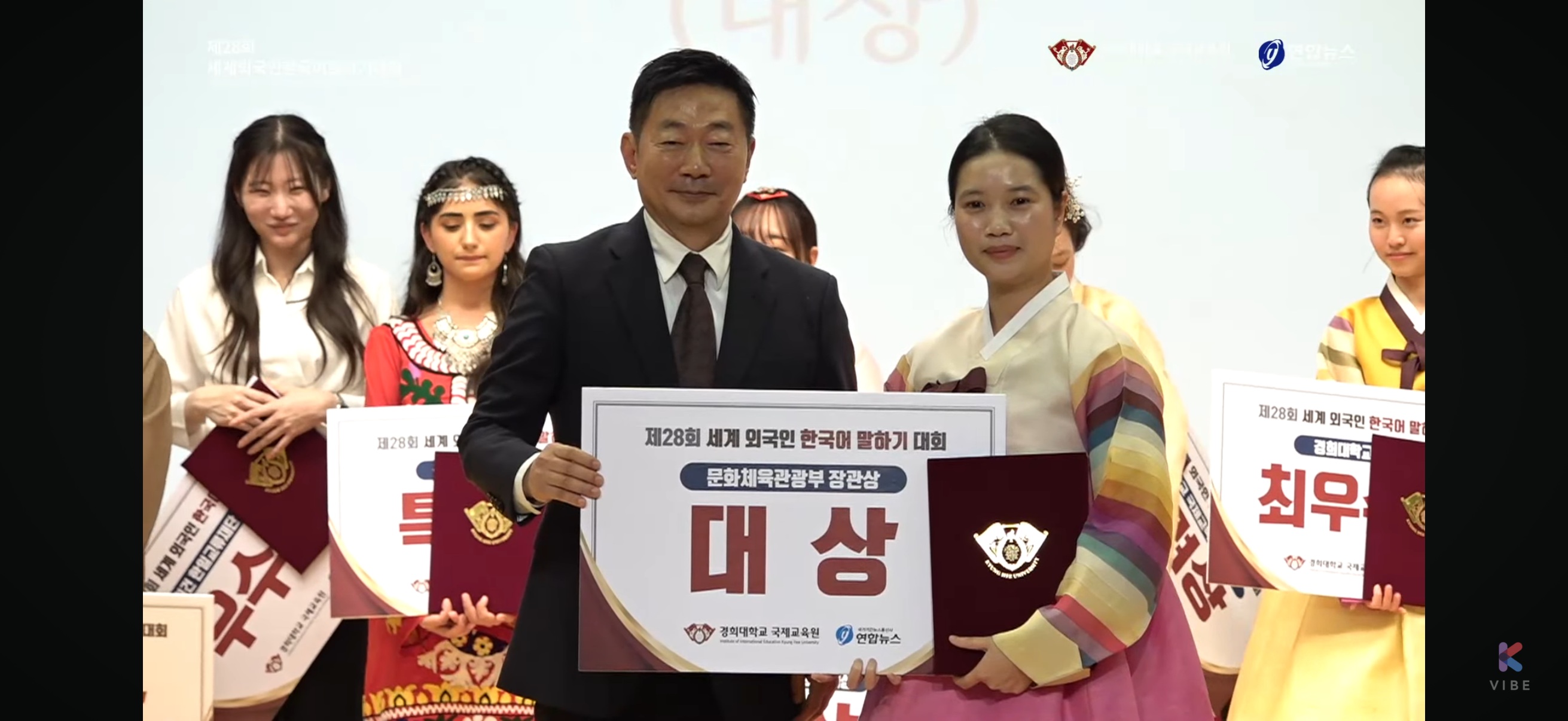
Vietnamese student Tran Thi Huong Ly (right) on Oct. 15 poses for a photo after winning the grand prize of the World Korean Language Speech Contest for Foreigners at Kyung Hee University in Seoul's Dongdaemun-gu District.
By Uyen Nguyen
Photos = Tran Thi Huong Ly
"Why do Koreans keep using -geot gatda, which implies speculation, even when they're stating a clear fact?"
This question puzzled Tran Thi Huong Ly, 25, while learning Korean. The Vietnamese student noticed how Koreans seemed to avoid making definitive expressions and spoke cautiously to avoid hurting other people's feelings. In the expression -geot gatda, which means "it seems like" or "I think," she discovered a mild flavor of the language.
Her speech titled "My Own Mild Flavor," which explored this expression, won the grand prize on Oct. 15 at this year's World Korean Language Speech Contest for Foreigners at Kyung Hee University in Seoul's Dongdaemun-gu District.
Co-hosted by Kyung Hee University's Institute of International Education and Yonhap News, the competition saw 16 of its 1,046 applicants from 16 of the 35 countries advance to the finals.
The following are excerpts from a Korea.net email interview of Tran on Oct. 16 on how her passion for Korean led to personal growth and achievement.
Briefly introduce yourself and how you grew interested in learning Korean.
My name is Tran Thi Huong Ly from Vietnam. I'm pursuing a master's in teaching Korean as a foreign language at Yeungnam University. I also teach Korean at the Korean Language Institute of Kyungil University.
As a child, I grew interested in K-pop groups like EXO and Girls' Generation. I later watched K-dramas such as "High Kick" and "Guardian: The Lonely and Great God," which naturally raised my interest in the Korean language and culture.
What did you focus on most when preparing for the competition?
For this competition, I gave the speech "My Own Mild Flavor" under the theme "The Flavor of the Korean Language." I focused on the expression -geot gatda, which Koreans often use in daily conversations. This is because, while learning and teaching Korean, I often noticed that non-native students found this expression difficult to understand.
In preparing for my speech, I focused not only on fluency but also content and delivery method so that the audience could easily understand and relate to my message.
What methods of study do you most recommend to foreign learners of Korean?
I studied English for many years before I began learning Korean. At first, I tried the same learning methods I used for English for use in learning Korean, but I soon realized the limits of this approach. I found out that to truly understand Korean requires learning not only the language but also Korean culture and ways of thinking.
Mastery of vocabulary and grammar is possible with enough time and effort, but properly using them in real life is difficult without understanding of the cultural context. I recommend that students of Korean actively experience Korean culture while studying the language.
The competition attracted contestants the world over. What impressed you most as you heard their speeches?
I was deeply impressed by how confidently people from various backgrounds shared their personal stories in Korean. In the past, interest in learning the language was restricted to Asian countries such as China, Japan and Vietnam. But today, people from a far wider range of countries are learning it. As a Korean-language educator, I felt a sense of pride to witness this change firsthand.
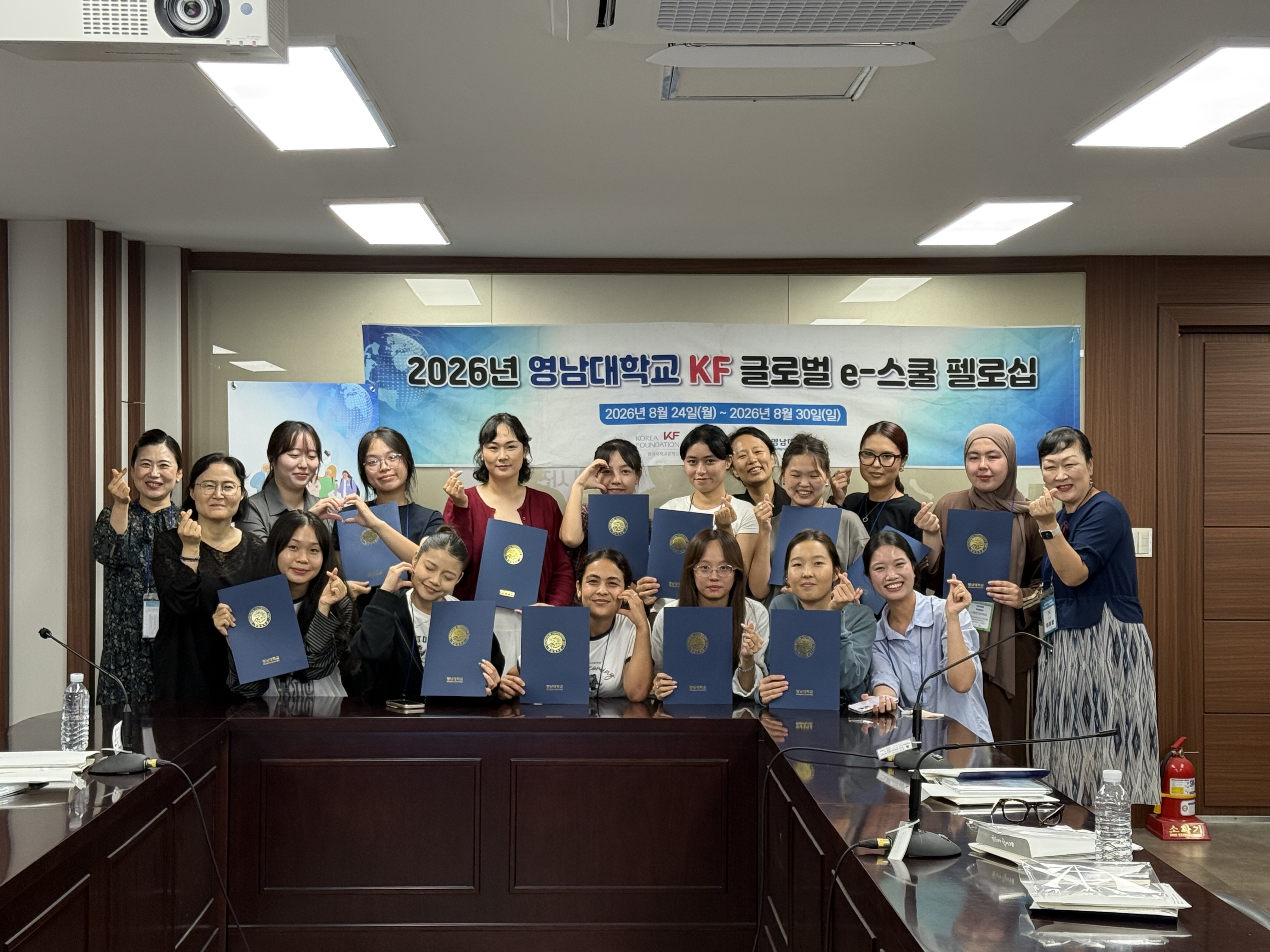
Tran Thi Huong Ly (sitting first on right in front row) on Aug. 29 poses for a group photo as a teaching assistant at the Korea Foundation's Global e-School Fellowship at Yeungnam University in Gyeongsan, Gyeongsangbuk-do Province.
Going from student to instructor of Korean, why did you pursue this path and how did learning the language give you academic and career opportunities?
In November 2019, I began studying Level 1 Korean at Daegu University's Korean Language Education Center. Over the following year, I vividly experienced the joys and challenges faced by international students while learning Korean. Whenever my friends said Korean is difficult but fun, I wondered what exactly was hard or enjoyable.
I wanted to easily explain the natural linguistic nuances of Koreans from the perspective of foreign learners of the language. Seeing teachers and professors guide students with patience and care also inspired me to pursue my dream of becoming a Korean-language educator.
Korean is more than just a foreign language to me -- it's a "soul" language that's helped me discover my career path and identity. Initially, I studied hard to earn a scholarship but my confidence grew as I got good grades. After graduating at the top of my class from Daegu University with a degree in Korean-language education, I enrolled in graduate studies at Yeungnam University for more in-depth study of the language.
Thanks to being a teaching assistant at the Korea Foundation's Global e-School, participation in on-campus mentoring programs, and educational activities at the Korean Language and Culture Institute, I felt the fulfillment of helping fellow international students. I also gained the firm conviction to pursue a career in Korean-language education.
What are your goals and what advice do you have for students who want to study in Korea?
I'm in my fourth semester of a master's program and plan to begin the Ph.D. program at Yeungnam University in March. My goal is to research Korean-language education that offers practical support to international students. Over the long term, I hope to teach Korean at a university in either Korea or Vietnam and contribute to bilateral exchange and cooperation.
When I first came to Korea, I felt both excited and afraid since I didn't know anyone. I experienced difficult times like the COVID-19 pandemic, but persevered and eventually found new opportunities through hard work. I want to encourage international students in Korea that even in tough times, they can eventually see a brilliant light if they consistently work toward their goals.
uyen81@korea.kr
