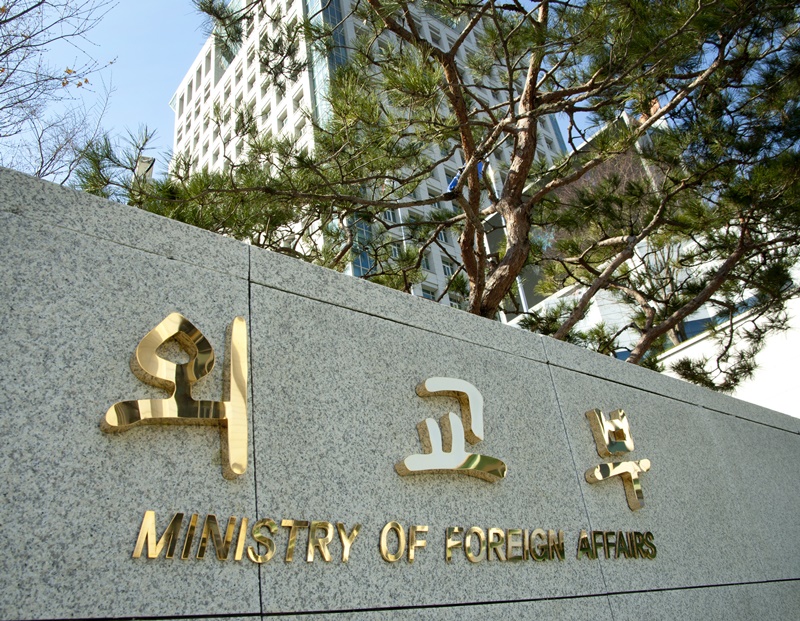
The Ministry of Foreign Affairs on Nov. 13 released its third basic plan for public diplomacy to take effect from 2026-30 at the 10th meeting of its public diplomacy committee. (Ministry of Foreign Affairs)
By Kim Hyelin
The direction of the country's public diplomacy over the next five years has been released.
The Ministry of Foreign Affairs on Nov. 13 said the 10th meeting of its public diplomacy committee scrapped the second basic plan for public diplomacy (2023-27) early and approved the third to take effect from 2026-30.
The new plan is in response to the rising necessity for an overhaul of public diplomacy strategy amid the changing international environment like the intensifying competition between the U.S. and China, rise of the Global South (non-Western emerging and developing countries), and expansion of transnational issues like climate change and artificial intelligence (AI).
The ministry said its strategy also reflected the growing importance of accurately disseminating information on Korea amid the spread of false and fabricated data, as well as higher demand for convergent public diplomacy that integrates culture, economy and technology.
Under the vision "Contributing to Global Growth and Peace through the K-initiative with the People," it set the following goals: promoting national interests based on the initiative, reinforcing the country's standing as a globally responsible power, and launch of an ecosystem for integrative and systematic public diplomacy.
The key change in the third plan was the expansion of public diplomacy's scope from promoting Korea to responding to global issues and industry and technology.
Other features included higher participation by non-state players such as youth, local governments, ethnic Koreans overseas and businesses as well as augmentation of digital public diplomacy using immersive content using AI and augmented and virtual reality. Also added were raising Korea's role in tackling global challenges and tasks such as the climate crisis, supply chains and economic security.
The 11 main and 32 sub-tasks include deepening understanding of the K-initiative, advancing public diplomacy linked to industrial competitiveness, enhancing digital public diplomacy, reinforcing public diplomacy by nation and region, and raising civic participation in public diplomacy.
Key tasks include support for Korean studies and Korean-language education abroad; the launch of a system to respond to false and fabricated information; and stronger communication on policy with non-Western countries.
The plan is to boost policy efficiency by gradually raising the public diplomacy budget by 2030 and strengthening the cooperative system centered on overseas missions.
Other goals are to raise such a budget at least 6% per year and continue advancing the ministry's comprehensive data system for public diplomacy and expanding its network of overseas missions.
The ministry said, "Based on this basic plan, we will bolster cooperation between the public and private sectors, raise the people's capacity for public diplomacy and further boost opportunities for direct participation."
kimhyelin211@korea.kr