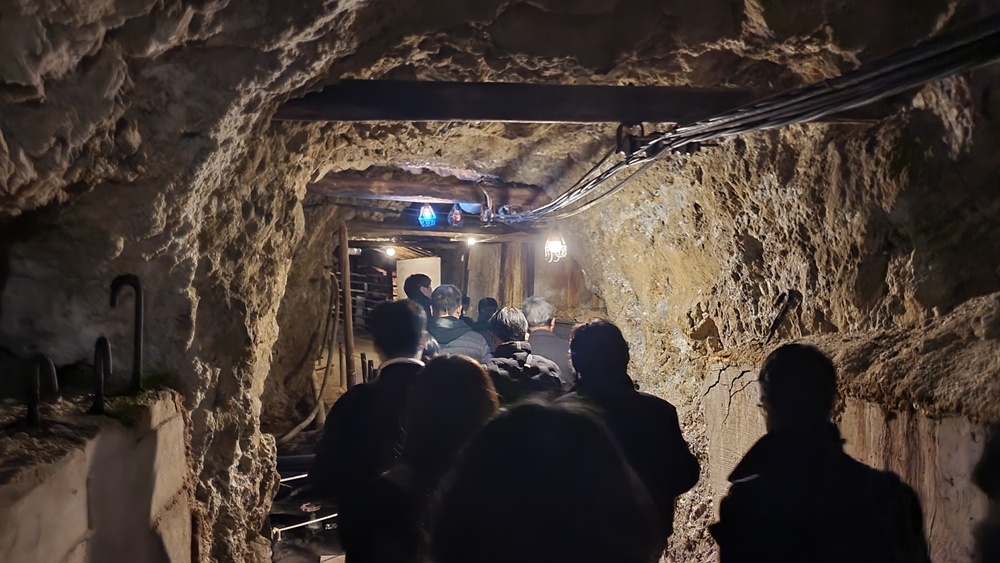
The Japanese government has again reneged on its pledges made in return for the inscription of gold mines on Sado Island as a UNESCO World Heritage Site. Shown are the relatives of Korean victims of forced labor at the mines on Nov. 25, 2024, touring a mine shaft after attending a memorial service at the former Korean dormitory site on the island off the coast of Japan's Niigata Prefecture. (Yonhap News)
By Jeon Misun
The Japanese government has again not implemented UNESCO's recommendation to reflect the entire history of gold mines on Sado Island, a site of forced labor by Koreans during Japanese colonial rule (1910-45) of the Korean Peninsula, even after the site's inscription as a World Heritage site.
In a spokesperson's statement on Japan's conservation report on the mines posted on the UNESCO World Heritage Centre, the Ministry of Foreign Affairs on Dec. 15 in Seoul blasted the omission of content on the forced labor issue.
While the report contained measures to carry out the eight recommendations of the UNESCO World Heritage Committee, it made no mention of the mines' full history like the forced mobilization of workers from Korea.
In response, the ministry urged Japan to faithfully put into practice the committee's decision, Tokyo's own pledges and bilateral agreements with Korea.
At the time of UNESCO inscription, the Japanese government pledged to work closely with Korea to remember all workers including Korean victims of forced labor, as well as improving how the site is exhibited and interpreted.
msjeon22@korea.kr