- 한국어
- English
- 日本語
- 中文
- العربية
- Español
- Français
- Deutsch
- Pусский
- Tiếng Việt
- Indonesian
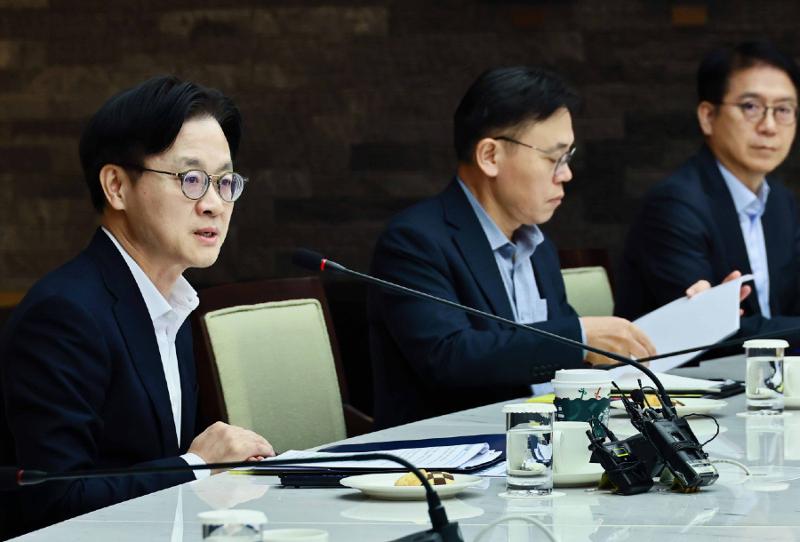
Minister of Trade, Industry and Resources Kim Jung-Kwan (left) on Dec. 22 chairs a meeting with CEOs on the restructuring of the petrochemical sector at the Korean Chamber of Commerce in Seoul's Jung-gu District. (Ministry of Trade, Industry and Resources)
By Yoon Sojung
The Ministry of Trade, Industry and Resources will expedite the transformation of the chemical industry into a high value-added and eco-friendly sector to raise its global ranking from fifth to fourth by 2030.
This was announced on Dec. 23 through the ministry's 2030 roadmap for the next-generation technological innovation of the domestic chemical industry at the launching ceremony of a chemical innovation alliance at Lotte Hotel Seoul in Seoul's Jung-gu District.
The recognition of urgency to transform general-purpose materials into high value-added products led to the formation of both the alliance and roadmap, as well as corporate efforts to streamline their facilities to raise next-generation competitiveness of the sector.
The gist of the alliance is to set up a "one-team" system to support the demand and supply sides from the early stage by linking core materials needed for future industries such as semiconductors and future vehicles with chemical companies.
The roadmap contains a strategy to raise Korea from fifth to fourth in the global chemical industry by 2030. To achieve this, the plan is to secure core materials and process technologies by advancing research and development (R&D) and infrastructure around three key pillars: transitioning to high value-added products, creating an eco-friendly environment and strengthening compliance with global environmental regulations.
Government support for advancement of technology and infrastructure based on artificial intelligence (AI) in the entire output process from material design and processing will seek to spread AI transformation in manufacturing within the chemical industry.
To devise the roadmap, the ministry had about 80 experts over six months take part in technological extraction and level analysis. After reviewing with research managers at petrochemical companies, they came up with 217 effective elemental technologies.
Based on marketability and level of technology acquisition, the technologies will fall into four categories -- short-term focus, long-term management, market development and performance expansion -- and support strategies will be customized.
"The roadmap announced today will serve as a catalyst for the crisis-ridden chemical sector so that it can transform into a high value-added industry," said Park Dong-il, the ministry's director general for industrial policy. "The ministry will do its best to support R&D and policy to raise the competitiveness of the sector's entire ecosystem."
arete@korea.kr