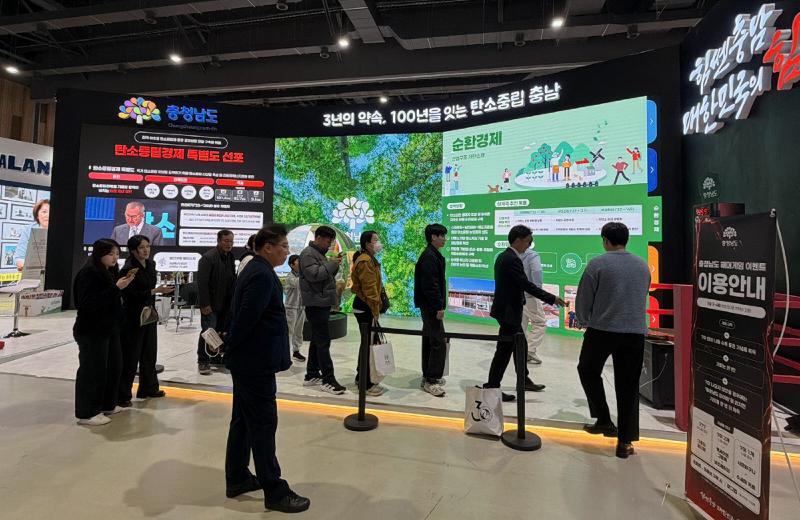
Chungcheongnam-do Province has led the way in carbon neutrality efforts in Asia since being the first local government in the region to join the Powering Past Coal Alliance in October 2018. Shown are visitors to the province's decarbonization-themed pavilion on Nov. 19, 2025, as part of the Korea Local Era Expo at the Ulsan Exhibition and Convention Center in Ulsan. (Chungcheongnam-do Province)
By Yoon Sojung
Black smoke from polluting factories that used to symbolize the nation's economic growth engine is being replaced with green innovation.
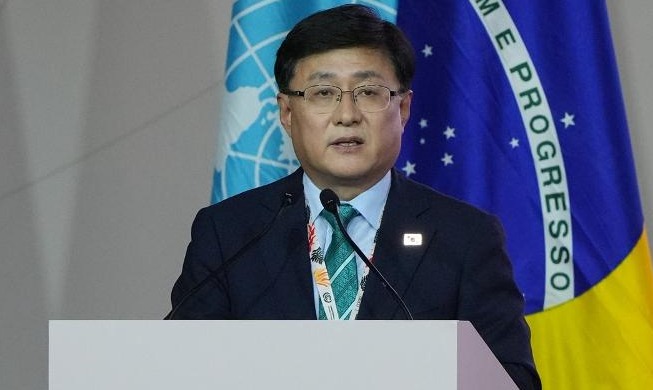
In November last year, the country officially announced its membership in the Powering Past Coal Alliance (PPCA) at the Conference of the Parties to the United Nations Framework Convention on Climate Change in Belem, Brazil. As the second Asian country after Singapore to join, Korea demonstrated its dedication to achieving a "great energy transformation" focused on carbon neutrality and renewable energy.
The PPCA comprises 62 countries including the U.S. and U.K. to promote the phase-out of coal-fired power generation.
Minister of Climate, Energy and Environment Kim Sungwhan said at the conference, "Our coal-fired power plant capacity ranks seventh worldwide but we will build no more such plants without equipment to reduce greenhouse gases as a result of our membership in the PPCA."
This resolution was underpinned by local government innovation, which tends to be faster than the central government. Eight local governments including the provinces of Chungcheongnam-do and Gyeonggi-do have joined the PPCA and seek to lay the basis for a roadmap to phase out coal.
Chungcheongnam-do, home to half of the country's 60 coal-fired power plants, was the first local government in Asia to join the PPCA in 2018. The province has since strived to foster alternative industries including energy transition and low-carbon industrial restructuring within the bigger framework of carbon neutrality.
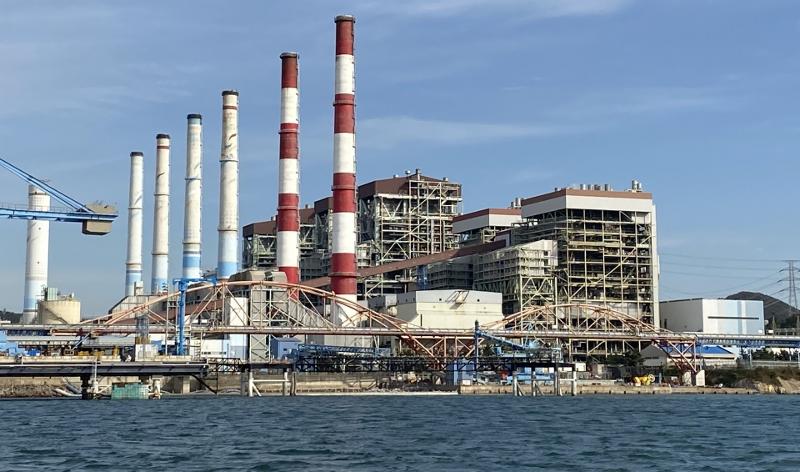
The phase-out of coal-fired power plants in Chungcheongnam-do Province in 2024 was honored as an exemplary case of carbon reduction by the Organisation for Economic Co-operation and Development. Shown are units 1 and 2 of the Boryeong thermal power plant complex in the province's city of Boryeong that were shut down early in December 2020.
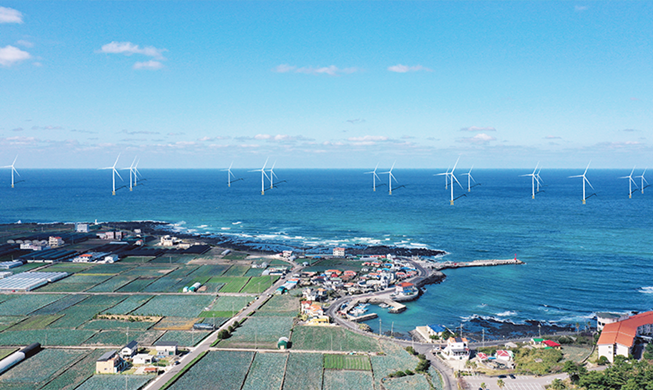
Since the early closure of two units at its Boryeong thermal power plant complex in late 2020, the province has rapidly reshaped its industrial structure toward a low-carbon basis by creating a hydrogen belt and offshore wind farms along the western coast. Its project "Just Transition" is designed to minimize the impact of the closure of coal-fired power plants on the province's industries and residents, and includes the enactment of a special act to support areas of the closed facilities and promote job stability and transfers.
These efforts have gained international recognition. In 2024, the Organisation for Economic Co-operation and Development named the province's efforts as a "practice example" in carbon reduction.
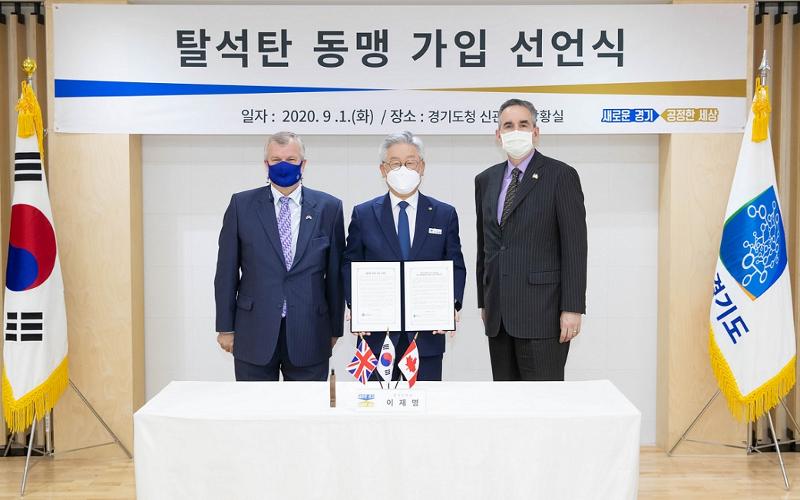
Gyeonggi-do Province has produced outstanding results in carbon reduction after joining the PPCA in September 2020. Shown are Gyeonggi-do Gov. (and future President) Lee Jae Myung (center) on Sept. 1, 2020, posing for photos with British Ambassador to Korea Simon Smith (left) and Canadian Ambassador Michael Danagher at the signing ceremony for PPCA entry at the provincial government's headquarters in Suwon, Gyeonggi-do. (Gyeonggi-do Province)
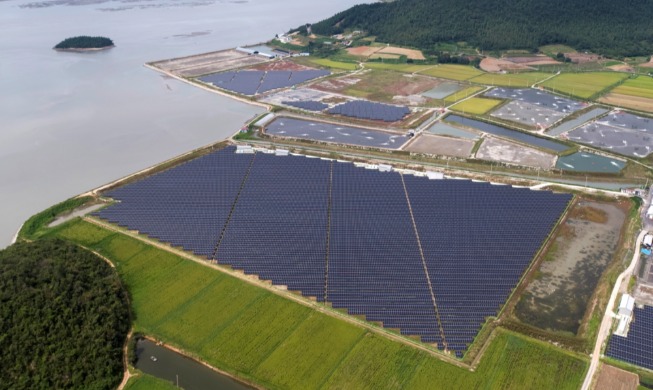
Since joining the PPCA in 2020, Gyeonggi-do Province has achieved concrete results in carbon reduction through Gyeonggi RE100, its global vision to have companies use 100% renewable energy by 2050 such as wind and solar power. By year's end, the province plans to expand renewable power generation to nine gigawatts, or equivalent that of six nuclear power plants.
Gyeonggi-do is also speeding up efforts to get public institutions to use 100% green energy, leading to an 18% increase in 2023 in newly installed solar power capacity from the previous year.
Building on this momentum, the goal is to raise the share of renewable energy generation from 5.8% in 2021 to 30% by 2030 and slash greenhouse gas emissions 40%. Other measures will seek to offer opportunity income for residents to go green such as the initiative "One Household, One Power Plant."
The RE100 project has received global recognition thanks to its application not only to the public sector but also industrial complexes and everyday life in Gyeonggi-do. In April last year, the province was named a leading organization in Asia for adopting clean energy by the conference Renewable Energy Markets Asia in Singapore.
The central government will expand such exemplary models used by local governments nationwide, as well as set up an inclusive structure for climate response through the Just Transition initiative to cover job security and transfers in regions that shut down coal-fired power plants.
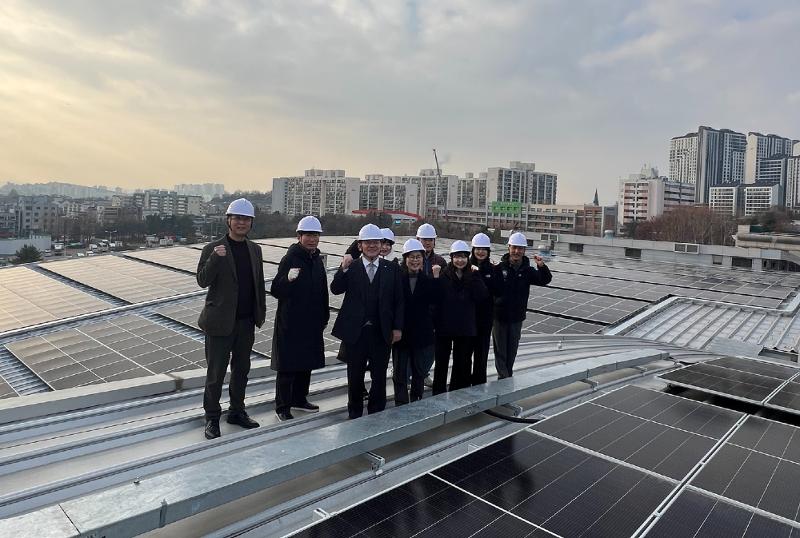
Gyeonggi-do Province as of Dec. 15, 2025, had facilities producing 24.3 megawatts of power, achieving some 90% of its Public RE100 goal. Shown are personnel from the provincial government and the Suwon World Cup Foundation on Dec. 15, 2025, inspecting a solar power plant atop the sports center of Suwon World Cup Stadium in Paldal-gu District of Suwon, Gyeonggi-do Province. (Gyeonggi Provincial Office)