- 한국어
- English
- 日本語
- 中文
- العربية
- Español
- Français
- Deutsch
- Pусский
- Tiếng Việt
- Indonesian
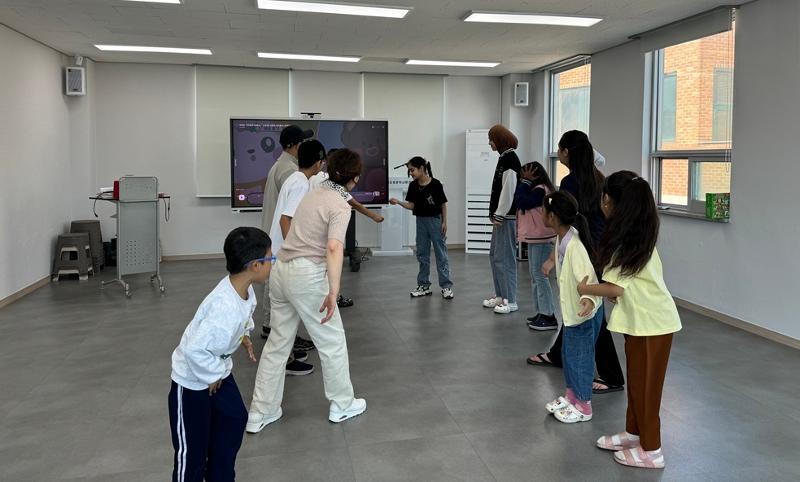
Foreign students at Gimpo Intercultural Exchange Center in Gimpo, Gyeonggi-do Province, take part in a Korean-language class. (Gimpo Intercultural Exchange Center)
By Lee Jihae
Korea requires nine years of elementary (six years) and middle school (three) education without discrimination as a universal right of children.
Ahead of the academic year that began in March, local governments in December last year sent school enrollment notices to families with children aged 6 slated to enter elementary school. This letter is an official invitation for Korean youth to enroll in public schools near their homes.
But this invitation often failed to reach everyone, most noticeably the children of expats. Local governments were prevented from identifying these youth due to a dual-track system in which the Ministry of the Interior and Safety manages information on citizens and the Ministry of Justice handles that on expats.
The result was a blind spot in which foreign children could expect no guidance on the issue despite living near public schools. The western Seoul suburb of Gimpo, Gyeonggi-do Province, stepped in to resolve this problem and offer a fair playing field for all children.
The city's efforts began in 2023, when it requested data from the Ministry of Justice to guarantee the right to education of foreign children. The response was a rejection, with the ministry calling it "impossible" under the Personal Information Protection Act.
This did not deter Gimpo, however. The municipal government lobbied the Personal Information Protection Commission under the Prime Minister's Secretariat, emphasizing the need to uphold the right to education. After gaining approval to collect the necessary data, the city in late 2024 achieved a first for a local government in the country by sending school enrollment notices to the homes of 112 foreign children age 6 residing there.
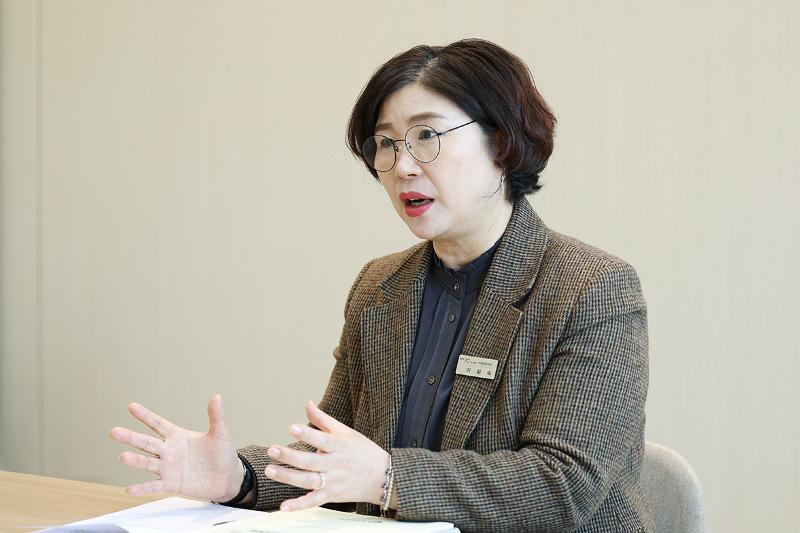
Lee Hoe Sook, director of the Family and Culture Department at Gimpo City Hall, on March 4 at her city's administrative office explains the process of sending enrollment notices given the risk to foreign children in an interview with Korea.net. (Park Dae Jin)
The sea of change launched by Gimpo had a ripple effect throughout Gyeonggi-do. In the first year of the program in 2024, 2,037 children in 21 of the province's 31 cities and counties received such notices.
The number of participating cities and counties rose to 30 last year, notifying 3,629 children of their right to attend school. The lone absentee was Uiwang, which has no foreign children age 6.
The notices were sent to each household in three languages: the recipient’s native language from a selection of 18 excluding English and Korean and the latter two.
Gimpo did not stop at just sending the notices. It confirmed whether each household received it and submitted an official letter to each school to verify if the relevant students had enrolled. As a result, 78% of the recipients last year enrolled in five public schools near their houses.
The city also chipped in with comprehensive support outside of school. Centered on Gimpo Intercultural Exchange Center, programs are offered for student adaptation like on Korean, math, art and soccer as well as psychological counseling to ensure healthy development.
In recognition of this innovative campaign, Gimpo in December last year won the top prize at the Best Practices in Local Government Support for Foreigners Competition.
"The mailing of school enrollment notices is more than mere administrative procedure, it's a pledge that our society will embrace all children without discrimination," said Lee Hoe Sook, director of the city government's Family and Culture Department. "Gimpo will keep building a city of coexistence where expats and locals respect each other and grow together."
jihlee08@korea.kr