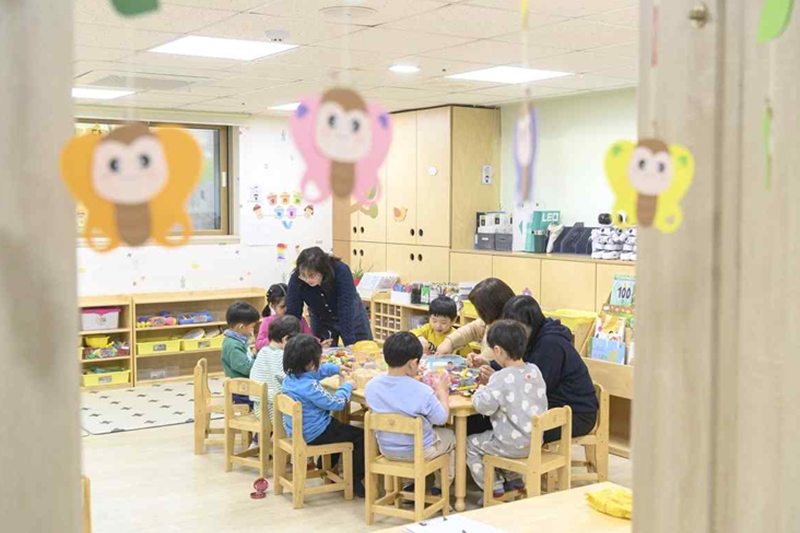
This is a child care room that tackles sudden gaps in caring for kids at Yangcheon-style Overnight Emergency Daycare Center in Seoul's Yangcheon-gu District. Eligibility to use such rooms was expanded this year to include students' siblings. (Yangcheon-gu District)
By Hong Angie
The return of the number of births last year to the 250,000 level has given Korean society hope in raising its low birth rate.
The government seeks to sustain the rebound by taking on the root causes of the low birth rate -- career disruption, financial cost, single parents and gaps in child care -- by shifting the policy framework from one based on individual responsibility to that of the nation.
Legally mandated maternity and parental leave
The most palpable change is a stronger safety net through maternity and parental leave. Unlike countries that lack compulsory regulations at the central government level, Korea requires such leave to protect worker rights.
Women can take up to 90 days of maternity leave before or after giving birth while earning 100% of their regular salaries during that period. Benefits from employment insurance caps out at KRW 2.2 million a month per pregnancy.
Maternity leave also transitions into parental leave after birth, allowing a mother to care for her baby. The post-payment system was scrapped this year to alleviate economic uncertainty during leave, with a mother paid her full salary every month instead of receiving 25% of the payment six months after returning to work.
The revolutionary "6+6" parental leave system encourages both parents to share child-rearing duties. If the parents of a child aged 18 months or younger take leave at the same time or consecutively, each parent receives his or her full regular wage for the first six months.
If both parents take six months of parental leave, they can receive a combined KRW 39 million, a de facto financial safety net in the early stages of child-rearing.
In addition, benefits like a two-hour reduction in daily work hours in the early and late pregnancy stages and 20 days of paid paternity leave seek to ease the burden of single parenthood.
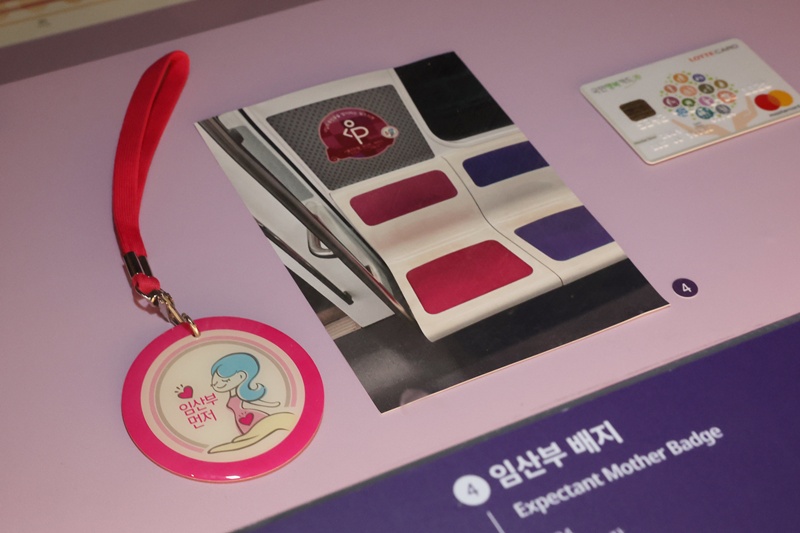
This pink badge (left) allows a pregnant woman to sit in seats reserved exclusively for expectant mothers on public transportation, and the People Happiness Card (right) provides financial support for parents. (Park Dae Jin)
Seamless cash support from birth to school age
A culture of considerate support for pregnant women is also reflected in policy to guarantee their mobility rights. A pink badge issued by public health centers helps identify those in early pregnancy -- when it might not yet be visible -- for priority seating on public transportation.
The Seoul Metropolitan Government's transportation voucher worth KRW 1 million for expectant mothers assists their practical mobility. The benefit extends to taxis, gas stations, high-speed trains (KTX and SRT), intercity buses and highway tolls.
Another change is the significant rise in cash support. A "first-meeting voucher," a one-time subsidy to alleviate initial child care costs, pays KRW 2 million for the first child and KRW 3 million for the second and others afterward. A parental allowance provides KRW 1 million per month to the parents of a baby under a year old and KRW 500,000 after that age.
The monthly allowance of KRW 100,000 to the parents of a child under age 9 was expanded to cover those with a kid under 13 (through sixth grade), reflecting the government's willingness to chip in for expenses as children grow.
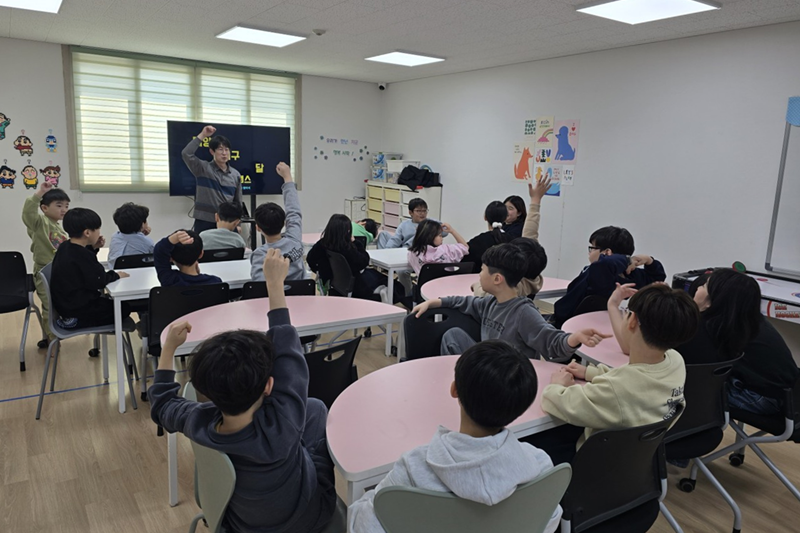
Gyeongsangbuk-do Province's K-Bodeum 6000, a program of free child care year-round, has received a positive response for filling gaps in child care for dual-income or shift-working parents or those who are self-employed. (Gyeongsangbuk-do Province)
Extended child care in provincial communities and schools
Households with two working parents often struggle with child-rearing before the end of the workday, but better infrastructure in social welfare is alleviating this problem.
The Neulbom School program, which integrates care classes and after-school programs at elementary schools, has been expanded nationwide. Students from first through third grade can get customized education and safe care at their schools and are allowed to stay there until 8 p.m. if their parents wish so.
Daycare centers open until midnight and hub-based child care facilities also offer reliable help to households with infants and toddlers. This year also saw the reinforcement of extended evening care for elementary school students ages 6-12.
For emergencies, the Ministry of Health and Welfare last month launched an exclusive hotline (1522-1318) to provide guidance on nearby child care facilities. Parents whose return home is delayed by overtime or other reasons can call the number to find a nearby facility to babysit their children as a last resort.
shong9412@korea.kr
![[Fertility fix] ① Exhibition of traditional childbirth culture](/upload/content/image/dd2642f75545427fbd1bae09cb68b7e5_20260408092054.jpg)