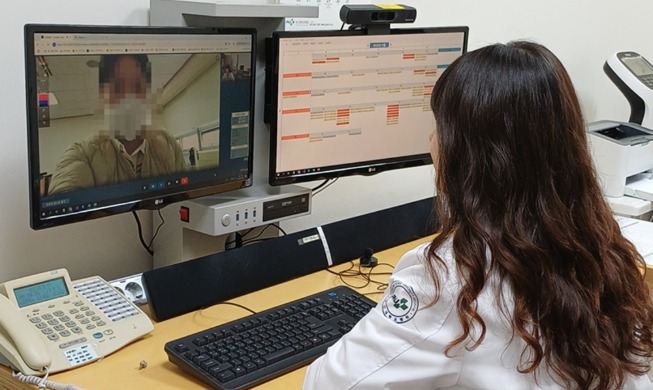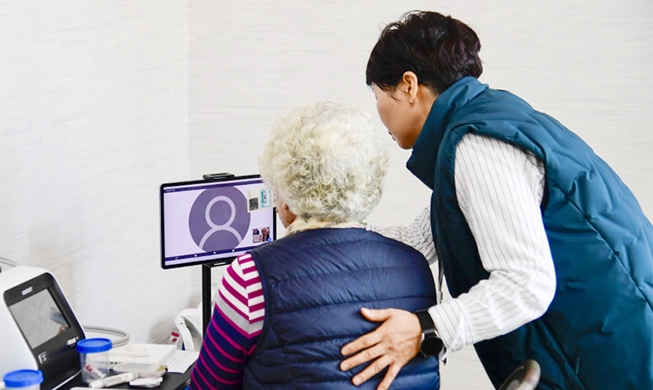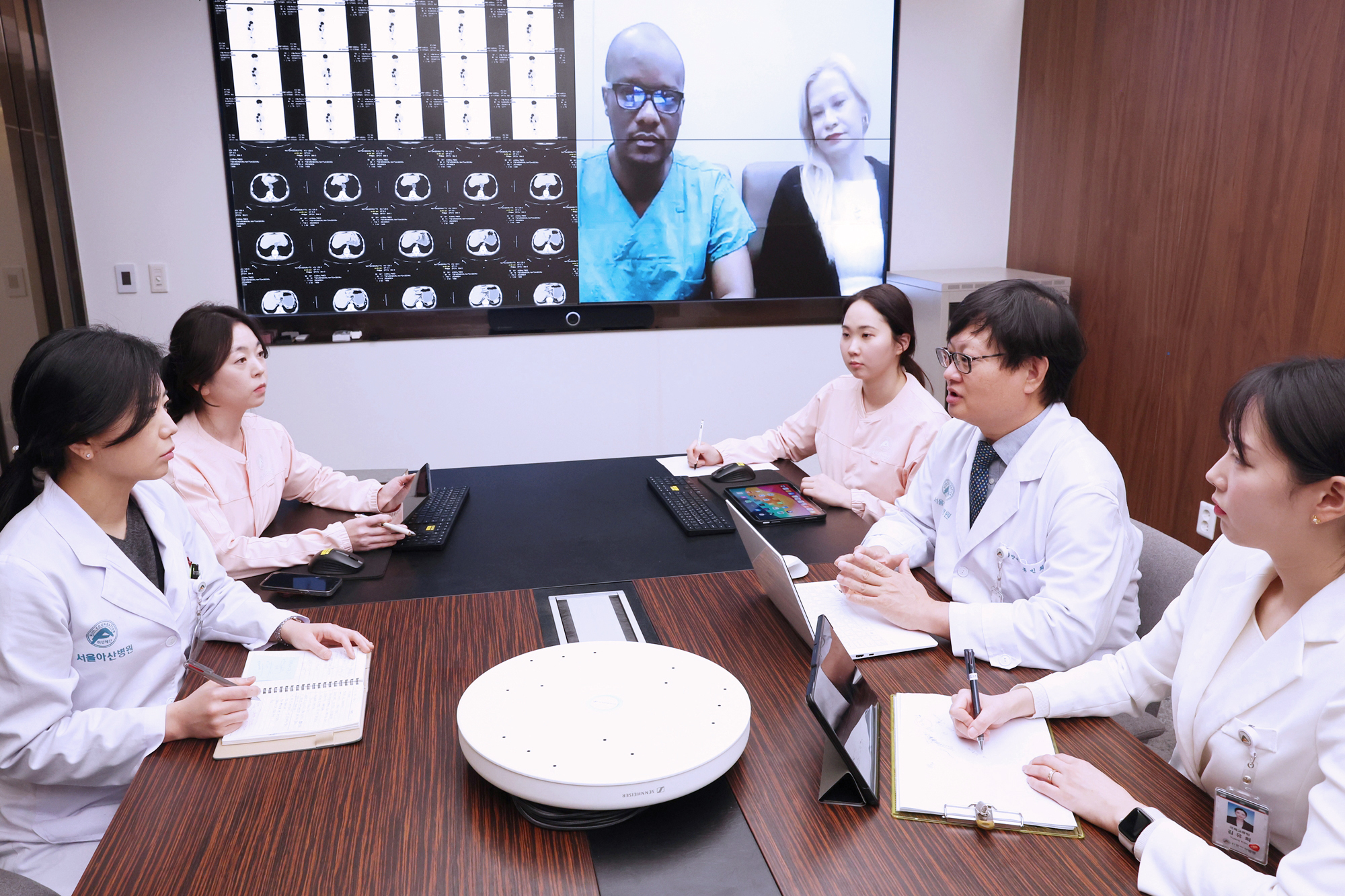
An amendment to the Act on Support for Medical Overseas Expansion and Attraction of Foreign Patients was announced on May 26 that includes the adoption of telemedicine for foreign patients. Shown is an international patient on a video screen with severe stomach cancer receiving a digital consultation from doctors at Asan Medical Center in Seoul through the hospital's integrated medical treatment platform. (Asan Medical Center)
By Margareth Theresia
The official adoption of non-contact medical treatment for foreign patients is expected to greatly boost global accessibility to medical care in the country.
The Ministry of Health and Welfare on May 26 announced an amendment to the Act on Supporting of Overseas Expansion of Medical Services and Attraction of International Patients that includes a system for telemedicine catering to foreign patients. The revision takes effect a year after its promulgation.
Thus doctors, dentists and those practicing traditional medicine affiliated with medical institutions that have foreign patients can provide continuous observation, consultation and education, diagnosis and prescriptions for such patients, including newcomers, at clinics and hospitals by using information and communication technology.
A telemedicine support system for foreign patients will enable remote consultations and prescriptions. Operations could be outsourced to a specialized institution.
The policy basis for attracting foreign patients and expanding medical services abroad will be also firmed up. To secure growth drivers of the domestic medical ecosystem, annual surveys will be done on medical performance and operating status, and the results will be used as basic data for devising policies for overseas expansion of healthcare services and attracting such patients.
Minister of Health and Welfare Jeong Eun Kyeong said, "The institutionalization of telemedicine for foreign patients is a new starting point that will raise the credibility of K-medical services in global healthcare and drastically change accessibility in the era of 2 million foreign patients."
margareth@korea.kr