- 한국어
- English
- 日本語
- 中文
- العربية
- Español
- Français
- Deutsch
- Pусский
- Tiếng Việt
- Indonesian
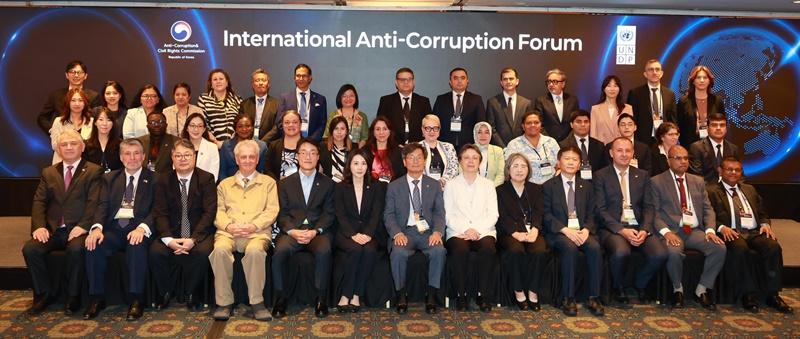
The Anti-Corruption and Civic Rights Commission (ACRC) and the UNDP (United Nations Development Programme) Seoul Policy Centre from July 2-3 hosted the International Anti-Corruption Forum at Lotte Hotel in Seoul's Jung-gu District, sharing the results of the global spread of Korea's anti-corruption model. (ACRC)
By Lee Jihae
The Anti-Corruption and Civic Rights Commission (ACRC) and the UNDP's (United Nations Development Programme) Seoul Policy Centre from July 2-3 jointly hosted the International Anti-Corruption Forum.
About 120 anti-corruption experts from 17 countries and officials from international organizations such as the World Bank attended the forum at Lotte Hotel in Seoul's Jung-gu District. They discussed Korea's anti-corruption model and the results of its global expansion.
Discussions covered five next-generation anti-corruption strategies including advancing institutions, spreading achievements through south-south and triangular cooperation, and setting safeguards for artificial intelligence and digital innovation. They agreed to adopt these as milestones for the anti-corruption efforts of each country.
Former ACRC head Kim Young-ran in her keynote speech explained Korea's institutional development, from the enactment of the Anti-Corruption Act in 2001 to the adoption of the Anti-Corruption Action Plan at the 2010 G20 summit in Seoul.
"Since 2010, we've signed memorandums of understanding with Thailand, Mongolia, Indonesia and other countries and have been running anti-corruption training programs," said Hwang Minah, director of the ACRC's International Relations Division. "This cooperation and exchange among officials from 74 countries actively continue even today."
The forum discussed case studies of Korea's anti-corruption system being adapted to fit the specific conditions of a country and yielding positive results.
Sri Lanka issued a presidential decree mandating the use of a Korean-style system of comprehensive evaluation. Vietnam and Uzbekistan announced their development of a Korean-style anti-corruption evaluation index, incorporating it into legislation and seeing major improvements in their Corruption Perceptions Index scores.
Tajikistan joined this technical support project to comprehensively adopt the Korean model.
The ACRC plans to keep boosting anti-corruption cooperation to respond to new challenges like digital transformation and climate change.
"Countries can conduct more effective responses by sharing their experiences and cooperating," ACRC Chairperson Jung Il Yeon said. "We will further strive to help our partner countries in the practical eradication of corruption to firmly establish Korea as a global leader in anti-corruption efforts."
jihlee08@korea.kr