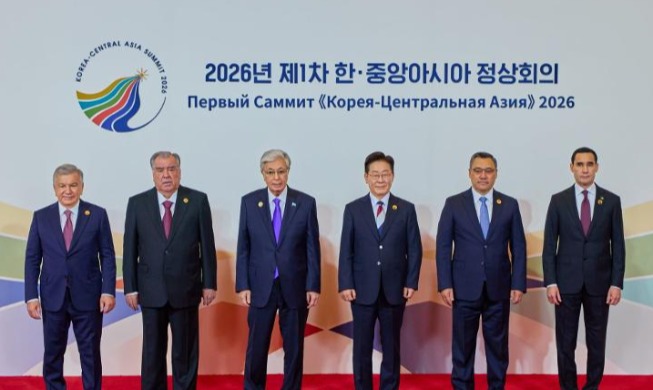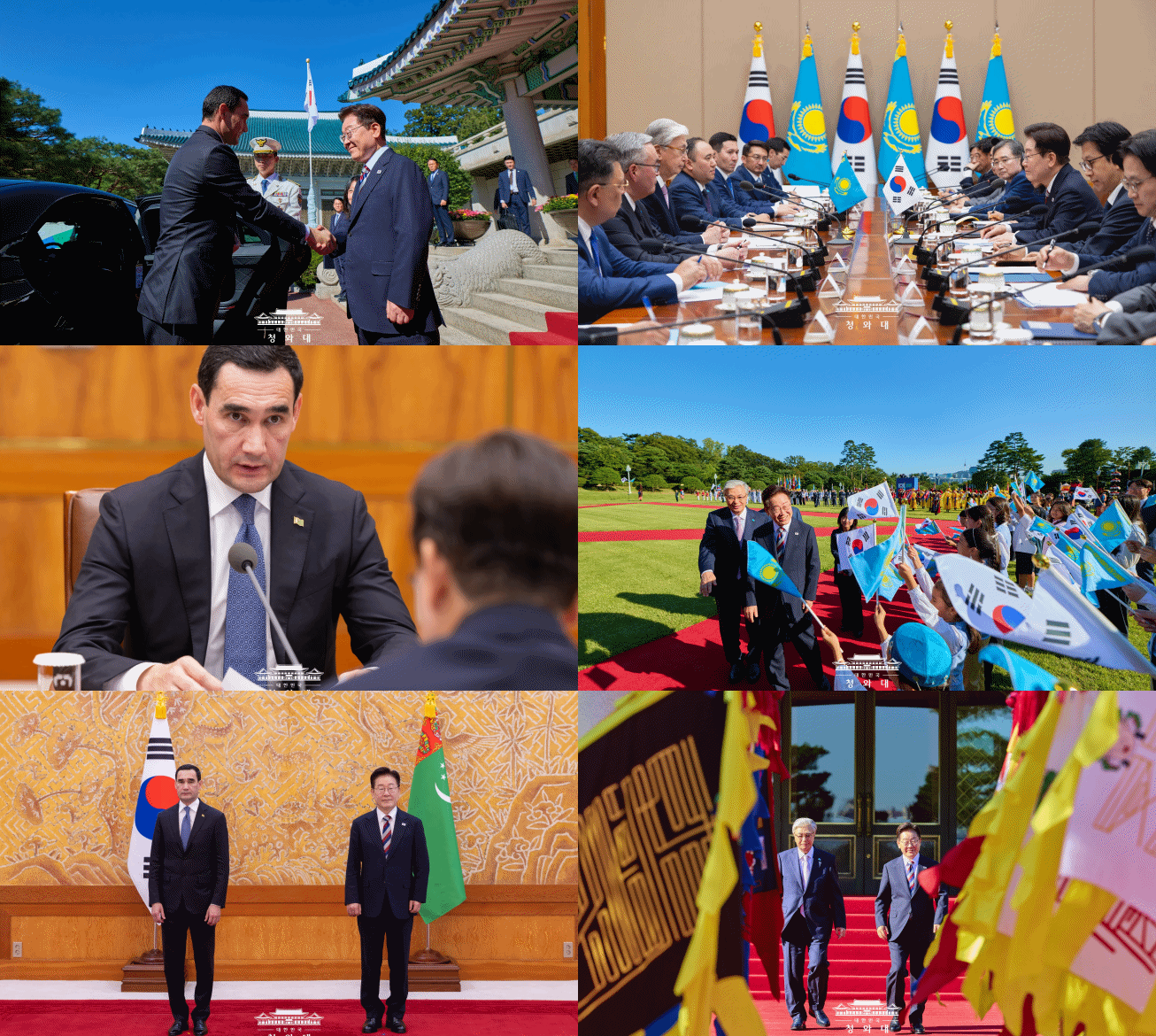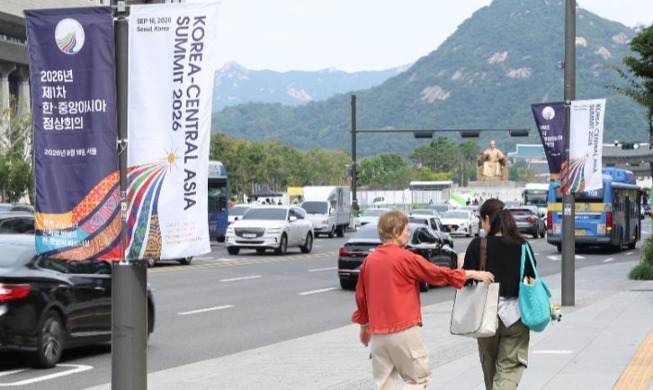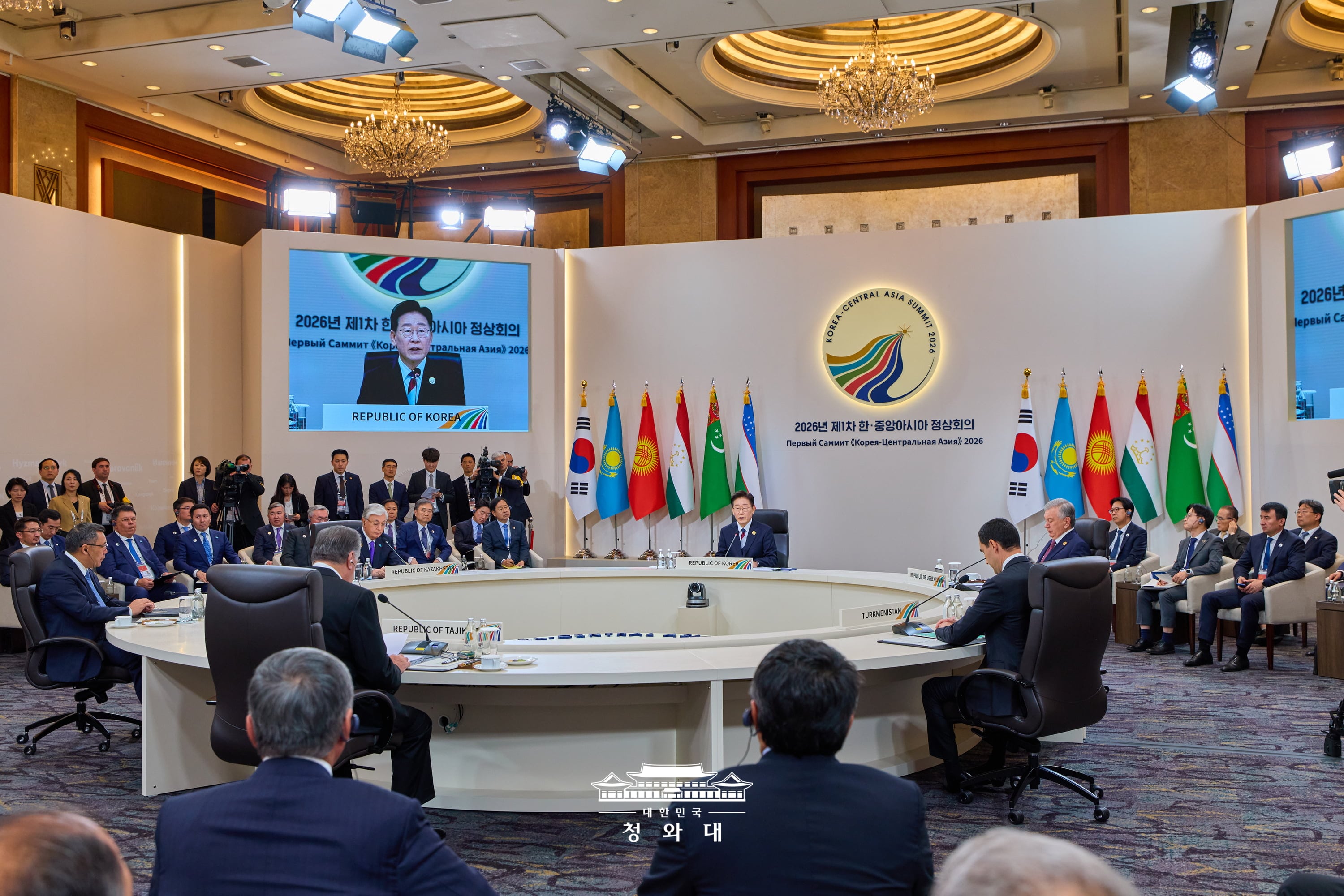
President Lee Jae Myung on Sept. 16 holds a summit with the leaders of five Central Asian nations at the inaugural Korea-Central Asia Summit in Seoul. (Cheong Wa Dae)
By Uyen Nguyen
The Seoul Declaration, which was adopted at the inaugural Korea-Central Asia Summit in Seoul, has laid the foundation for bilateral cooperation over the next 30 years.
President Lee Jae Myung on Sept. 16 chaired the event under the theme "Directions for Korea-Central Asia Cooperation and a Partnership to Strengthen Innovation, Prosperity and Connectivity," said Senior Secretary to the President for Public Relations and Communications Seong Ghihong, in a written briefing.
The president proposed five main pillars for joint prosperity between both sides: partnership, peace, mutually beneficial and substantive cooperation, future-oriented ties and people-to-people connections.
Korea and the five countries agreed to make the summit a regular event and adopt the Seoul Declaration as a joint roadmap for future collaboration.
In peace and security, Seoul requested continuous support from Central Asia for resolving the North Korean nuclear issue, restore inter-Korean dialogue and change the armistice agreement into a permanent peace.
Korea agreed to share its experience and know-how to respond to cross-border issues such as terrorism, transnational crime and cyber threats.
In economy, the two sides agreed to form a "mutually beneficial value chain" combining Central Asia's resources and markets with Korea's manufacturing and technological capabilities.
They also pledged to expand processing and manufacturing of critical minerals, energy and agricultural and livestock products to raise added value and create jobs in Central Asia, as well as diversifying Korea's supply chains and markets.
A memorandum of understanding was signed on cooperation in industrial and supply chains and a joint ministerial consultative body on industry was launched.
They also adopted a future artificial intelligence (AI) and science and technology partnership initiative and another in climate, energy and the environment initiative to raise future cooperation.
They pledged to expand policy and personnel exchanges in AI and science and technology, as well as bolster climate cooperation in areas such as water resource management, forest restoration and energy transition.
The launch of joint projects next year will mark the 90th anniversary of the settlement of Goryeoin, or ethnic Koreans in Central Asia. The programs will include the training of technical personnel and experts; more exchanges among students, researchers and businesspeople; heightened cooperation in aviation and tourism; and exchanges among international students, industrial workers and government officials.
President Lee called the summit a "new starting point" for future partnership, and agreed with the five countries to hold another meeting two years later in Kazakhstan.
In the afternoon, he and the other leaders attended the inaugural Korea-Central Asia Business Summit at the hotel Westin Josun Seoul and an official dinner in the evening.
uyen81@korea.kr