- 한국어
- English
- 日本語
- 中文
- العربية
- Español
- Français
- Deutsch
- Pусский
- Tiếng Việt
- Indonesian
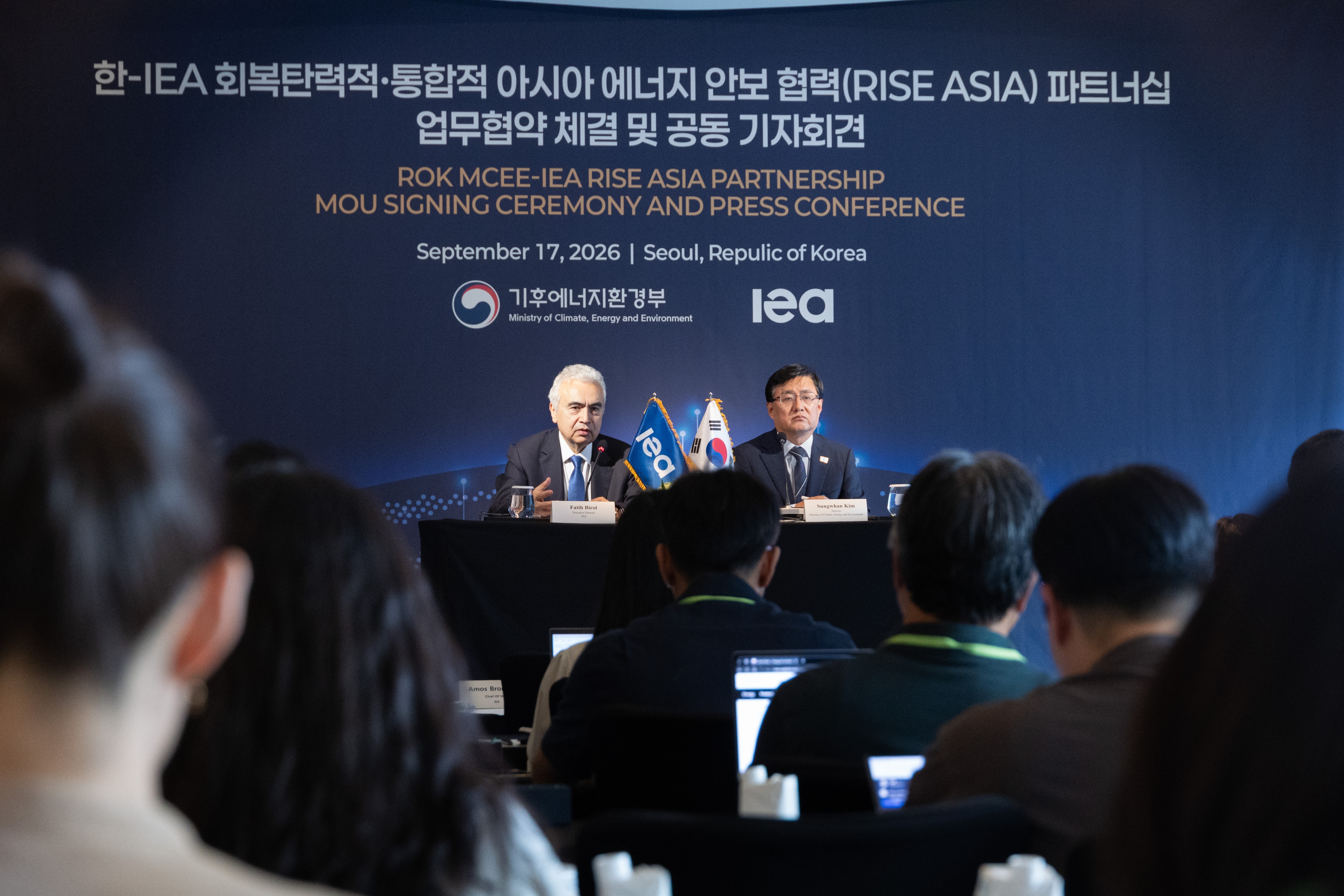
Minister of Climate, Energy and Environment Kim Sungwhan (right) and IEA Executive Director Fatih Birol on Sept. 17 speak at a signing ceremony for a memorandum of understanding and their joint news conference at Four Seasons Hotel Seoul in the capital's Jongno-gu District. (Ministry of Climate, Energy and Environment)
By Oh Jung Eun
The Ministry of Climate, Energy and Environment and the International Energy Agency (IEA) have agreed to jointly respond to energy security and the climate crisis in Asia amid growing fears over the vulnerability of the region's energy supply chains due to climate-induced disasters and instability in the Middle East.
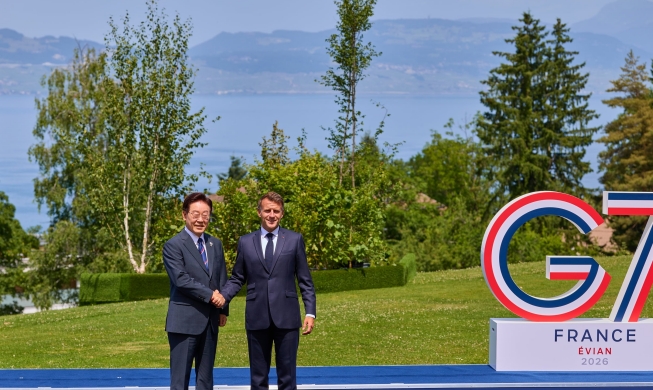
Both sides on Sept. 17 signed a memorandum of understanding (MOU) at Four Seasons Hotel Seoul in the capital's Jongno-gu District and agreed to promote the Resilient & Integrated Strategy for Energy Security in Asia (Rise Asia). This initiative follows up on President Lee Jae Myung's proposal in June at the G7 summit in France to expand cooperation with the IEA to raise the resilience of energy supply chains in the Asia-Pacific region.
Rise Asia is a cooperative framework that covers not only the supply and demand for conventional energy and resources, but also the transition to renewable energy, electrification, and the stability and resilience of power systems.
Under the MOU, both sides will conduct comprehensive assessments of the supply and demand situations of energy sources such as crude oil and liquefied natural gas, clean energy supply chains and power supply stability. They will also form a framework for responding to energy crises in Asia.
The agreement also requires expansion of infrastructure for stable supply of clean electricity and improvement of the electricity market and power grid operation systems. A forthcoming open policy consultation platform will share the results of their cooperation and find more areas of collaboration.
The ministry and the IEA will set the framework for their cooperation next year and conduct a joint assessment before linking relevant projects and investments from 2028.
IEA Executive Director Fatih Birol said the crisis in the Middle East was comparable to the oil shocks of the 1970s, forcing a fundamental reassessment of energy strategies. Asia, which is heavily dependent on imported fossil fuels, must accelerate its diversification of supply routes, expansion of clean energy, promotion of electrification and strengthening of power systems, he added.
He also commended Korea for proactively presenting a vision and leading a new cooperative initiative to reinforce energy security in Asia, saying Korea, as a trusted country worldwide, can play an important role at a time when global trust in the energy sector is declining.
"Energy security and response to the climate crisis are goals to be achieved together," Minister of Climate, Energy and Environment Kim Sungwhan said. "We will speed up the transition to renewable energy and electrification to reduce our dependence on imported fossil fuels, as well as build a resilient power system to withstand shocks like surging electricity demand and natural disasters."
cloveroh@korea.kr