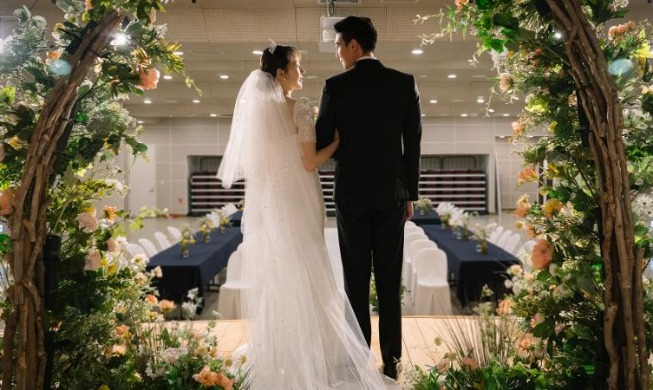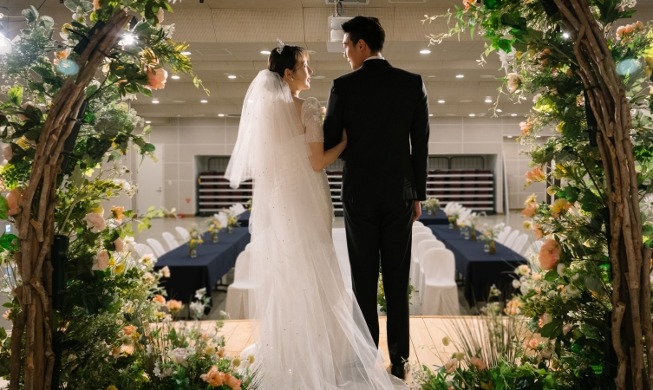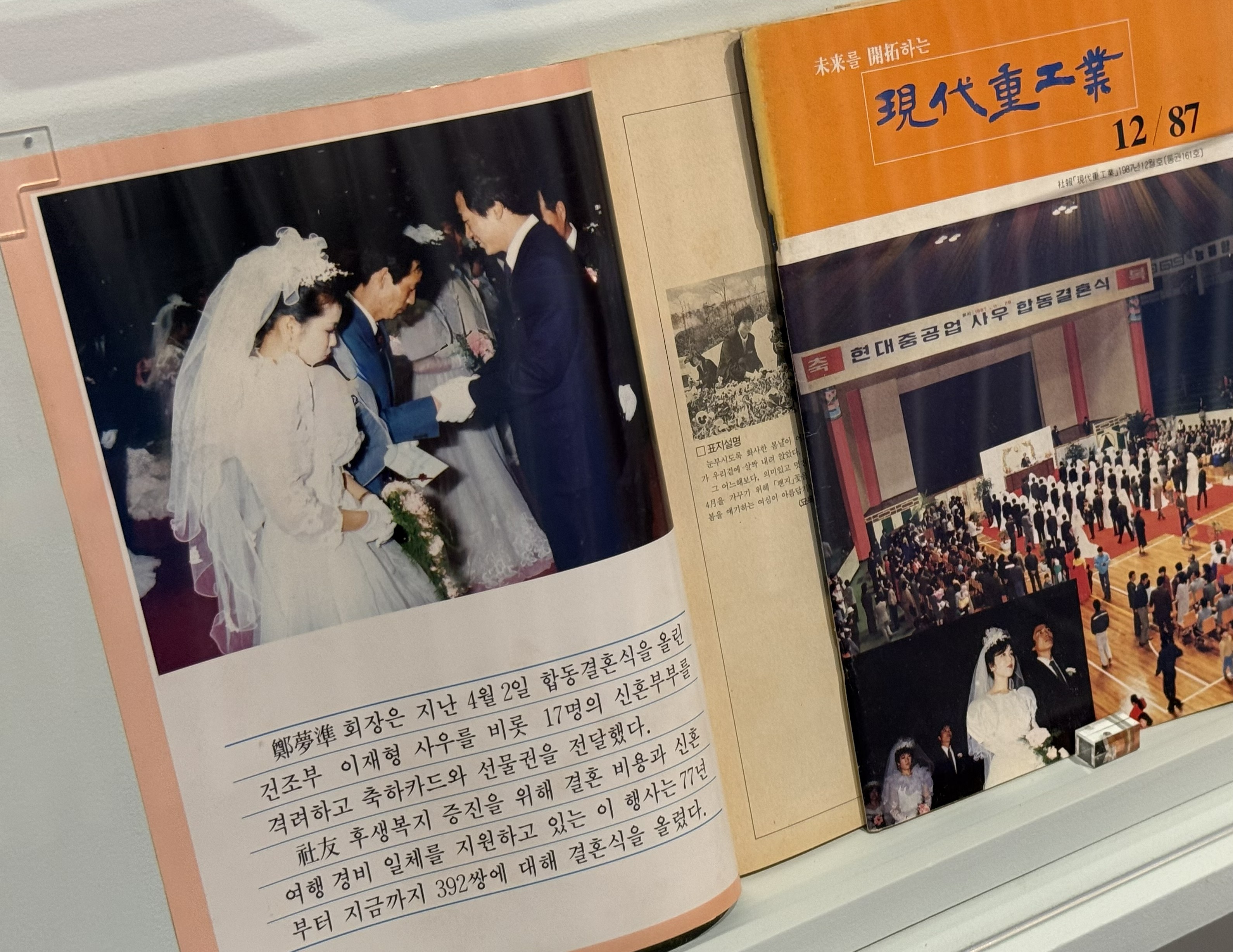
A scene from a group wedding for company employees in the 1970s and 80s are on display at the exhibition "Ulsan Wedding Chronicles," which runs through July 26 at Ulsan Museum in the southern port city of Ulsan.
By Hong Angie
Photos = Hong Angie
From traditional and modern group weddings to today's personalized ceremonies, marriage in Korea is a social and cultural phenomenon that has constantly evolved within the context and community structures of each era, going beyond mere personal choice.
Community festival, traditional wedding and pyebaek
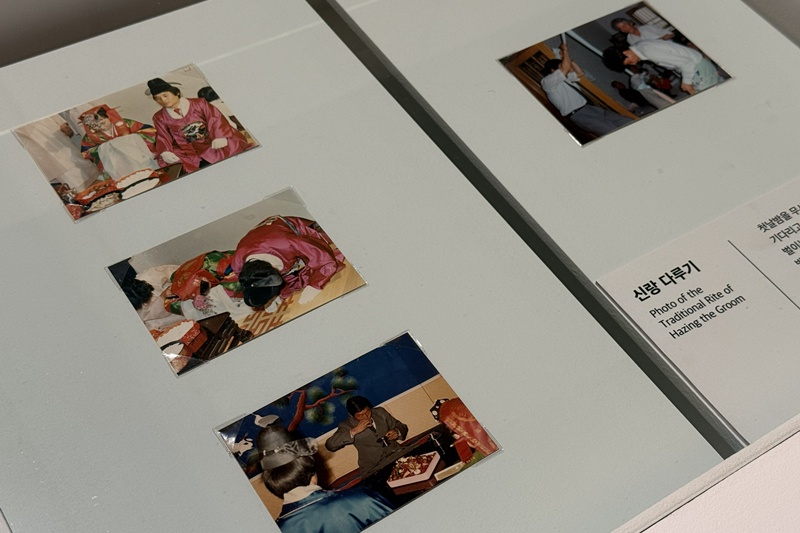
Collection of photos featuring the traditional wedding ritual pyebaek and "hazing of the groom"
A traditional wedding took on the character of a community festival in which the entire village and extended family joined. A prime example was the custom of "hazing the groom," a lighthearted and joking rite of passage before the wedding night to solidify bonds by accepting the new groom into the community.
After the wedding, the groom's friends traditionally tied his ankles, hung him upside down and lightly beat the soles of his feet with a stick or dried yellow corvina fish. They asked him questions like information about his bride, with wrong answers earning a light beating of his feet as a playful test of the groom's strength, wits and stamina before his wedding night.
Following the ceremony, the newlyweds changed into Hanbok (traditional clothing) for pyebaek, a ritual in which they formally pay respects to their parents and relatives. Beyond mere greetings, this solemn ceremony affirmed the union of the couple as an official bond and harmony between both families.
The custom of parents throwing jujubes and chestnuts to symbolize children onto the bride's skirt is still seen at weddings in Korea. But pyebaek is now an option based on the values of the bride and groom.
Harmony of yin and yang, Hanbok for mothers of bride and groom
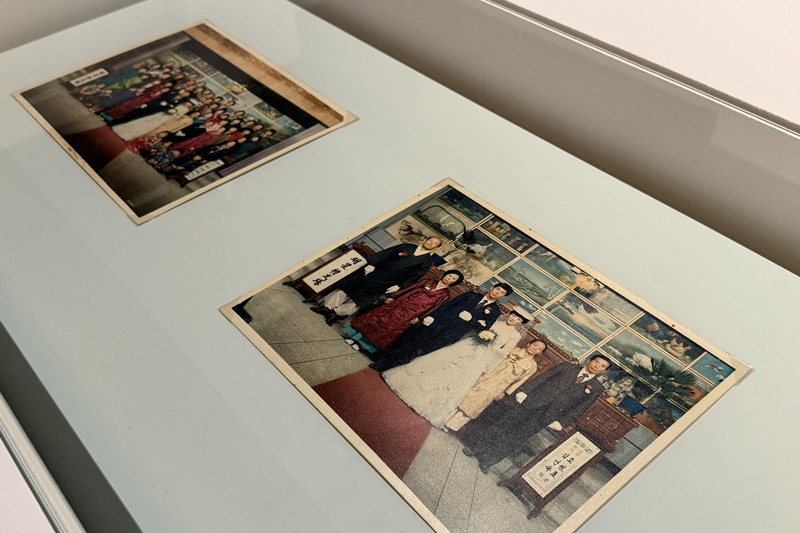
A traditional wedding in the past stressed the harmony of yin and yang, and the custom of the groom's side wearing Hanbok in shades of blue (e.g., blue, navy or mint) and the bride's donning Hanbok in shades of red (e.g., pink, red or coral) has survived to this day.
But one tradition remains firmly entrenched even at modern wedding halls: the practice of the mothers of the bride and groom wearing honju (wedding host) Hanbok. Based on yin-yang harmony, the groom's mother wears a Hanbok in shades of blue and the bride's in shades of red.
In a Western-style wedding, both mothers enter hand in hand and light candles, and this signals the beginning of the ritual exclusive to Korea.
Industrialization-shaped scenes: group weddings and electric rice cookers
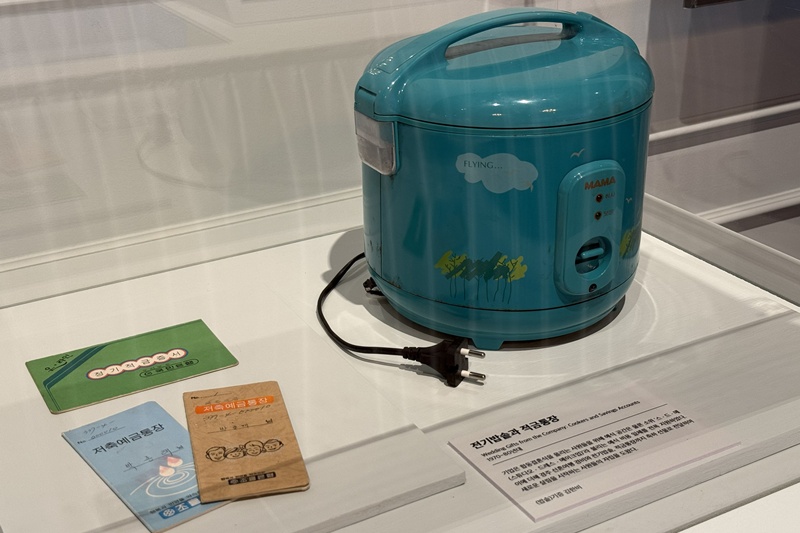
During the nation's rapid industrialization, corporations provided "in-house group weddings" as an employee benefit, with dozens of couples exchanging vows simultaneously at company facilities like gymnasiums. Shown are savings account ledgers (left) and an electric rice cooker.
During Korea's rapid industrialization in the 1970s and 80s, a new wedding phenomenon emerged. Corporations supported "in-house group weddings" as an employee perk, with dozens of couples exchanging vows simultaneously at company venues such as gymnasiums.
Back then, electric rice cookers and savings account ledgers were the gift of choice at weddings to help the newlyweds get off to a practical start toward independence. In contrast, the culture has now completely shifted to cash gifts, with guests giving money in envelopes based on the cost of meals and their closeness to the couple.
Weddings as content: 'reservation war' for photos, dress, makeup
Today's weddings in Korea are increasingly shaped by the personal preferences of the couple. The bride and groom plan their ceremony to suit their tastes under the "SDM" system spanning studio photography, dress and makeup in one package, and budgets are flexibly allocated based on individual priorities.
People even resort to waging a "reservation war" a year in advance to secure popular wedding halls. This prominent aspect of the country's modern wedding culture reflects the perception of the ceremony as a stage personalized by the couple.
shong9412@korea.kr
![[K-matrimony] ① Tradition of uniting families, not just spouses](/upload/content/image/1791ba3de1fe429ea01ef6aa5542b19f_20260526131521.png)