- 한국어
- English
- 日本語
- 中文
- العربية
- Español
- Français
- Deutsch
- Pусский
- Tiếng Việt
- Indonesian
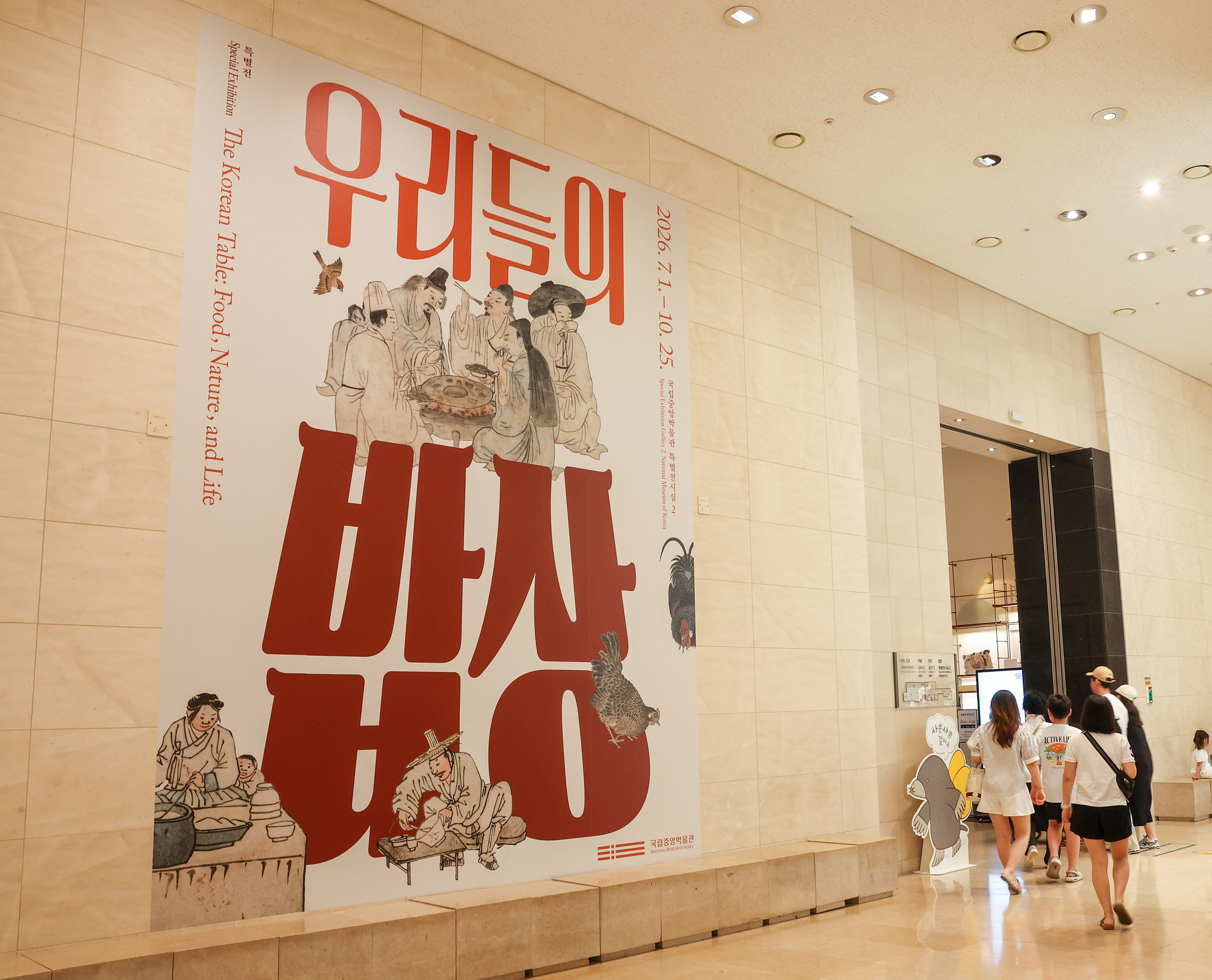
The National Museum of Korea in Seoul through Oct. 25 hosts an exhibition of Korean culinary history and culture titled "The Korean Table: Food, Nature, and Life."
By Jeong Euiseok
Photos = Park Daejin
An exhibition is exploring the roots of the country's traditional cuisine amid surging global interest in Korean culture and food.
The National Museum of Korea in Seoul though Oct. 25 is hosting "The Korean Table: Food, Nature, and Life," a comprehensive look at Korean culinary culture.
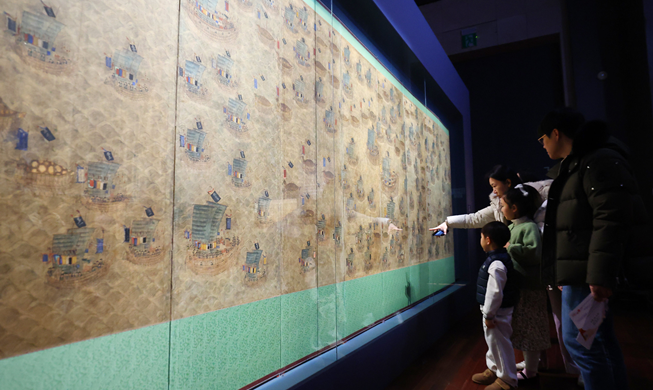
The collection of diverse ingredients spanning eras and genres show how the roots of Hansik (traditional food) lie in everyday meals. Displayed are 684 artifacts across 488 items ranging from rice seeds dating back three millennia to genre paintings depicting traditional life and records of culinary experiences by gourmets during the Joseon Dynasty (1392-1910).
The exhibition's two sections are "A Table Shared with Life" and "A Table Shaped by Nature."
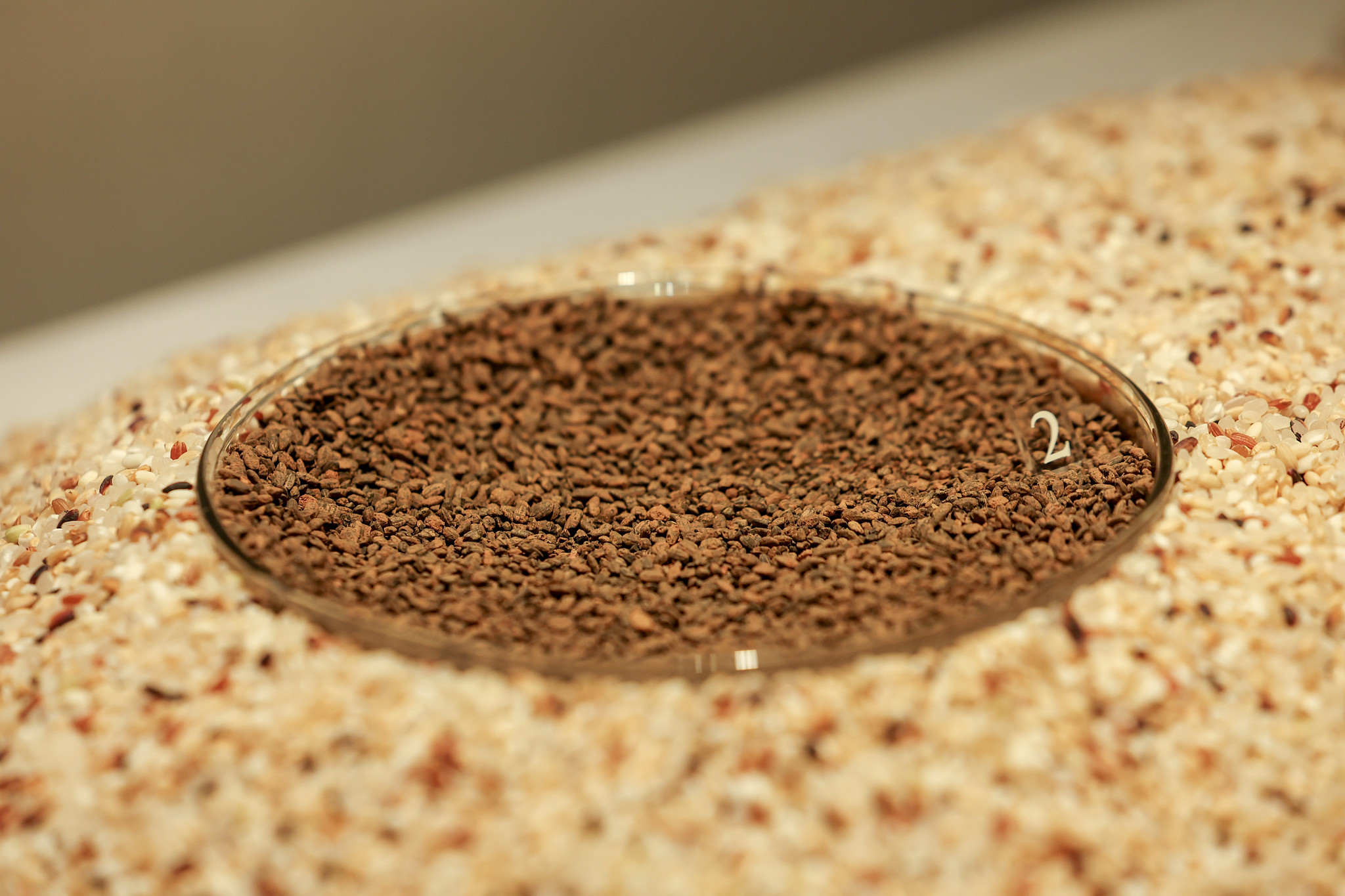
Burnt rice grains from the Bronze Age discovered in Buyeo-gun County, Chungcheongnam-do Province, are important evidence that prove how rice farming began on the Korean Peninsula as early as the Bronze Age.
"Have you eaten?" This is a familiar greeting in Korea that welcomes visitors when they enter the exhibition. Upon entering, another display grabs immediate attention: carbonized rice.
Organic materials like rice seeds rarely retain their original form for long in an ordinary environment. If oxygen is blocked during the burning process, however, this organic matter transforms into a mass of inorganic carbon that avoids decay for thousands of years.
Discovered in 1979 in the village of Songguk-ri in Buyeo-gun County, Chungcheongnam-do Province, these seeds are valuable evidence of how rice farming began on the Korean Peninsula as early as the Bronze Age.
In addition, the drawing "Bangsang sikdo" (Diagram of Table Settings), and soban (small dining tables) of various shapes and sizes from the Joseon era capture the rich food culture of that era.
One section of the exhibition hall shows scenes of the lives of laypeople in Joseon through paintings. "A Tavern" by Kim Hongdo (1745–after 1806) realistically depicts someone eating a bowl of janggukbap (rice in soy-based soup) while sitting in an awkward cross-legged posture.
Another painting, "Riverside Dining Gathering" by Kim Deukshin, captures a simple daily moment of people sharing a meal under the shade of a willow tree amid the scorching summer heat. These works offer a glimpse of a time when people found contentment through shared company.
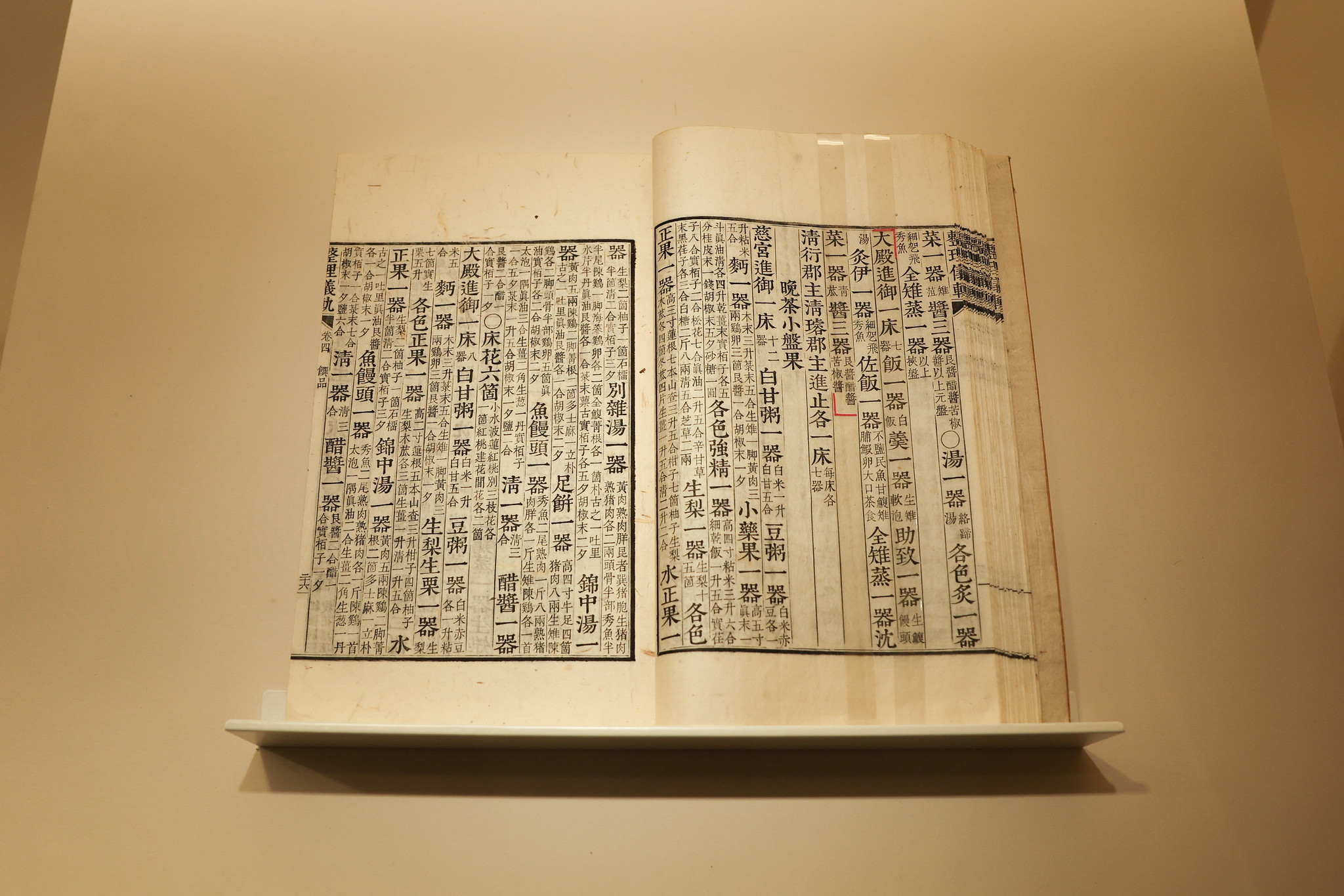
The Royal Protocols of the King's Visit to the Royal Tomb in 1795 are records of the banquet and other events hosted by King Jeongjo when he visited his father's tomb to mark the 60th birthday of the king's mother, Queen Heongyeong.
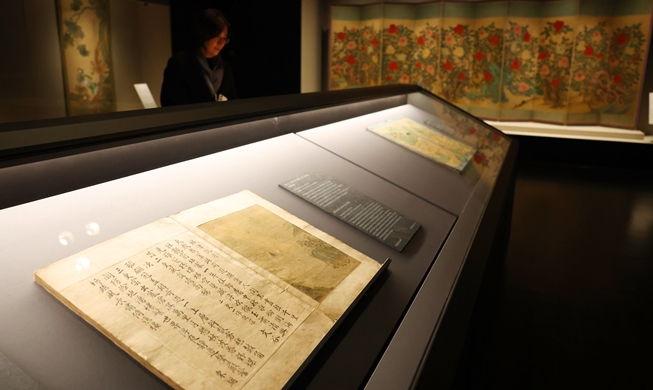
The second part of the exhibition, "A Table Shaped by Nature," shows a royal dining table. Wonhaeng Eulmyo Jeongni Uigwe (The Royal Protocols of the King's Visit to the Royal Tomb) documents the banquet hosted in 1795 by King Jeongjo (1762-1800) when he visited his father's tomb to mark the 60th birthday of Jeongjo's mother, Queen Heongyeong, also known as Lady Hong, as well as events that followed his return to Hwaseong Haenggung Palace in Hwaseong, Gyeonggi-do Province.
The exhibition meticulously chronicles everything from the banquet spreads and daily meals served to King Jeongjo and his mother Queen Hyegyeonggung during the eight-day procession, as well as what attendees and the royal entourage ate. Paintings of the morning meal from that time add a sense of realism.
Visitors can see materials on the theme of food made by nature such as "Domun daejak" (Imaginary Feasting at the Butcher's Gate) by Joseon gourmet Heo Gyun, who wrote it while in exile as he reminisced about regional delicacies; carbonated soybean clumps believed to be the early forms of meju (fermented soybean bricks) or cheonggukjang (rich fermented soybean paste); and historical records on fermented foods.
The museum also employs an innovative approach to overcoming the limitations of not displaying real food. Visitors can listen to the vivid sounds of the cooking process and a large digital screen shows at a glance the regions specializing as the sources of seafood, agricultural produce and livestock products.
Museum director You Hong June said, "I hope that this exhibition allows us to recognize that our meals are made possible by the nature of this land and the efforts of our ancestors, who revered food as a gift from heaven."
innocence@korea.kr