- 한국어
- English
- 日本語
- 中文
- العربية
- Español
- Français
- Deutsch
- Pусский
- Tiếng Việt
- Indonesian
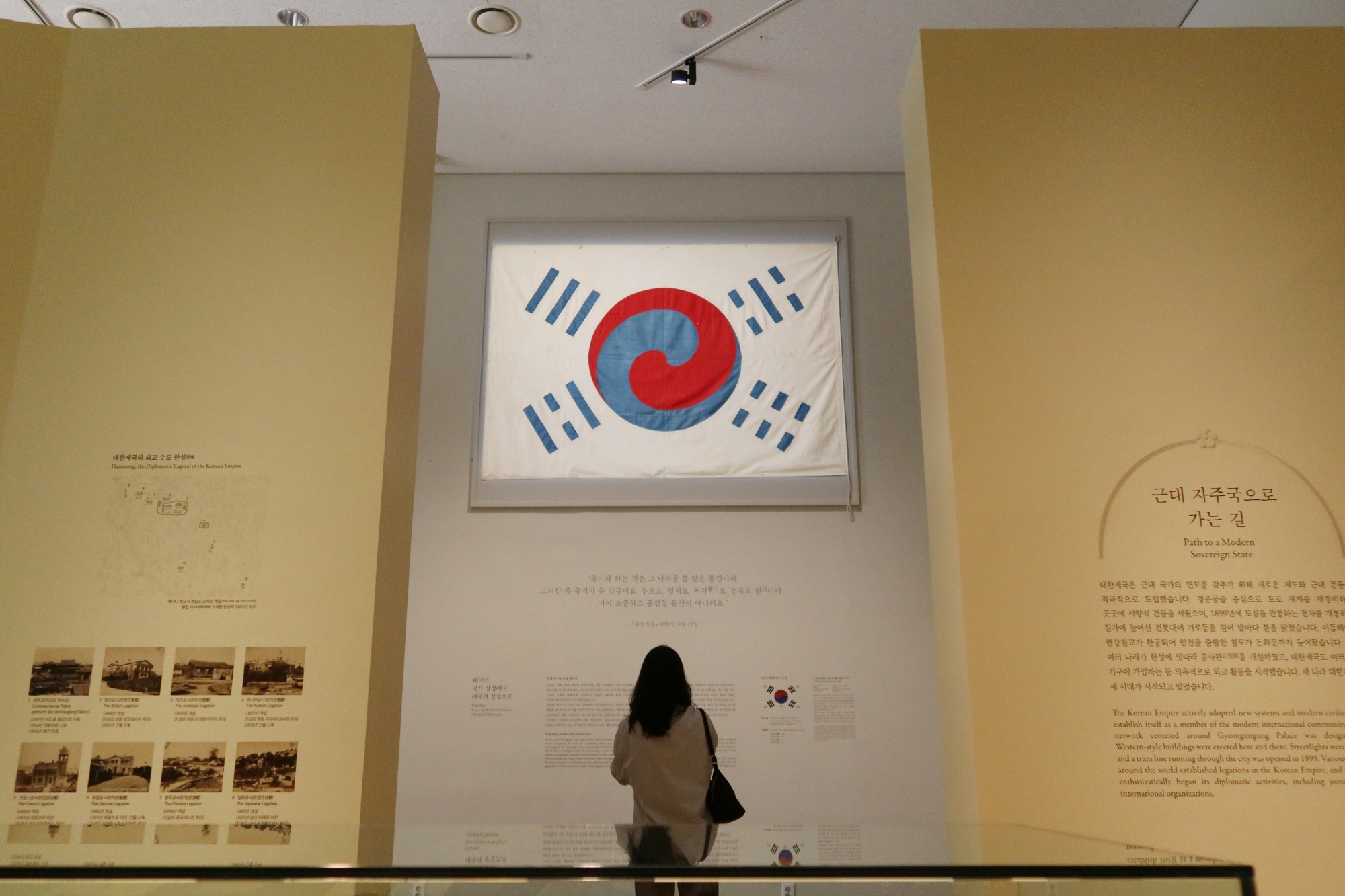
The Denny Taegeukgi, the country's largest and oldest surviving national flag, is prominently displayed on July 30 at the renovated Korean Empire Gallery of the National Museum of Korea in Seoul's Yongsan-gu District. (Charles Audouin)
By Oh Jung Eun and Charles Audouin
A result of defeat does not negate the meaning of effort.
The newly renovated Korean Empire Gallery was opened on July 30 at the National Museum of Korea in Seoul's Yongsan-gu District. The facelift offers a multifaceted look at the empire's struggle and aspiration for modernization as it fought to find a path toward independence amid mounting pressure from imperialist powers.
King Gojong, the 26th monarch of the Joseon Dynasty (1392-1910), proclaimed the launch of the empire on Oct. 13, 1897. This ended just 13 years later in 1910, when the country lost its sovereignty to Japan.
The gallery focuses on Gojong's efforts to establish the empire as an independent state.
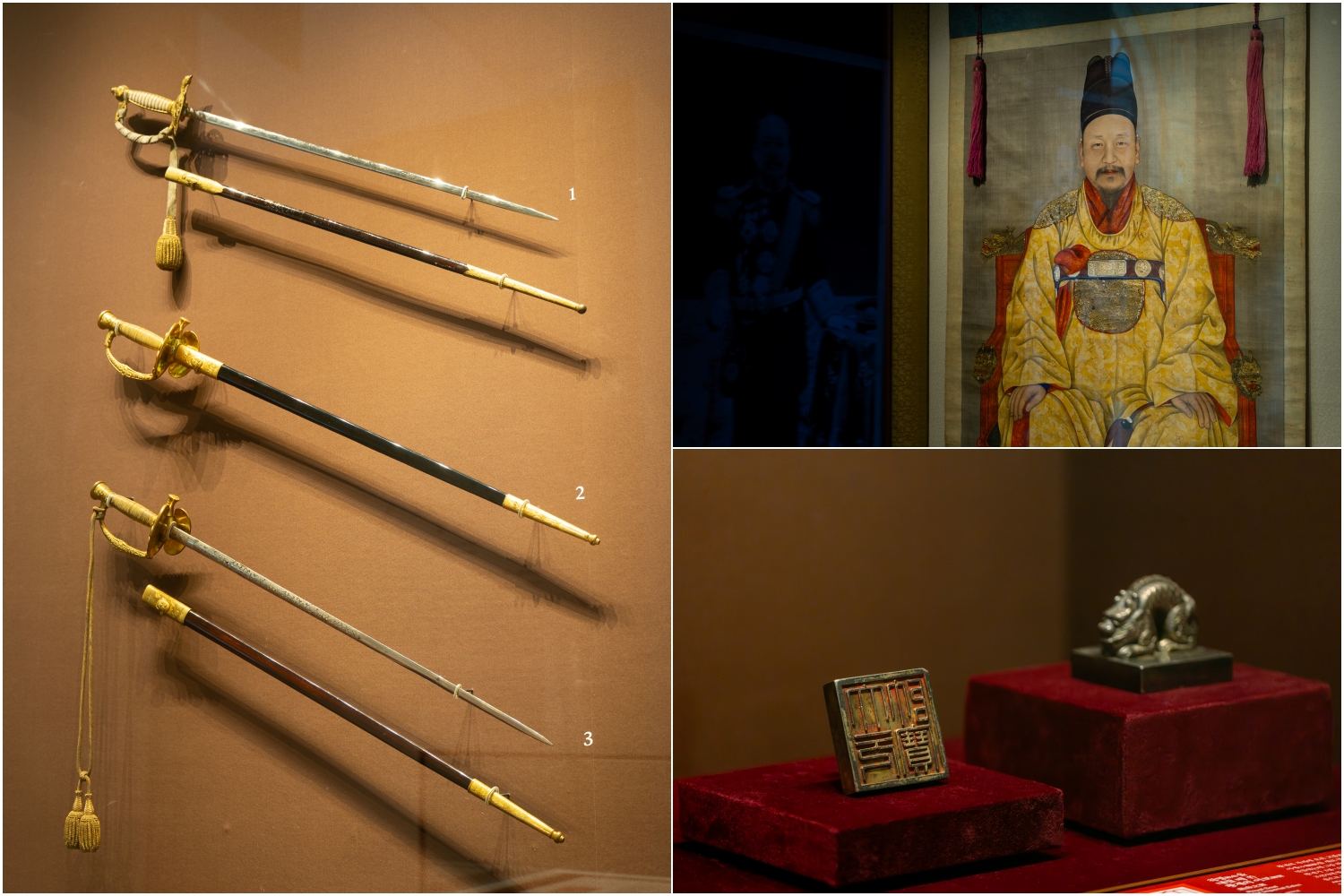
Clockwise from the top left are formal dress swords, a portrait of Emperor Gojong and his royal seal. (National Museum of Korea)
Located on the first floor of the museum, the gallery makes effective use of its relatively compact space. Upon entering, visitors encounter the vivid scene on the walls of an artificial intelligence-generated video of crowds dressed in Western suits and dresses and streetcars crisscrossing the city center, showing the rapidly modernizing landscape of Hanseong, the old name for Seoul.
Scenes of intense diplomatic talks offer a vivid glimpse into the country's history some 120 years ago.
The first artifact to catch attention is Gojong's imperial seal. Used to issue imperial edicts, the artifact reflects the status of the empire.
Unlike Joseon royal seals with handles shaped like turtles, this seal features a dragon, a symbol of the emperor, to reflect Gojong's determination to make his land an empire.
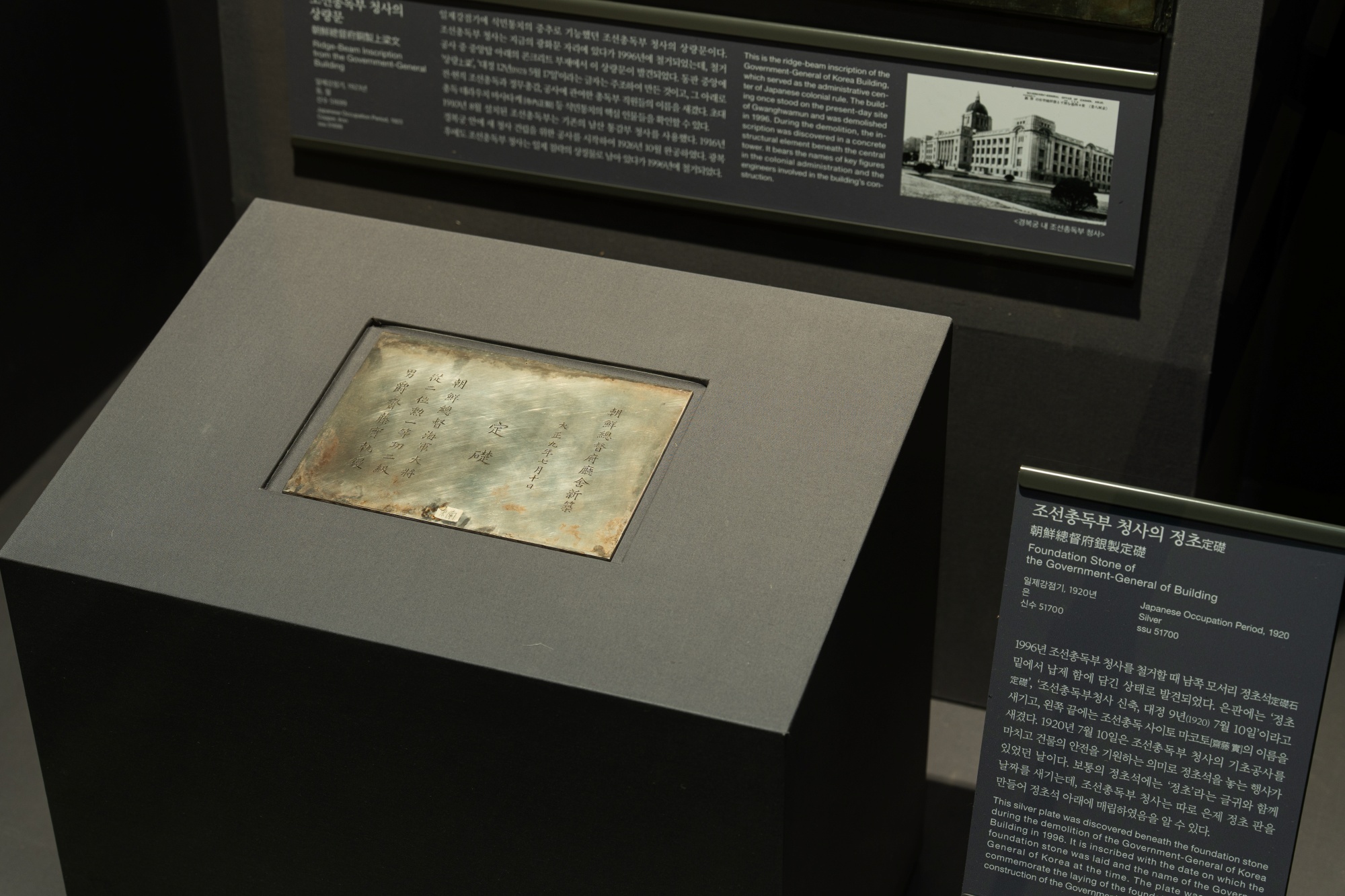
Foundation stone of former Japanese Government-General building (National Museum of Korea)
The history of domestic resistance against Japanese colonial rule is also featured here. The Denny Taegeukgi, a version of the national flag presented by Gojong to his American diplomatic adviser Owen N. Denny, is the largest and oldest surviving Taegeukgi in Korea.
The flag received wide public recognition after being designated the official flag of the empire. It was later used as a banner of the independence movement during Japanese colonial rule and evolved into a symbol of patriotism.
A silver plate discovered beneath a foundation stone during the demolition of the former building of the Japanese Government-General, the hub of colonial rule, is also on public display for the first time.
Museum curator Lim Hyekyung told a media briefing on July 30, "We unveiled it in the hope that the public doesn't forget the dark history of the Japanese colonial period."
"Because of the outcome -- the loss of national sovereignty -- we've hesitated to give the Korean Empire the credit that it's due," museum director You Hong June said. "Remembering the Korean Empire's efforts to prepare for this historical transition is an important step toward properly understanding the beginning of our modern history."
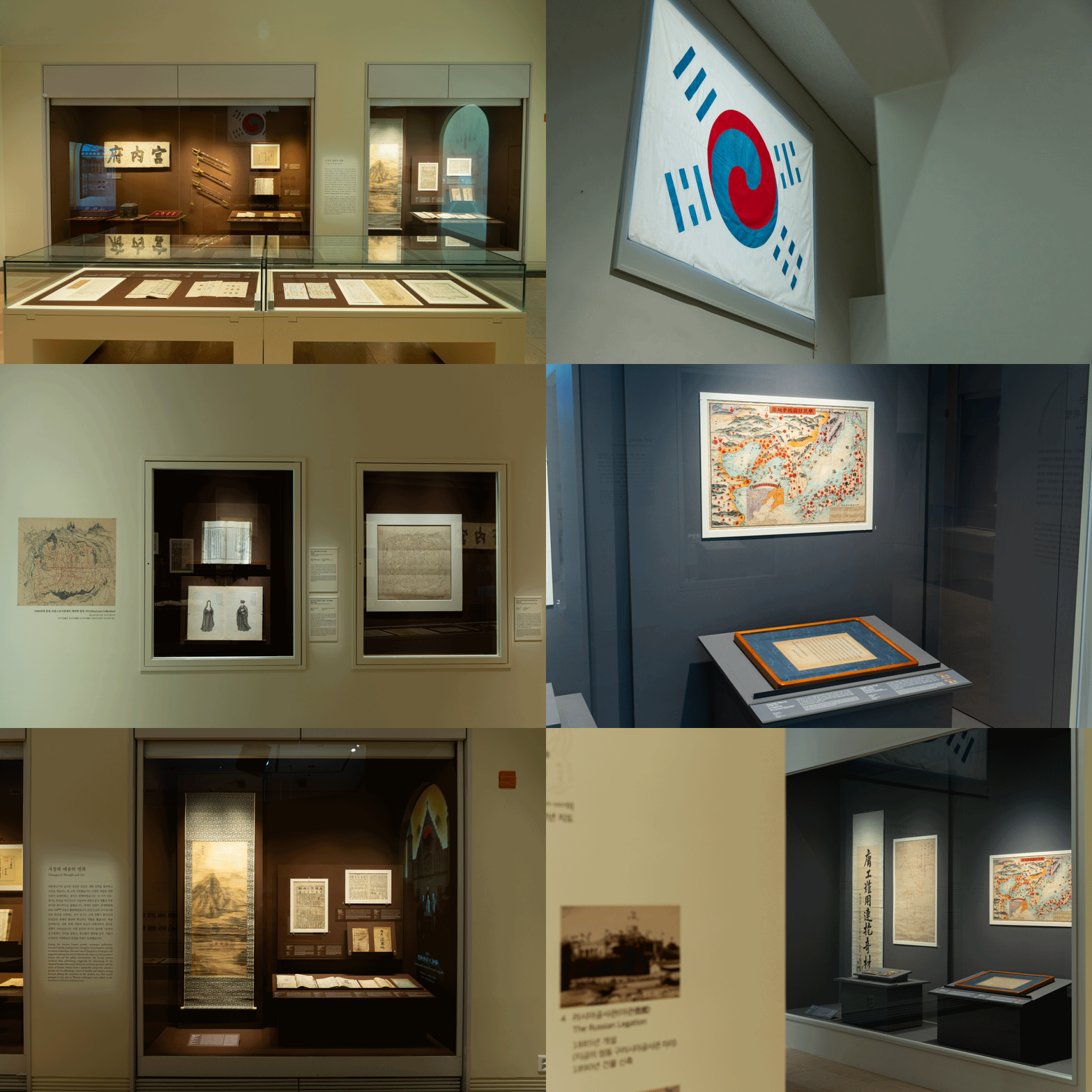
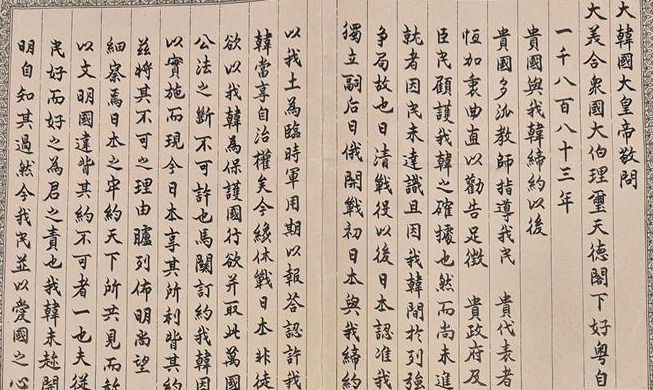
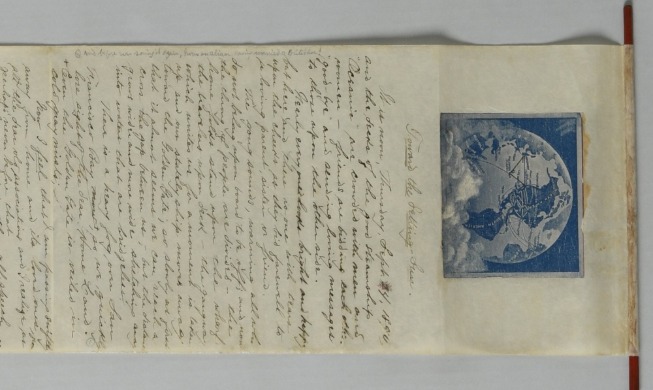
Exhibits at Korean Empire Gallery (National Museum of Korea)
cloveroh@korea.kr