- 한국어
- English
- 日本語
- 中文
- العربية
- Español
- Français
- Deutsch
- Pусский
- Tiếng Việt
- Indonesian
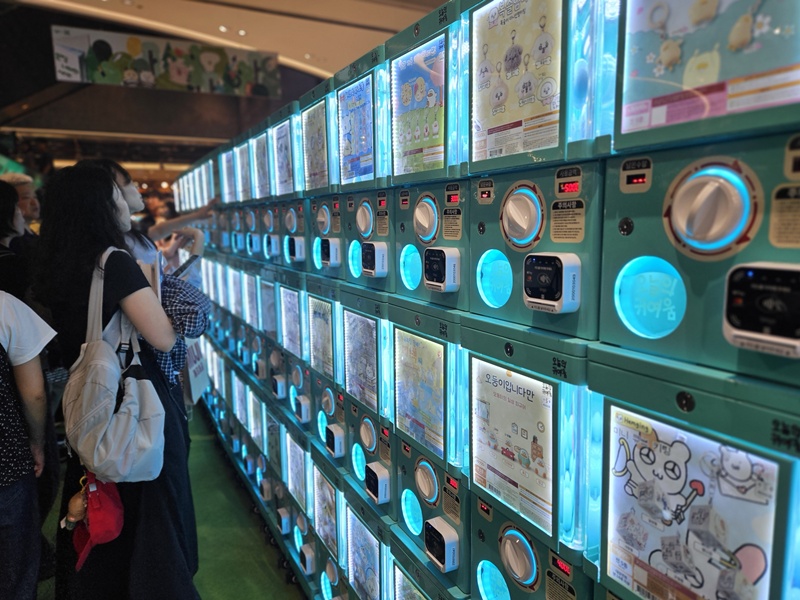
Visitors on Aug. 23 explore an interactive corner where they can randomly choose from a selection of collaborative products at the pop-up event "Minumsa X Cutes of the Day: Beyond Sentences" at Hyundai I'Park Mall in Seoul's Yongsan-gu District. (Lee Ji Yae)
By Lee Ji Yae
A pop-up event featuring collaborations with character brands was held from Aug. 11-26 on the third floor of Hyundai I'Park Mall in Seoul's Yongsan-gu District.
"Beyond Sentences," a collaborative pop-up store set up by the publishing group Minumsa and the brand Cutes of the Day drew large crowds.
The pop-up was for people unable to purchase such products at the Seoul International Book Fair, which was held in June at the convention center Coex in Seoul's Gangnam-gu District. The store featured works by Korean character artists including Kkamja, Odungi and Cheese Duck combined with Minumsa's book cover designs, featuring a range of products such as blank notebooks, keycaps, keychains and mugs.
"I came here to buy gifts for my foreign friends," visitor Kim Min Jae said. "Traditional culture-themed presents nowadays are nice, but many of my foreign friends want limited-edition products only sold in Korea."
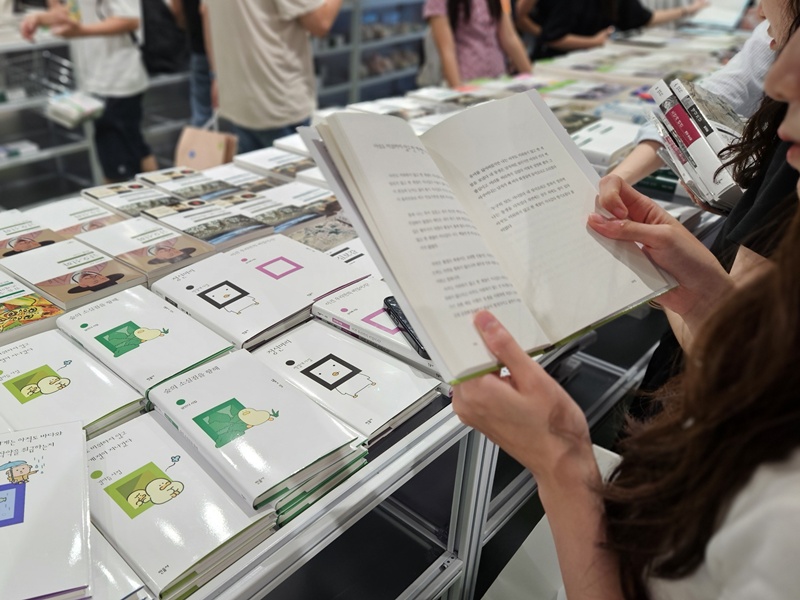
A visitor on Aug. 23 looks at a Minumsa poetry collection featuring collaborations with domestic characters at the pop-up event "Minumsa X Cutes of the Day: Beyond Sentences" at Hyundai I'Park Mall in Seoul's Yongsan-gu District. (Lee Ji Yae)
As the market for products and collaborations using character intellectual property increase in popularity, the domestic character industry is rapidly growing.
A white paper last year from the Korea Creative Content Agency (KOCCA) named as the major trends of the 2024 Korean character industry the expansion of "kidult" consumers, higher collaboration with other sectors such as retail, hotels, and food and beverages, and growing overseas expansion of domestic characters.
This year's Character Licensing Fair hosted from July 16-19 by the Ministry of Culture, Sports and Tourism attracted a combined 40,900 visitors. About 10,000 alone visited the event on its opening day, up around 30% from the same day at last year's event.
The biggest change in the domestic sector is seen in the makeup of the creators and companies in the field.
Son Taeyoung, head of KOCCA's Content IP Strategy Team, said, "Animation and toy and stationery companies were once the main players in the character industry, but more individual creators and small studios that have built fandoms on social media have recently entered the field,"
A prime example is Tintin Tinkle, which began as a social media comic in 2020. It tells stories of friendship among elementary school characters in the 2000s, and has since expanded into character merchandise.
More recently, the brand collaborated with the domestic pro baseball team Gwangju Kia Tigers to launch 16 products like uniforms, plush dolls, pouches and retro game sets.
Ganadi is another character that grew popular on social media before its commercial application to products and expansion into offline pop-up stores like at mall The Hyundai Seoul in the capital's Yeongdeungpo-gu District and Hyundai I'Park Mall, selling out via presale and on-site.
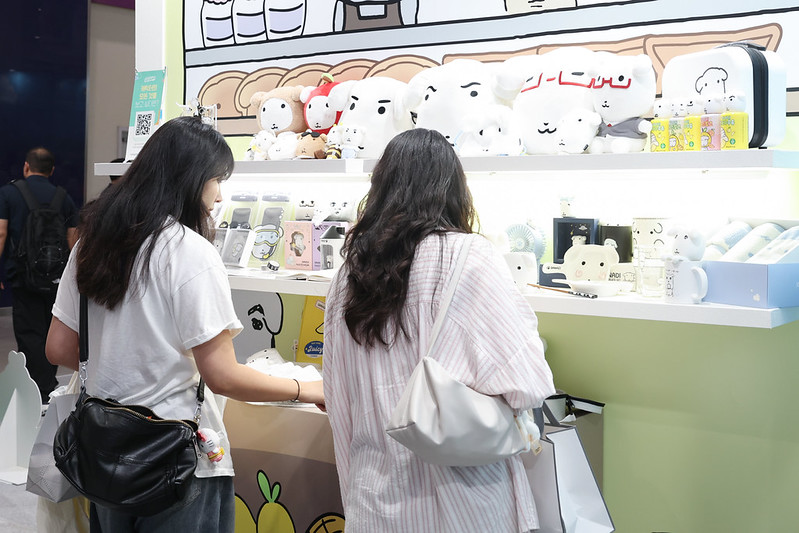
Visitors to this year's Character Licensing Fair at the convention center Coex in Seoul's Gangnam-gu District on July 16 look at collaborative products featuring the domestic character Ganadi. (Park Dae Jin)
Son said these cases show that the sequence in which character intellectual property (IP) grows has changed.
"In the past, the typical phased model was to produce an animated series, secure a slot with a broadcaster, and then move on to merchandising and licensing based on brand awareness built up through the broadcast," he said. "This required high entry costs and a great deal of time."
"Nowadays, the reserve structure has taken hold in which fandoms are formed first through social media channels such as Instagram, TikTok and emoji platforms -- even without animation -- and these fandoms then lead to pop-up stores, collaborations and licensing," he added. "Thus the obstacles to entering the character business and the barrier of initial investment have fallen, while overseas expansion has grown faster."
Character IPs that have built fandoms through social media are now expanding beyond Korea.
A KOCCA analysis on domestic content trends in the fourth quarter of last year and all of 2025 found that the sector's exports reached USD 14.9 billion last year, up 5.9% year on year, with those of character brands leading growth among such shipments with 12.8%.
Maltese & Retriever is a hit among Chinese youth consumers after the 2023 launch of emojis on China's top app WeChat.
Esther Bunny has sold over a million keychain mascots in Japan alone. Building on its success there, the brand works with about 400 companies in 15 countries and sells roughly 5,000 products, with more than 70% of revenue coming from overseas.
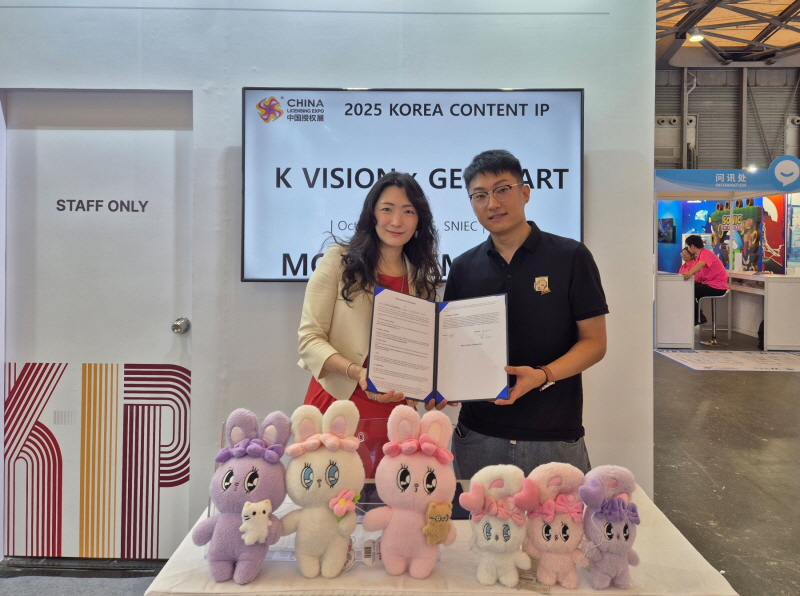
K-Vision, a company specializing in licensing planning and consulting for domestic and international character brands, in October 2025 signed a memorandum of understanding with Chinese company Genio Art at the Korea Pavilion of last year's China Licensing Expo at the Shanghai New International Expo Centre in Shanghai. Shown are Lee Song Mi (from left), senior manager of K-Vision, and Cui He, head of licensing team of Genio Art. (KOCCA)
Son called the "emotions" conveyed by social media-based characters a key factor for their international competitiveness.
"Rather than relying on a complicated world-building framework, new characters convey universal emotions such as helplessness, comfort and self-deprecation through simple forms, so they need no explanation," he said. "This lowers language and cultural barriers and develops a sense of empathy without separate localization."
Son also mentioned as advantages for global business partners direct content delivery to consumers abroad through social media and gauging the size and response of a fandom.
The ministry and KOCCA are providing training and consulting on licensing and commercialization, support for content and product development and commercialization, and help with attending major licensing markets abroad to promote domestic character IPs.
ljyhwa@korea.kr