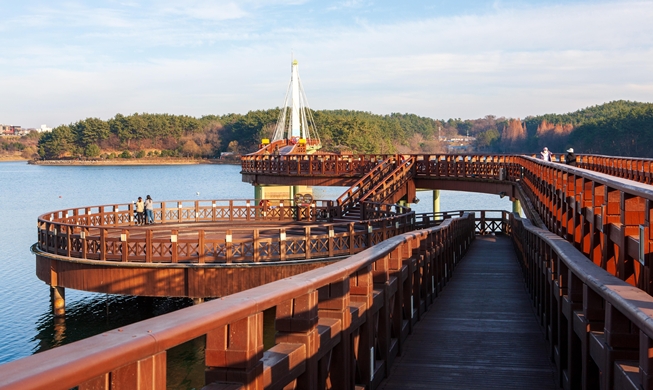
The results of a poll for the 100x100 Project to Discover Korea's Top Attractions, a joint program of the Ministry of Culture, Sports and Tourism and the Korea Tourism Organization, have been released on the initiative's official website (https://spot100x100.kr), which is linked to the Visit Korea homepage. This Korea.net series introduces 100 travel themes in eight sectors to highlight attractions recommended by the Korean public for foreign visitors.
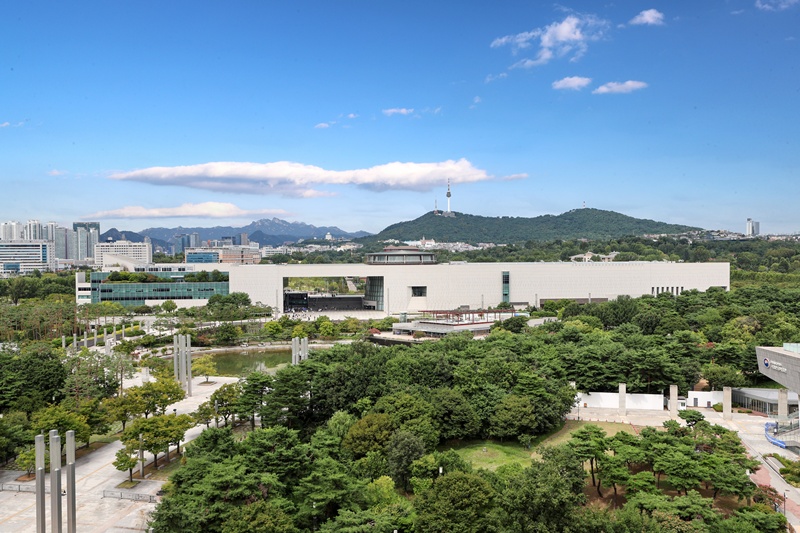
This is a panoramic view of the National Museum of Korea in Seoul's Yongsan-gu District. Beyond Mirror Pond are sweeping views of the city skyline and N Seoul Tower.
By Hong Angie
Photos = Korea Tourism Organization
The most enchanting way to explore Korea is not by plane but visiting sites of the country from yesteryear.
Just steps away from forests of ultra-modern skyscrapers are the serene smile of a 1,400-year-old Buddha statue in the heart of the capital; an evening banquet at the Silla royal court a millennium ago; and the nostalgic taste of dalgona (honeycomb candy) in a 1970s-style alleyway alongside an old railway track.
The 100x100 Project to Discover Korea's Top Attractions, which were selected directly by 40,000 people in the country, highlights cultural, artistic and traditional landmarks that do more than simply showcase history -- they invite travelers to immerse themselves in vibrant cultural experiences that transcend time and space.
The following are three "time travel" destinations that each offer a glimpse into a different era.
National Museum of Korea: 1,400-year smile
The first destination, which earned the top spot in the culture, arts and traditions category, is the National Museum of Korea in Seoul's Yongsan-gu District. Showcasing 5,000 years of Korean history, the facility attracted 3.8 million visitors in the first half of this year, punctuating its status as a true national landmark.
The most popular spot among visitors is the Room of Quiet Contemplation on the second floor. Bathed in soft lighting against a dimly lit backdrop, the space houses two national treasures -- the Gilt-bronze Pensive Bodhisattva statues -- whose enigmatic smiles evoke thoughts of a world of profound silence and deep contemplation.
Beyond the exhibition hall is a spacious garden with Mirror Pond, which offers sweeping views of N Seoul Tower for a peaceful escape from the city.
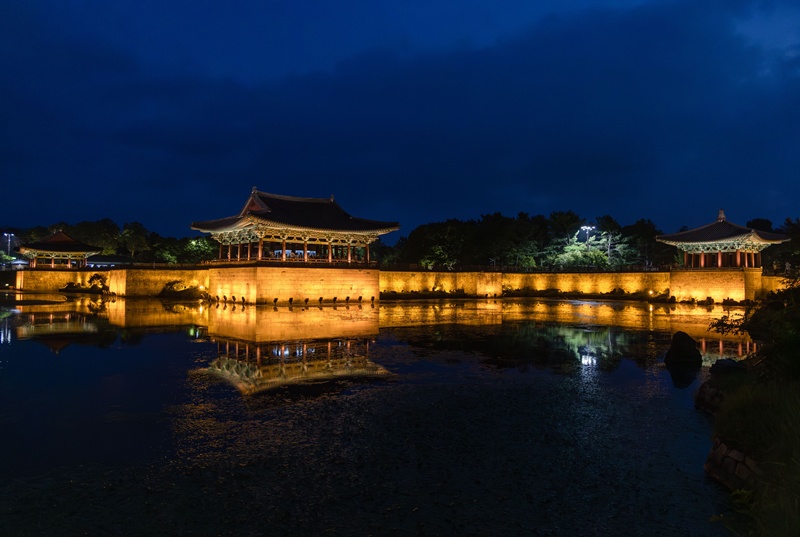
This is a night view of Donggung Palace and Wolji Pond in Gyeongju, Gyeongsangbuk-do Province. As darkness falls, the still waters provide a near-identical reflection of the traditional pavilions.
Donggung Palace and Wolji Pond: ancient Silla evening banquets
The second destination -- Donggung Palace and Wolji Pond in Gyeongju, Gyeongsangbuk-do Province -- retains the enchanting evening atmosphere of the Silla Kingdom (57 B.C.-A.D. 935) more than a millennium ago. Once a secondary palace of the royal family, the site hosted lavish banquets for distinguished guests.
Its true beauty emerges after sunset, when illuminated traditional pavilions and garden trees are reflected in the still waters and create a gorgeous, dreamlike nightscape.
The landscape also displays the Silla people's sophisticated aesthetics. The pond's gently curved edges were designed so that one glance was not enough to expose its expanse, instead creating the impression of a vast, open sea. Formerly called Anapji, the site later reclaimed its original name Wolji, which means "moon-reflecting pond." A stroll along its edges gives the feel of being at a royal banquet more than a millennium ago.
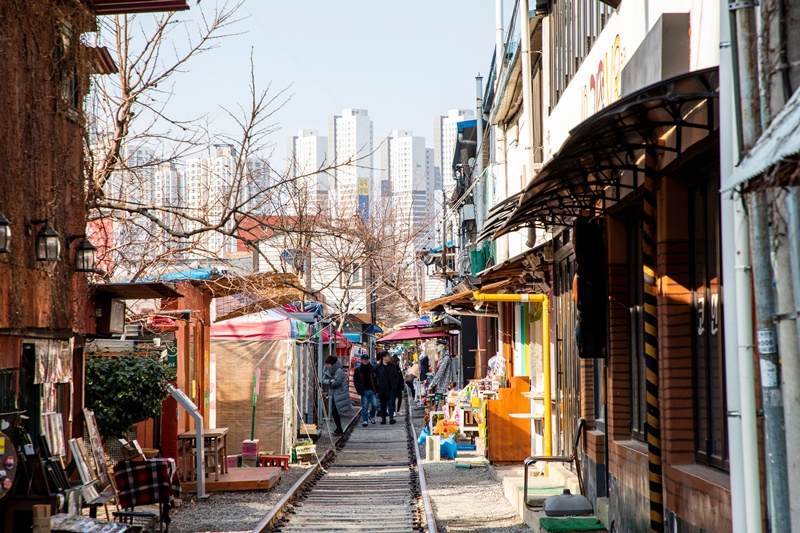
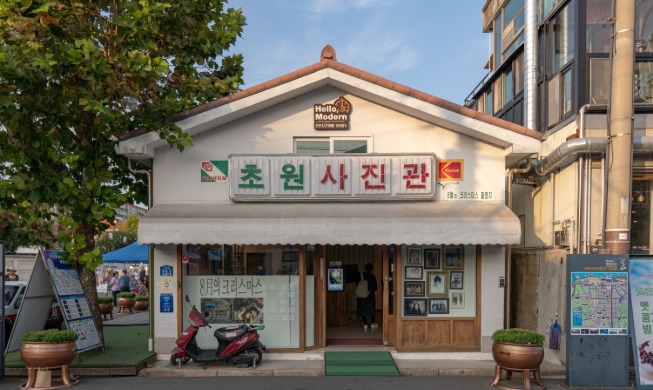
In Gyeongam-dong Railroad Village in Gunsan, Jeollabuk-do Province, the alleyways along the old tracks evoke the nostalgic charm of the 1970s and 80s.
Gyeongam-dong Railroad Village: feel of 1970s Korea
Last but not least is Gyeongam-dong Railroad Village in Gunsan, Jeollabuk-do Province. Unlike grand palaces or national heritage sites, this attraction brings to life the warmth and personal stories of Koreans in the country's modern and contemporary history.
Laid in 1944 to transport raw materials and newsprint for a paper mill, this rare rail line narrowly traveled through gaps of just over 1 m between houses. Whenever a train passed, station attendants would blow their whistles to warn residents, who would scramble to gather their laundry and move potted plants.
Such daily scenes faded into history when train service was terminated in 2008. But the abandoned tracks were turned into a themed street featuring scenes of the warm, analog charm of the 1970s and 80s.
This trip to memory lane offers trying on old school uniforms from yesteryear and strolling along the rusted tracks, making dalgona by melting sugar in a ladle, taking black-and-white photos at a studio, and dropping by old-fashioned candy shops.
Getting there
National Museum of Korea: Go to the entrance without going outdoors via the Moving Museum, an underground passage connected to Ichon Station, served by Seoul Subway Line 4 and the Gyeongui-Jungang Line.
Donggung Palace and Wolji Pond: Take city buses from KTX Singyeongju Station and the Gyeongju Express Bus Terminal for easy access to the entrance.
Gyeongam-dong Railroad Village: Just walk 10-15 minutes from either the Gunsan intercity or express bus terminal.
shong9412@korea.kr