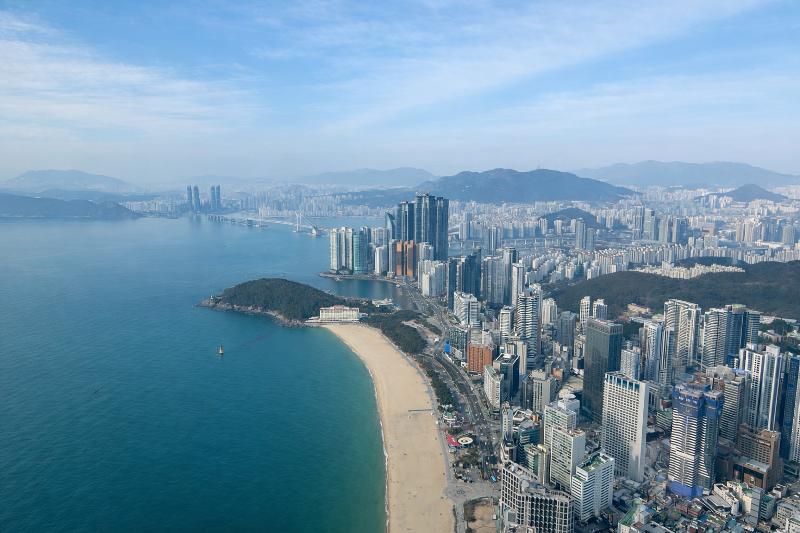
This panoramic view of Haeundae Beach in Busan's Haeundae-gu District was taken from the skyscraper Busan X The Sky, the country's second-tallest building. (Margareth Theresia)
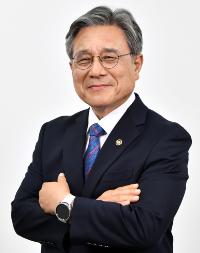
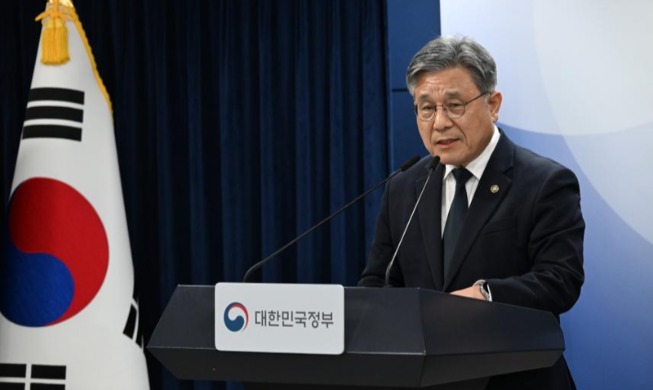
By Huh Min, administrator
Korea Heritage Service
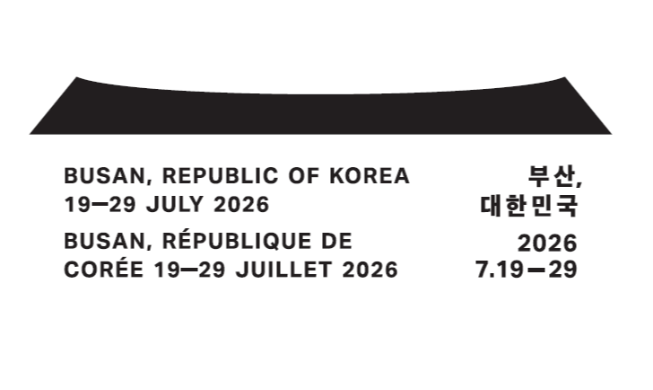
The UNESCO World Heritage Committee, aka the "Olympics of cultural diplomacy" for its focus on heritage of universal value that humanity must protect and nurture, on July 19 will kick off its 48th session in Busan, Korea's second-largest city. The event will mark Korea's first instance of serving as chair country since joining the World Heritage Convention in 1988.
Representing Korea's transformation from a receiver of global aid into a world cultural leader as the chair, the gathering will mark a milestone for Korea's national heritage policy and offer a prime opportunity to firmly establish the global stature of "K-heritage."
Since joining the convention in 1988, Korea has inscribed 17 cultural and natural heritage sites, a remarkable achievement in a relatively short period, thanks to their outstanding universal value. Beginning in 1995 with the designation of Jongmyo Shrine, Seokguram Grotto, Bulguksa Temple and the Janggyeong Panjeon (Tripitaka Koreana Depository) at Haeinsa Temple, each heritage site embodies profound historical meaning.
Jeju Volcanic Island and Lava Tubes, which were registered in 2007 as the country's first natural heritage sites, have captivated the world with their unparalleled geological significance and primordial beauty. The Petroglyphs along the Bangucheon Stream, which was inscribed last year, is a shared treasure of humanity that vividly illustrates prehistoric life and thought. From the earliest sites of natural wonder to the most recent ones of culture, Korea's World Heritage sites bear witness to the harmonious coexistence of nature and humanity as well as the past and present.
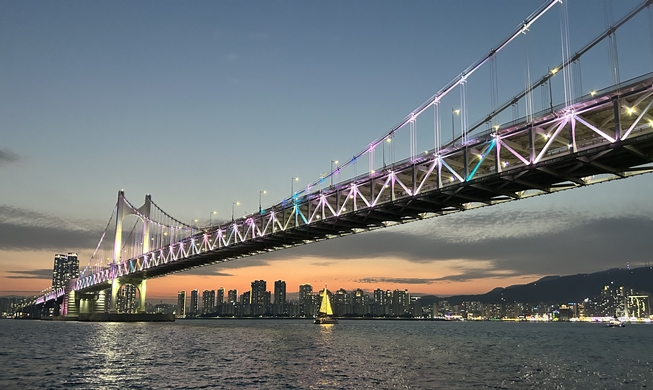
Busan, the host city of this session, also holds major symbolic value of its own. As the nation's temporary capital during the Korean War, it took in refugees from across the Korean Peninsula. Traces of the resilience that maintained human dignity and hope amid extreme suffering remain throughout the city, earning it a place on the tentative list of UNESCO World Heritage. Achieving remarkable economic growth and recovery from the ruins of war with global support, the port city is evolving into a global solidarity venue where heritage experts from the world over gather to discuss their sector's future. Busan's overcoming of adversity to achieve recovery and prosperity aligns perfectly with the values of peace and coexistence championed by UNESCO.
As the first held in Korea, the session is likely to emerge as a turning point that further elevates the country's international leadership. Chairing the event for the first time signifies recognition not only as a nation with numerous heritage sites, but a key leader of systems for the conservation and management of World Heritage. Expectations are particularly high for the expanded inscription of Getbol, Korean Tidal Flats (Phase II). Should this happen, it will reaffirm to the world the value of Korea's tidal flats, a treasure trove of biodiversity.
Furthermore, the session will adopt the Busan Declaration, which seeks to overcome multifaceted crises facing World Heritage sites and present a future vision for global heritage policy. Today, such sites are under unprecedented threat ranging from damage caused by climate change to destruction from armed conflicts.
To tackle these challenges, Korea will emphasize stronger international solidarity by adding collaboration to UNESCO's five strategic objectives: credibility, conservation, capacity building, communication and community. And in a World Heritage first, the declaration will cover the issue of ethics and responsibility in the era of digital transformation through a practical dilemma: how to preserve the authenticity of heritage in the age of artificial intelligence.
I hope that the Busan Declaration will not be the result of a one-off event but remain a major milestone in World Heritage, one that the world keeps discussing. To this end, the Korea Heritage Service will conduct follow-up initiatives and host the Busan Forum. With the declaration as a starting point, we will demonstrate sustainable and responsible leadership in cultural diplomacy.
The highlight of the session will be K-Heritage House, a Korean-centric pavilion under construction at BEXCO whose size is equal to two soccer fields. This space is not solely for international participants but where any Korean can visit and experience premium content in traditional culture spanning the nation's UNESCO World Heritage, Intangible Heritage and Memory of the World. By using this facility, where tradition is fused with cutting-edge technology, as a catalyst, the goal is to promote Korean heritage, the fundamental root of Korean culture. This will create a festive venue that showcases the excellence of such heritage to the world while instilling a sense of pride in the Korean people.
World Heritage sites are more than just the remains of the past; they are humanity's shared assets to be passed on to future generations. The message of Korean heritage resonating from Busan will deeply move the world and solidify Korea's status as a cultural power. I hope that the hosting of the 48th session of the UNESCO World Heritage Committee will see Korea emerge as a true global leader and illuminate the future of the World Heritage Convention.
Huh Min assumed his post as administrator of the Korea Heritage Service in July 2025.
arete@korea.kr