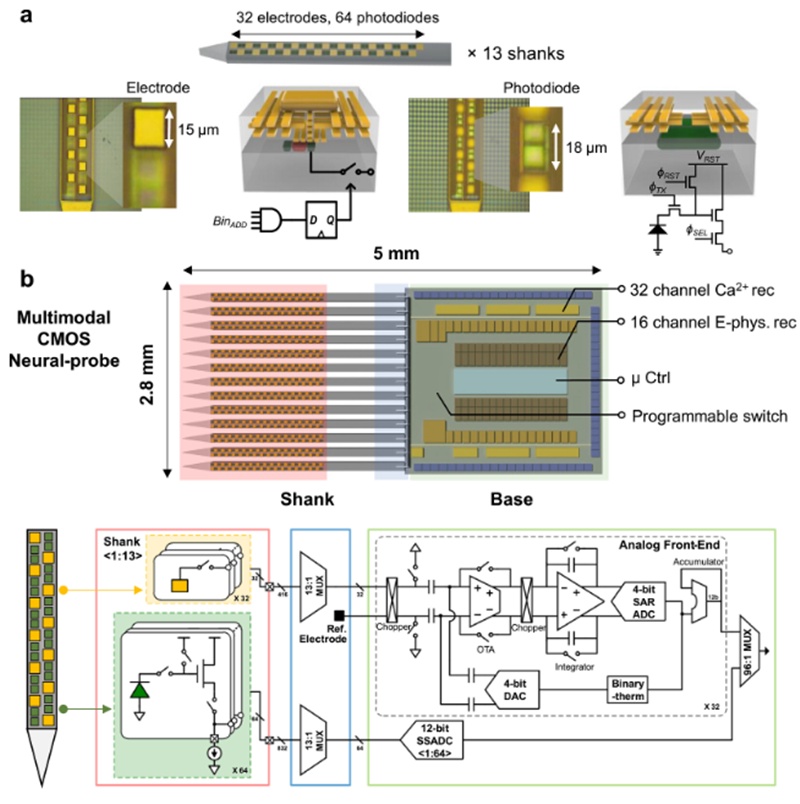
This is a structural and signal processing circuit diagram of the next-generation brain-computer interface chip. (Screenshot from paper published in Advanced Science)
By Koh Hyunjeong
Domestic researchers have developed the world's first next-generation brain-computer interface (BCI) capable of deciphering information from neurons in the brain, which is expected to raise the precision of diagnosis and treatment of neurological disorders like dementia, Parkinson's disease and depression.
The Korea Institute of Science and Technology on Aug. 5 announced its development of the technology capable of simultaneously measuring electrical and light signals from neurons on a single semiconductor chip.
Commonly dubbed a "brain implant," a BCI uses a chip implanted in the brain to enable a user to control external devices connected to the internet of things such as computers, robotic arms and powered wheelchairs using only thought. It can also stimulate deep regions in the brain to treat neurological disorders.
This technology simultaneously analyzes both electrical and optical signals to allow simultaneous detection of the timing and type of neural cell activity. By using general purpose chips and post-processing based on 3D printing, the team also slashed manufacturing costs to about 1/100th of the previous level.
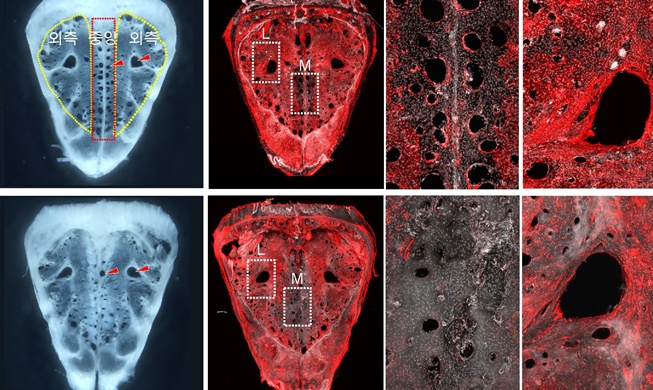
Chips implanted into the brains of live mice to measure both changes in brainwaves and neural responses at the same time found normal inflammatory response or motor function after a week.
This technology was the cover story of the June issue of the global academic journal Advanced Science.
hjkoh@korea.kr