A pension is an essential financial asset that guarantees stability in one's later years. People may want to contribute less to their pension out of their monthly income, but still receive a payout after retirement. However, as a super-aged society approaches, countries face a serious financial burden. In order to maintain the payouts, a vicious cycle of increased taxes and financial deficits continue.
Some 1.08 million civil servants have chosen to make concessions, to contribute more now but to receive less in the future, so that they can prevent the pension deficit from continuously growing and to make the system more in line with the National Pension. The Civil Service Pension System was introduced in 1960 and played a key role in establishing the civil service employment system, but it eventually encountered financial problems. Beginning in the 1990s, many countries started to experience an aging society and financial pressure on pensions due to increasing payouts. Civil service pension reform then became part of the social agenda. The civil service pension deficit has grown from KRW 59.9 billion in 2001 to KRW 1.3072 trillion in 2010 and to KRW 2.4854 trillion last year. The amount increased 41-fold over the past 13 years.
There have been issues about fairness, as civil servants receive 2.1 times the amount they contribute where the public receives only 1.5 times their contribution through the National Pension system. As a result, the government started pursuing civil service pension reform to reduce the general public's financial burden by improving the system's financial soundness, to improve fairness between the Civil Service Pension and the National Pension and to reinforce social unity.
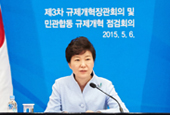
President Park Geun-hye expressed a strong will to reform the Civil Service Pension on Feb. 25, 2014, as social conflicts were growing over the Civil Service Pension and the related deficit continued to increase. The government had sought a range of analyses and alternatives to reform the civil service pension system, and the ruling Saenuri Party proposed a reform bill with unanimous support from its members on Oct. 28, 2014. A special civil service reform committee at the National Assembly that includes various stakeholders, including lawmakers from both the ruling and opposition parties, related professionals, government representatives and civil service labor organizations, formed an official discussion group and held some 60 meetings over a five-month period.
The Civil Service Pension Amendment finally passed a regular session of the National Assembly on May 29 and the amendment was announced on June 22. The new law will take effect on Jan. 1, 2016.
Under the amendment, pension payouts will be frozen for five years, from 2016 to 2020, and the rate of civil servants' contribution to the pension will increase from 14 percent to 18 percent. However, the payout rate will decline from 1.9 percent to 1.7 percent. Pensioners will receive payments when they are 65 years old, instead of the current 60 years old, as the pension recipient age will increase by one year every three years.
The civil service pension deficit is expected to decline by KRW 497 trillion over the next 70 years and the government's financial burden is likely to decrease by KRW 333 trillion after the reforms.
With the civil service pension reform, the ratio between the present value of the expected pension benefits and the present value of a person's total expected contributions (MWR) will become similar to that of people under the National Pension plan. The MWR will be 1.46 for civil servants and 1.5 for the rest of the population.
After the reform, current government employees will pay more but will receive less and the size of one's pension payout will be frozen for five years. This is expected to reduce a significant amount of the government's financial burden. It is very meaningful that various stakeholders, including lawmakers, government representatives and civil servant labor organizations, reached consensus.
By Wi Tack-whan, Limb Jae-un
Korea.net Staff Writers
Photos courtesy of the Ministry of Personnel Management
whan23@korea.kr
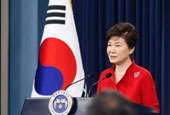
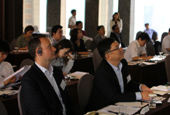
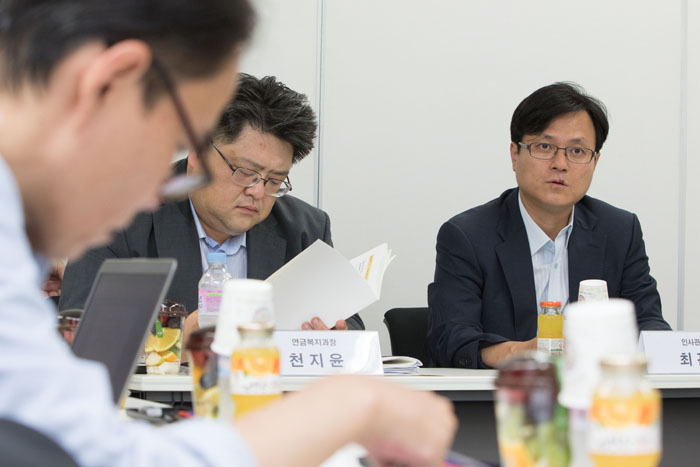
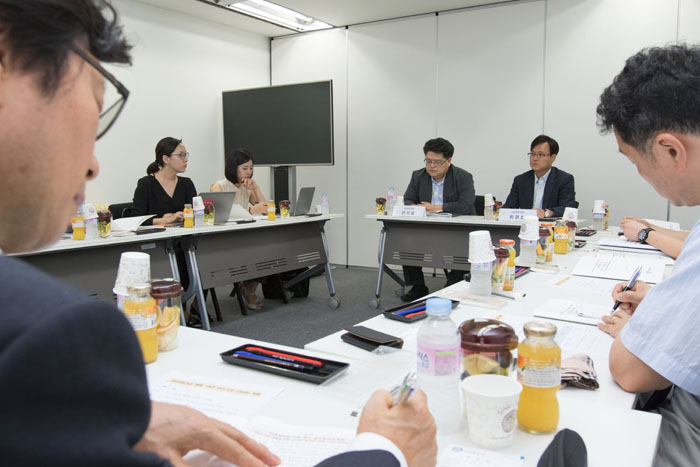
Changes made to civil servants' pension system will see them contribute more to their pensions now, but receive smaller payouts after retirement. A briefing on the recent civil servant pension reform takes place for foreign correspondents at the Foreign Press Center in central Seoul on Aug. 24.
Some 1.08 million civil servants have chosen to make concessions, to contribute more now but to receive less in the future, so that they can prevent the pension deficit from continuously growing and to make the system more in line with the National Pension. The Civil Service Pension System was introduced in 1960 and played a key role in establishing the civil service employment system, but it eventually encountered financial problems. Beginning in the 1990s, many countries started to experience an aging society and financial pressure on pensions due to increasing payouts. Civil service pension reform then became part of the social agenda. The civil service pension deficit has grown from KRW 59.9 billion in 2001 to KRW 1.3072 trillion in 2010 and to KRW 2.4854 trillion last year. The amount increased 41-fold over the past 13 years.
There have been issues about fairness, as civil servants receive 2.1 times the amount they contribute where the public receives only 1.5 times their contribution through the National Pension system. As a result, the government started pursuing civil service pension reform to reduce the general public's financial burden by improving the system's financial soundness, to improve fairness between the Civil Service Pension and the National Pension and to reinforce social unity.
President Park Geun-hye expressed a strong will to reform the Civil Service Pension on Feb. 25, 2014, as social conflicts were growing over the Civil Service Pension and the related deficit continued to increase. The government had sought a range of analyses and alternatives to reform the civil service pension system, and the ruling Saenuri Party proposed a reform bill with unanimous support from its members on Oct. 28, 2014. A special civil service reform committee at the National Assembly that includes various stakeholders, including lawmakers from both the ruling and opposition parties, related professionals, government representatives and civil service labor organizations, formed an official discussion group and held some 60 meetings over a five-month period.
The Civil Service Pension Amendment finally passed a regular session of the National Assembly on May 29 and the amendment was announced on June 22. The new law will take effect on Jan. 1, 2016.
Under the amendment, pension payouts will be frozen for five years, from 2016 to 2020, and the rate of civil servants' contribution to the pension will increase from 14 percent to 18 percent. However, the payout rate will decline from 1.9 percent to 1.7 percent. Pensioners will receive payments when they are 65 years old, instead of the current 60 years old, as the pension recipient age will increase by one year every three years.
The civil service pension deficit is expected to decline by KRW 497 trillion over the next 70 years and the government's financial burden is likely to decrease by KRW 333 trillion after the reforms.
With the civil service pension reform, the ratio between the present value of the expected pension benefits and the present value of a person's total expected contributions (MWR) will become similar to that of people under the National Pension plan. The MWR will be 1.46 for civil servants and 1.5 for the rest of the population.
After the reform, current government employees will pay more but will receive less and the size of one's pension payout will be frozen for five years. This is expected to reduce a significant amount of the government's financial burden. It is very meaningful that various stakeholders, including lawmakers, government representatives and civil servant labor organizations, reached consensus.
By Wi Tack-whan, Limb Jae-un
Korea.net Staff Writers
Photos courtesy of the Ministry of Personnel Management
whan23@korea.kr