- 한국어
- English
- 日本語
- 中文
- العربية
- Español
- Français
- Deutsch
- Pусский
- Tiếng Việt
- Indonesian
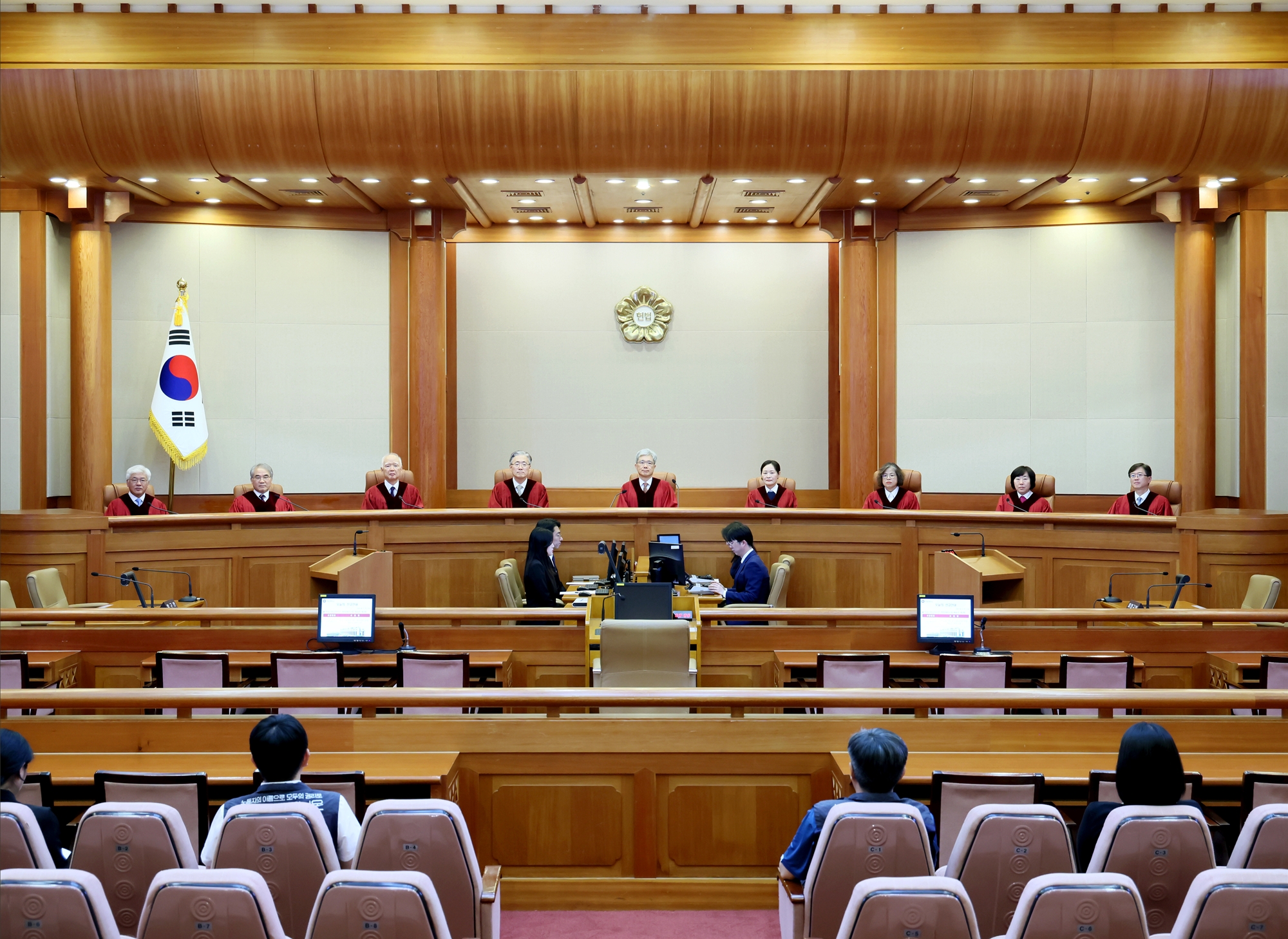
The Constitutional Court in Seoul's Jongno-gu District on Aug. 27 ruled as unconstitutional the lack of regulations on birth registration for the children of foreign nationals. (Constitutional Court)
By Lee Da Som
The Constitutional Court has ruled that the lack of regulations on birth registration for foreign children born in Korea is unconstitutional.
The ruling released on Aug. 27 unanimously ruled in favor of a Vietnamese national and his child. The plaintiff had filed a constitutional complaint challenging the National Assembly's failure to devise regulations on registering the births of foreign nationals born in Korea, something the court found unconstitutional.
The plaintiff and his wife were both from Vietnam and entered Korea in 2008 on the non-professional employment (E-9) visa. They have since remained in the country without legal status after their visas expired, marrying in 2016 and having their child in 2019.
Because their child was a foreign national, birth registration was impossible under domestic law. The following year, the child was eventually registered under Vietnamese law.
The court said a child born in Korea to foreign parents also had the "right to be registered immediately after birth."
"'The right to be registered at birth' is the right to have the government register basic information on a child's birth to allow the state to manage that information at 'the earliest possible time after birth' when the child can receive protection," it added.
"This is a basic and fundamental right not explicitly stipulated in the Constitution, allowing children to freely develop their personalities as humans and grow and develop healthily under the protection of their parents and family," it said. "It cannot be argued that eligibility for coverage should differ based on whether the child is a citizen or foreign national."
The ruling also said children excluded from the birth registration system and whose existence is not officially documented in Korea were relatively more vulnerable to abuse and abandonment. It noted their higher likelihood of becoming targets of crime because their identities could remain secret even if exposed to other criminal activity.
"The government has a legislative duty to set the specific substance of the right so that births can be registered under the laws of the Republic of Korea regardless of nationality, immigration status or if the birth was registered in the person's country of origin," the court added.
dlektha0319@korea.kr