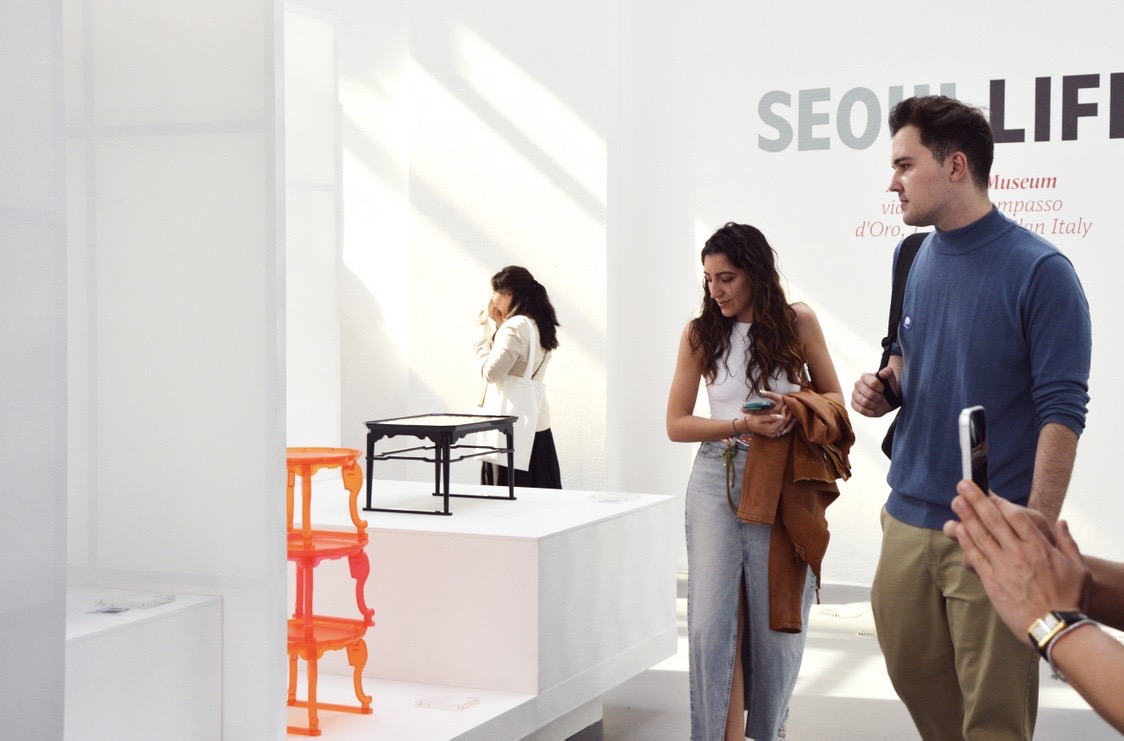
Visitors in April view modern interpretations of soban, a traditional small table, at the ADI Design Museum in Milan, Italy. (Seoul Design Foundation)
By Uyen Nguyen
During this year's Milan Design Week in April, some 20,000 visitors stopped at an exhibition hall to look at soban, a traditional small dining table, that has long been part of everyday life in Korea.
The Seoul Design Foundation said the display at the ADI Design Museum in the Italian city drew global attention by showcasing 17 works by Korean and international designers who reinterpreted soban in contemporary ways.
How have these small tables, which have been used by Koreans for centuries, attracted attention on one of the world's leading design stages?
A soban is both a tray for carrying food and a table for dining. It serves as a tray when carrying dishes from the kitchen to a room and as a dining table for one when then placed on the floor.
Because they served both purposes, such tables were designed to be lightweight and easy to carry. Their average height is typically 25-30 cm, reflecting Korea's traditional floor-seating lifestyle.
Eating norms during the Joseon Dynasty (1392-1910) were far stricter than those of today. Under Neo-Confucian etiquette, meals were served on separate tables based on social status, gender and age, leading to the development of the dining culture known as doksang, in which each person was served at his or her own table.
Soban was thus more than a piece of furniture for placing food but an everyday tool that embodied the dietary habits and lifestyle of that time.
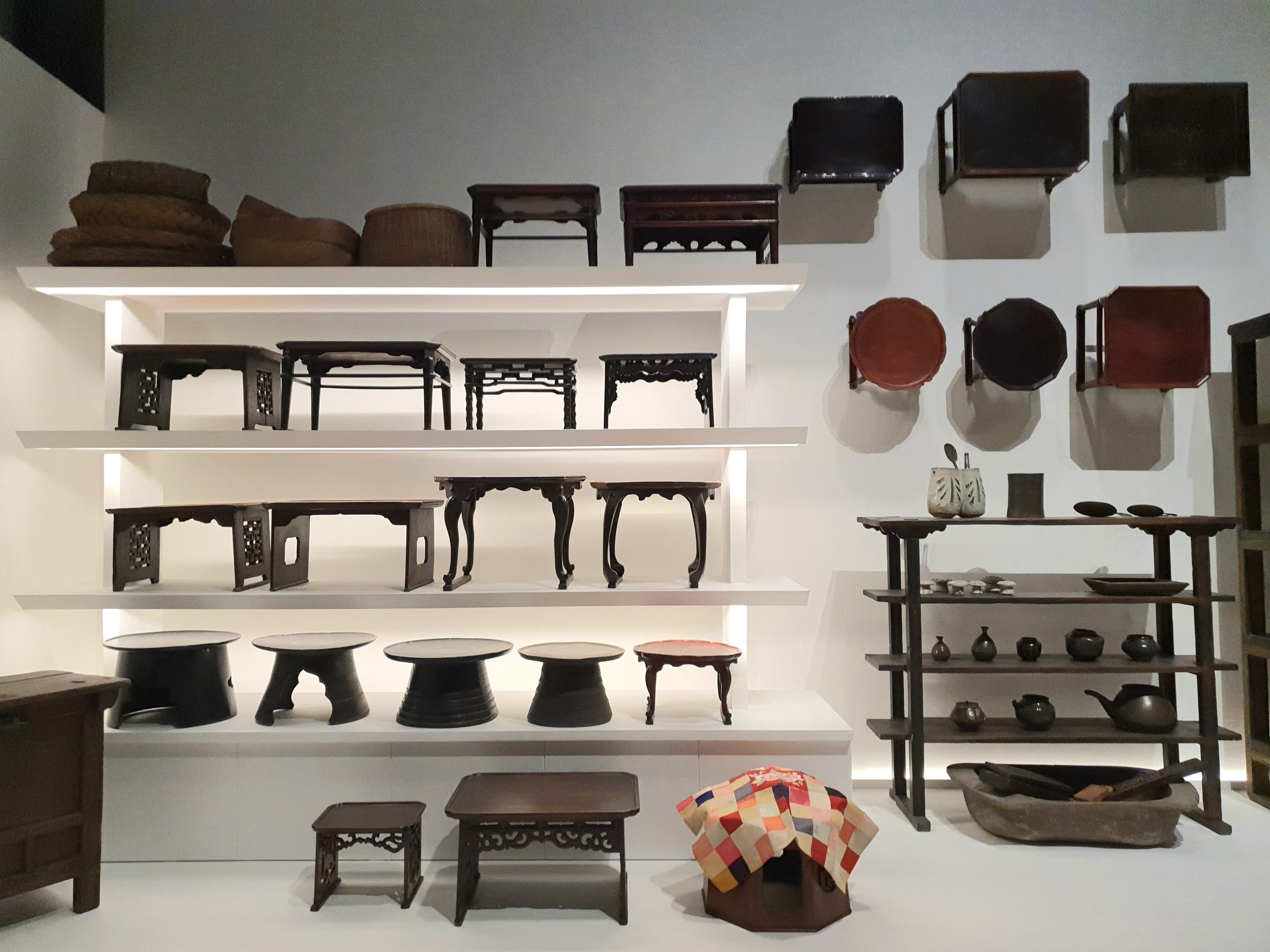
Soban of varying forms depending on the shapes of their tabletops and legs are on display through Oct. 25 at the exhibition "The Korean Table: Food, Nature, and Life" at the National Museum of Korea in Seoul. (Uyen Nguyen)
Despite its small size, a soban comes in a wide diversity of forms. Tabletops range from square, octagonal and dodecagonal shapes to circular and flower-shaped designs. Their legs are also categorized into types like gujokban, which has dog-like legs; hojokban (tiger) and pangakban (wide panels).
Another appealing feature of soban is style diversity by region. As the shapes of the table differed across the country, the names of regions were used to refer to specific types of the tables. Najuban from Naju, Jeollanam-do Province, for example, has a separately made rim attached to the tabletop and long supports underneath.
Tongyeongban from Tongyeong, Gyeongsangnam-do Province, features additional decorative elements beneath the tabletop, with the legs directly connected to it. Haejuban from Haeju, a city in Hwanghaenam-do Province in present-day North Korea, has two plank-shaped legs lavishly decorated with intricate openwork patterns, while Gangwonban from Gangwon-do Province also uses plank-shaped legs but with simpler ornamentation.
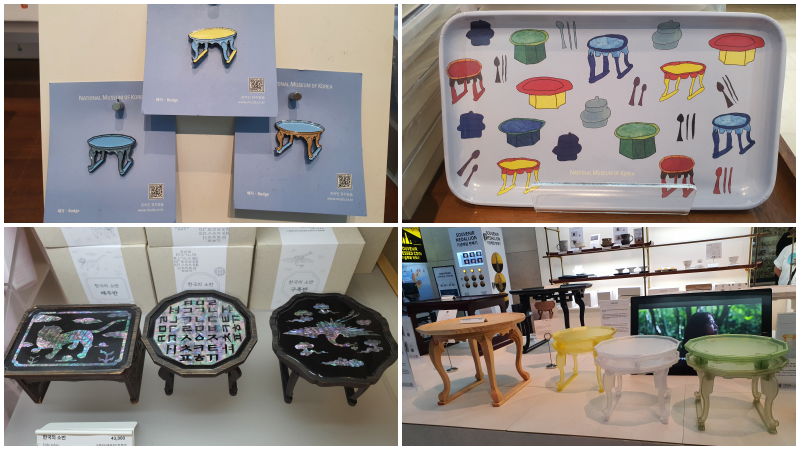
Soban, a symbol of traditional lifestyle and culture, come in a variety of designs and patterns at the souvenir store of the National Museum of Korea in Seoul. (Uyen Nguyen)
Soban, which has preserved its distinctive charm according to region and form, is now transitioning into a contemporary design object that blends traditional craftsmanship with advanced manufacturing know-how. The Milan exhibition featured 17 design teams -- 13 from Korea -- whose works incorporated traditional craft techniques such as woodworking, lacquerware and mother-of-pearl inlay into modern technologies including 3D printing and digital modeling.
The reinterpretation extended beyond mere craftsmanship. The tabletops explored contemporary issues ranging from single-person households to carbon emissions. Once a practical surface for placing dishes, the tabletop, which has also long served as a space for expressing aesthetic values and aspirations, now bears the weight of contemporary life and thought.
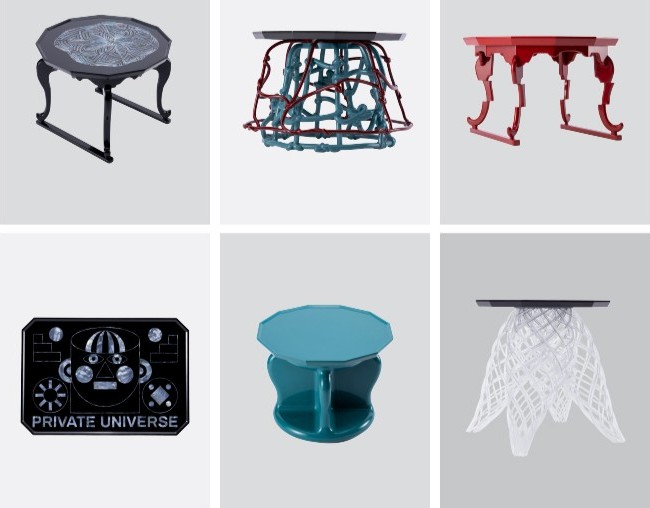
These soban models are among the 17 showcased at Milan Design Week of Italy in April. (Seoul Design Foundation)
The 17 soban pieces that received an enthusiastic response in Milan are now on display in Seoul after going on a world tour. Visitors can see them through Oct. 8 at the exhibition "Seoul Life 2026: Heritage Reimagined, Soban" at Dongdaemun Design Plaza in the capital's Jung-gu District.
"The soban is a design asset that embodies Korea's traditional lifestyle while connecting flexibly with modern life," Seoul Design Foundation CEO Cha Kang Heui said. "Through this display, we hope to share these reimagined soban by domestic and international designers with the public and build on it as a record of design that captures Seoul today."
uyen81@korea.kr