Korean culture has transcended being a passing fad and evolved into part of daily life worldwide. In this five-part series, Korea.net examines the factors behind the global popularity of Korean content in music, cinema, food, beauty and literature and explores Hallyu's (Korean Wave) sustainable future and strategies for sustainable growth as well as analyzing the phenomenon.
By Kang Gahui
#KoreanFood #Delicious
Korean food is spreading worldwide through social media algorithms. While the globalization of Hansik (traditional cuisine) once centered on introducing favorites such as kimchi, bulgogi (marinated stir-fried meat) and bibimbap (rice with meat and vegetables) to international diners, consumers around the globe are now coming up with new combinations and food cultures using Korean ingredients and recipes.
Social media platforms such as TikTok, Instagram and YouTube have recently seen recipes featuring Korean ingredients going viral. As users abroad cook and share their recipes, Hansik has evolved from simply food to eat into content that people create and enjoy together.
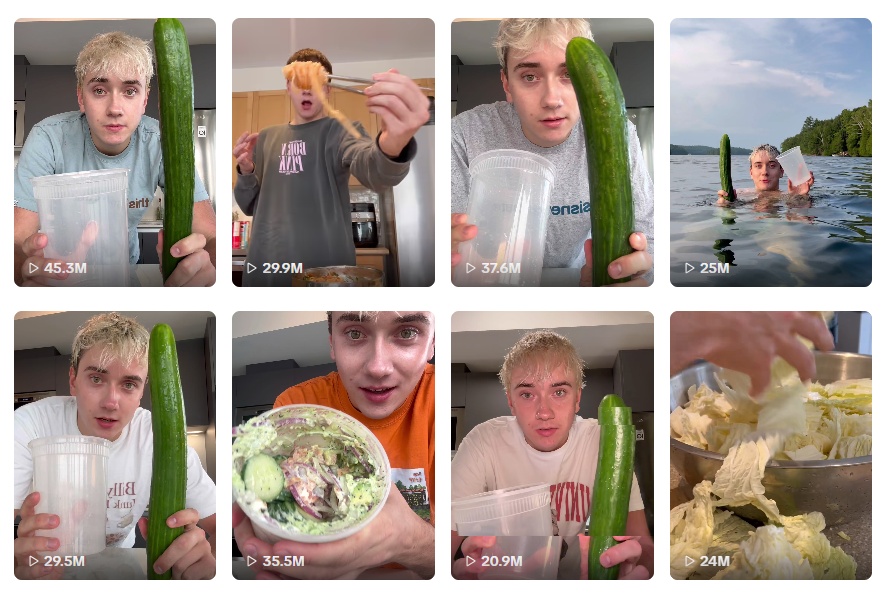
Canadian Hansik vlogger Logan Moffitt shows his cucumber salad recipe on TikTok. (Screenshot from Moffitt's TikTok account)
A prime example is a cucumber salad recipe popularized by Canadian Hansik vlogger Logan Moffitt (@logagm). His simple recipe of tossing thinly sliced cucumbers with sesame oil, soy sauce, chili oil and seasonings has earned tens of millions of views on TikTok.
His recipe's popularity grew so viral the BBC in 2024 reported that Iceland saw all of its cucumbers temporarily sell out due to surging demand.
Korean ingredients are no longer limited to conventional Hansik. More consumers abroad are incorporating Korean fermented sauces and condiments including soy sauce, gochujang (red pepper paste), doenjang (soybean paste) and ssamjang, a thick and spicy sauce made with soybean paste, into dishes in their countries, creating their own interpretations of Korean cuisine.
Among foreign visitors to Korea, new combinations using convenience store products are growingly popular. Spreading on social media are recipes such as mixing banana-flavored milk with coffee to make banana milk coffee and creative pairings of instant cup noodles, triangle-shaped gimbap (seaweed rolls) and other ready-to-eat foods in fueling the rise of a new category of Hansik content.
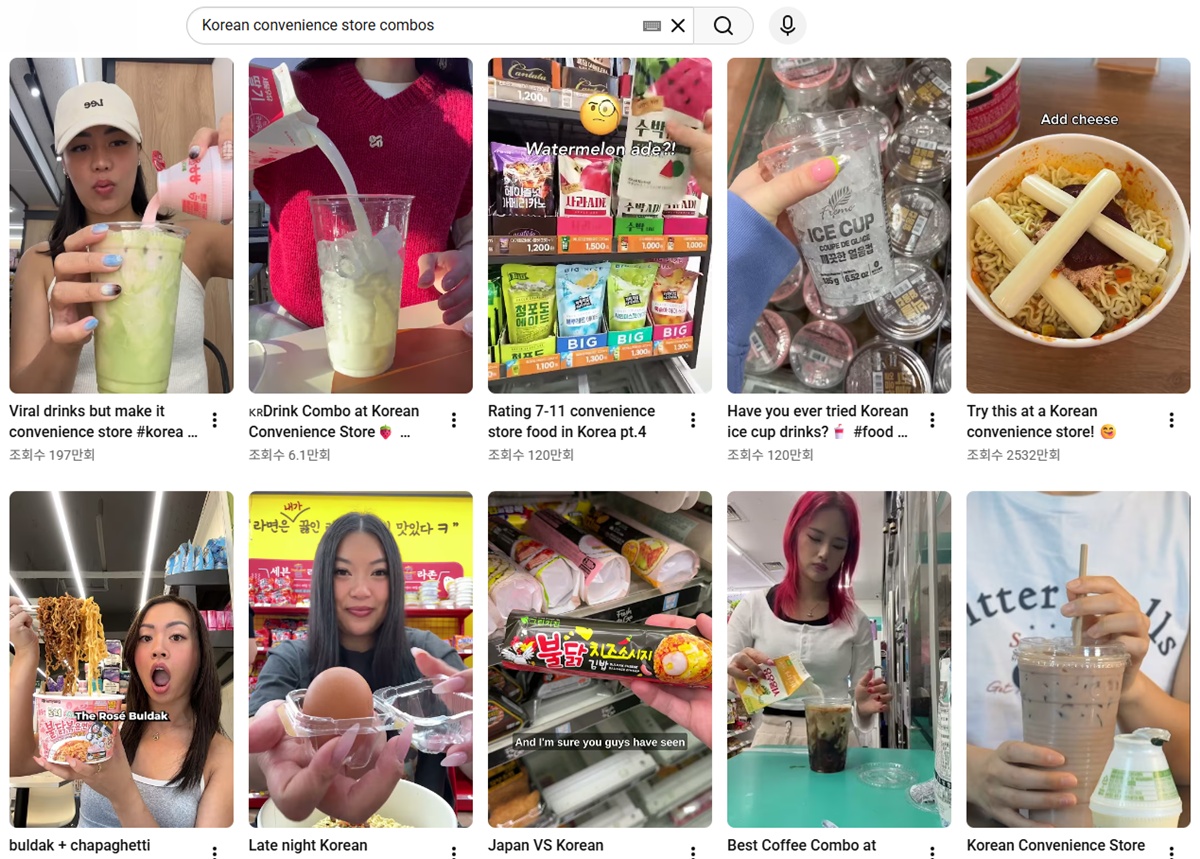
A search for culinary combinations featuring food from Korean convenience stores on social media shows a wide variety of related recipes. (Screenshots from YouTube)
The growing presence of Hansik in daily life worldwide has fueled sustained export growth in the sector. Data from the Ministry of Agriculture, Food and Rural Affairs on July 5 said such overseas shipments reached USD 5.38 billion in the first half of this year, up 5% year on year.
Growth has been strong not just in traditional Hansik strongholds like the U.S. and China, but also emerging markets including the Middle East (25.2%), Latin America (19.5%) and Europe (17.9%).
Jun Ki Chan, director of food exports at the Korea Agro-Fisheries & Food Trade Corp., said, "Overseas consumers have moved beyond simply accepting Hansik as is to actively adapting it to fit their own food cultures."
"The biggest change is that whereas in the past, efforts were needed to promote Korean food, consumers abroad have now shifted to active consumption, independently searching for and sharing information on how to eat it," he added. "The social media culture of viral sharing, in which consumers find enjoyment and actively take part, has a greater impact than any corporate advertising and is resulting in tangible results, including the growth of Korean food exports and wider distribution networks."
"More foreign tourists who experience K-food at convenience stores and popular restaurants while visiting Korea continue to purchase Korean food online or at supermarkets after returning home," he said. "Their firsthand experiences in Korea translate into daily consumption back home as Hansik is getting deeply embedded in the lives of people around the world."
kgh89@korea.kr
![[Global K-life] ① K-pop enters mainstream via connecting people](/upload/content/image/60d3becbd18543d69eec641f3b853485_20260706084227.jpg)
![[Global K-life] ② Fresh and innovative Korean cinema moves world](/upload/content/image/256fa4584e2d4f9a9b5912379086ddd0_20260731094007.jpg)