The results of a poll for the 100x100 Project to Discover Korea's Top Attractions, a joint program of the Ministry of Culture, Sports and Tourism and the Korea Tourism Organization, have been released on the initiative's official website (https://spot100x100.kr), which is linked to the Visit Korea homepage. This Korea.net series introduces 100 travel themes in eight sectors to highlight attractions recommended by the Korean public for foreign visitors.
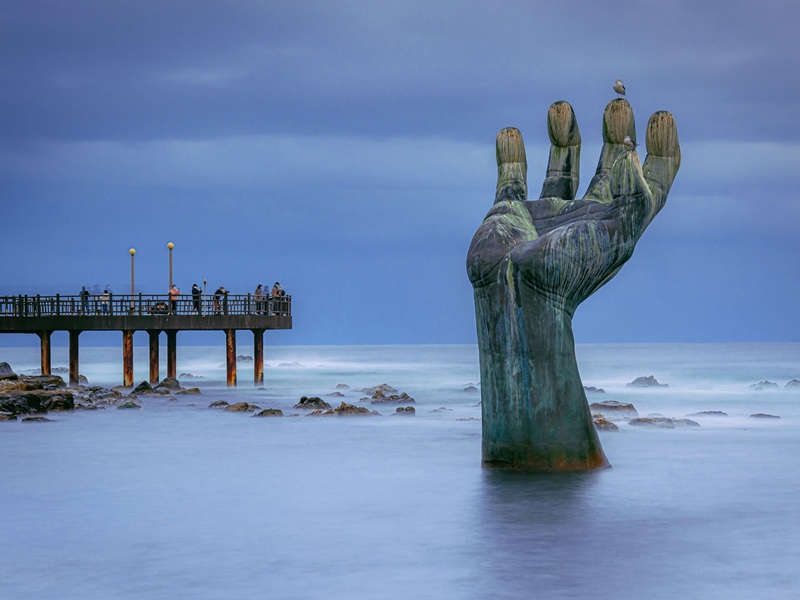
Bronze sculpture "Hand of Harmony" at Homigot Sunrise Square in township of Homigot-myeon in Nam-gu District of Pohang, Gyeongsangbuk-do Province (Korea Tourism Organization)
By Margareth Theresia
The final category explored in this Korea.net series is "K-Content," which covers travel themes that engage Korean culture and stories including Fun Festivals, K-Pop Pilgrimage Sites and K-Mystery Travel Destinations.
Korea.net introduces three in the mystery spot category that boast unique landscapes and mysterious tales.
The first spot is Homigot Sunrise Square, located in the township of Homigot-myeon in Nam-gu District of Pohang, Gyeongsangbuk-do Province. The site's gargantuan bronze sculpture "Hand of Harmony" rises above the sea, creating a breathtaking scene along with the sunrise.
Homigot represents the tail of the Korean Peninsula when the country is likened to the shape of a tiger. As one of the nation's top spots to see the sunrise, it attracts hordes of visitors on Jan. 1 to see the first sunrise of the new year and make wishes and hosts the Homigot Sunrise Festival.
As the symbol of the square, the sculpture consists of a left hand on land and a right hand in the sea facing each other. Created to mark the new millennium, the work symbolizes harmony and coexistence and reflects the hope of people helping one another.
To get there from Seoul, take the KTX high-speed train to Pohang Station and transfer to city bus No. 9000 bound for Homigot. Get off at the bus stop for the square (Myeon Community Center), and then walk.
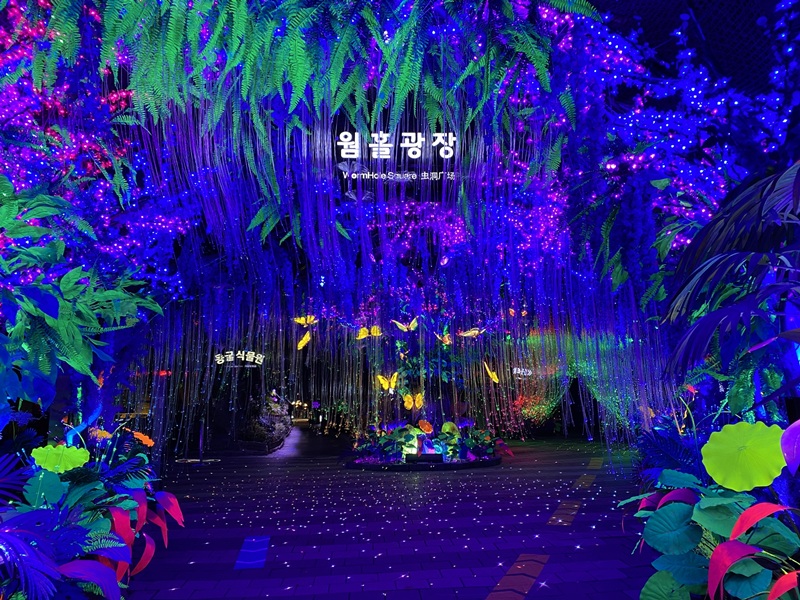
Wormhole Square at Gwangmyeong Cave in Gwangmyeong, Gyeonggi-do Province (Gwangmyeong City Hall)
The second destination is Gwangmyeong Cave in Gwangmyeong, Gyeonggi-do Province. The former mine near Seoul has been transformed into a cultural and arts space, where light and art come together in a unique underground setting.
Developed in 1912, the site was originally where gold, silver, copper and zinc were mined. After being closed in 1972, it was used as a storage facility for salted shrimp and renovated in 2011 as a tourist attraction.
Walking along the tunnel, Wormhole Square with its vibrant lighting and the Space of Light, Golden Waterfall and a giant dragon sculpture create a magical atmosphere.
The Cave Art Center has video exhibitions projected onto rock walls, while the Wine Cave offers homegrown wines.
A visit takes about an hour. The average temperature inside the cave is around 12 degrees Celsius, so wearing a light jacket is recommended.
To get there, take bus No. 17 from either Cheolsan Station on Line 7 of the Seoul subway or KTX Gwangmyeong Station and get off at the bus stop for Gwangmyeong Cave.
The cave is open Tuesday through Sunday from 9 a.m. to 6 p.m. daily, with the last admission at 5 p.m. Admission for adults is KRW 10,000.
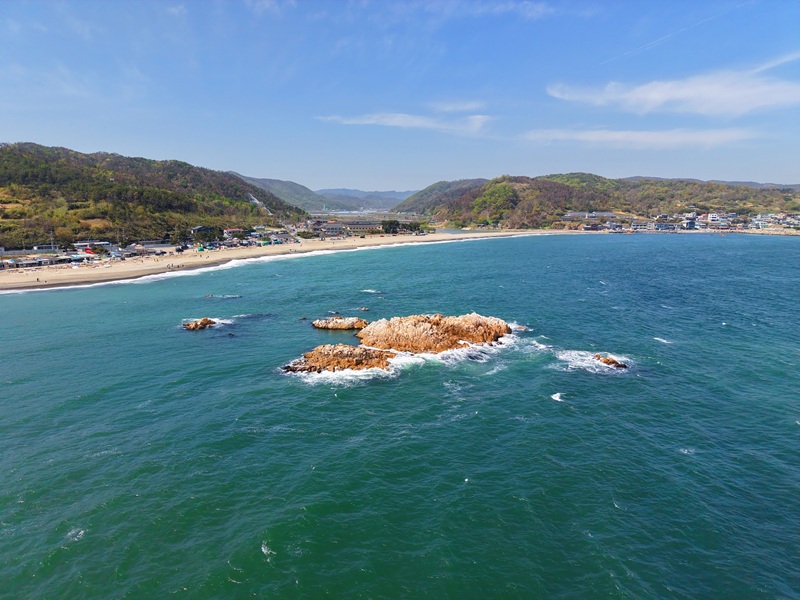
Tomb of King Munmu in waters off township of Munmu-daewang-myeon in Gyeongju, Gyeongsangbuk-do Province (Korea Tourism Organization)
Finally, the Tomb of King Munmu is located in the township of Munmu-daewang-myeon in Gyeongju, Gyeongsangbuk-do Province.
Instead of a traditional burial mound rising like a small hill, the highlight of this site is the rocky islet Daewangam (Rock of the Great King) in the sea that is the underwater tomb of King Munmu, who reigned from 661–81 as the 30th ruler of the Silla Kingdom (57 B.C.-A.D. 935).
The islet is about 200 m from Bonggil Beach.
Munmu, who unified the Three Kingdoms of Goguryeo, Baekje and Silla, is said to have expressed his wish to become a dragon after his death to continue protecting the country. His body was cremated and his ashes spread in the East Sea per his instructions.
His legend also lives on at the nearby Buddhist temple of Gameunsa. His son, King Sinmun, is said to have completed Gameunsa in honor of his father and had a waterway built beneath the main hall so that Munmu could enter and exit the temple as a dragon.
Bonggil offers great views of Daewangam and the sunrise. Admission is free.
Touring the temple and Igyeondae Pavilion offers a deeper understanding of historical landmarks associated with Munmu.
To get here from Seoul, take the KTX to Gyeongju Station and head for the city's bus terminal. From the Gyeongju Intercity/Express Bus Terminal, take bus No. 150 and get off at the stop for the Tomb of King Munmu/Bonggil Beach. The beach is about a three-minute walk from there.
margareth@korea.kr