The public perception of animals in Korea is fundamentally changing. The surge in the number of pet owners and rising awareness of animal welfare have led to related changes in policy and daily life. This series covers societal shifts surrounding the relationship between animals and humans by examining the legal status of animals, sanctuaries to protect them and animal-friendly policies by local governments.
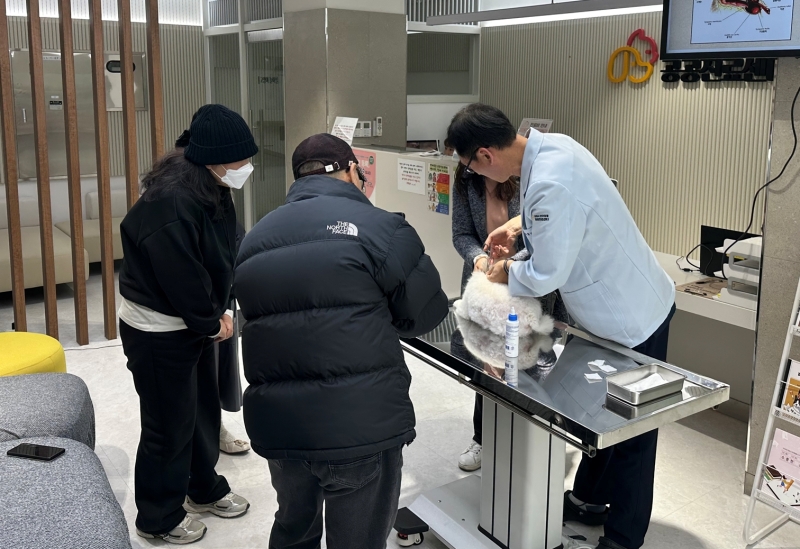
Staff at a public veterinary center in Gimpo, Gyeonggi-do Province, treat a dog. (Gimpo Public Veterinary Center)
By Kim Hyelin
Local governments are using animal welfare policy to reshape the daily lives of people and their pets.
The third comprehensive plan on animal welfare of the Ministry of Ministry of Agriculture, Food and Rural Affairs said 28.6% of households nationwide had pets in 2024. In line with this trend, around 100 local governments have launched support for such households as a key policy objective, with the scope of assistance expanded to veterinary care, education, tourism and creation of relevant venues.
Gimpo, Gyeonggi-do Province, is at the center of this trend. Opened in July 2024 as the first of its kind in the country, the Seoul suburb's public veterinary center treated 2,551 animals in just 18 months, with a user satisfaction score of 92.
The center's 655 registered animals account for about 22% of all microchip registrations in the city. The welfare bureau of the city's family culture division is also the country's first local government to set up a pet culture team.
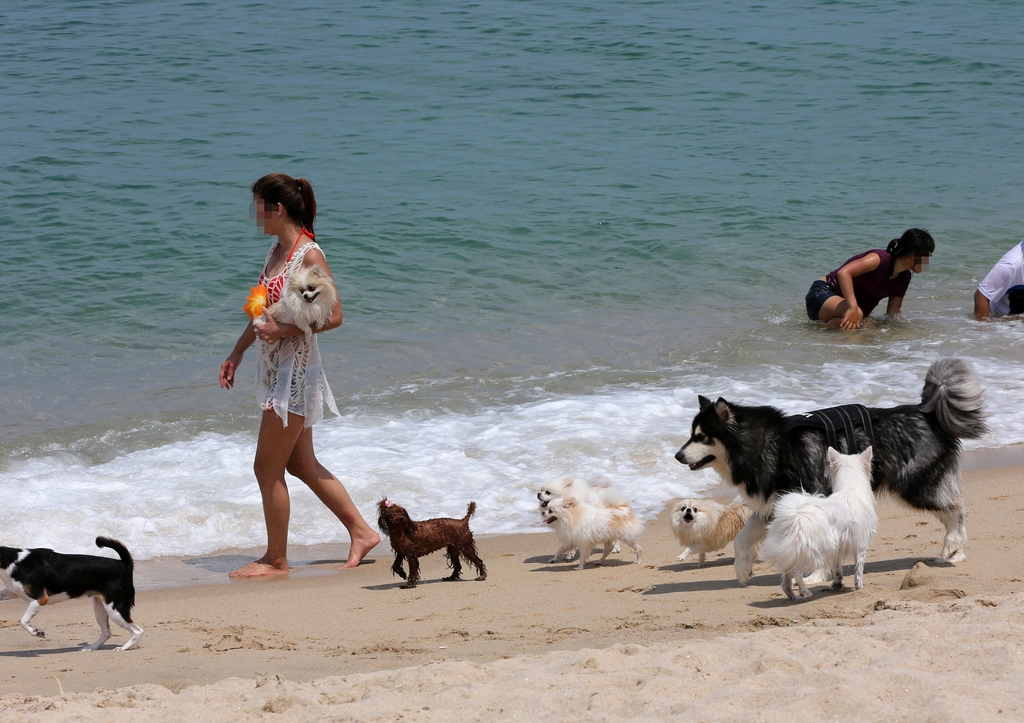
More beaches nationwide including those in Ulsan; Geoje, Gyeongsangnam-do Province; and Yangyang-gun County, Gangwon-do Province, are allowing pets. Shown are beachgoers and their dogs at Sageunjinhaebyeon Beach in Gangneung, Gangwon-do Province. (Yonhap News)
Chungcheongnam-do Province stands out at the provincial level, topping the animal welfare index, which reflects ordinances, personnel and budget ratios, released in December last year by Animal Futures Forum. The only local governments whose animal welfare funds exceeded 0.1% of their overall budgets are the provinces of Chungcheongnam-do and Gangwon-do.
Chungcheongnam-do also runs a service that integrates information on the adoption of abandoned animals, missing pet reports and feeding stations. It also promotes neutering surgeries and the building of pet-friendly parks.
Specialized pet-friendly policy is also a trend. Geoje, Gyeongsangnam-do Province, in 2023 opened Myeongsa Beach, the nation's first exclusively for pets opened by a local government.
Pocheon, Gyeonggi-do, has a pet-friendly campground with exclusive playgrounds and hiking trails. Suncheon, Jeollanam-do Province, has an animal-friendly village that links traditional markets, village buses and educational programs. It also launched the dog-exclusive Suncheon Daengdaeng Train in collaboration with the Korea Railroad Corp.
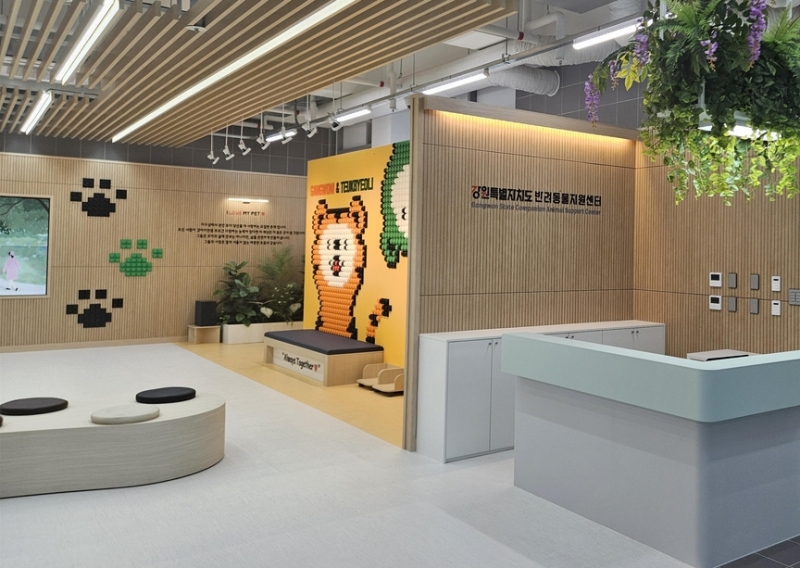
Interior of pet support center in Gangwon-do Province opened on Nov. 6, 2025 (Gangwon State)
Training for pet owners is also at the core of such policy as well as facility construction. Since 2018, the Seoul Metropolitan Government's Seoul Animal Care Center has trained 2,000 people per year on pet socialization, walking and behavior correction.
The city's Gangbuk-gu District since 2021 has sent professional trainers to households with pets for individual training in customized behavior correction.
kimhyelin211@korea.kr
![[Animal kin-stinct] ② Sanctuaries: safe havens for rescued animals](/upload/content/image/dd9b6870b1944e1696d278b93ca59f6e_20260401130731.jpg)
![[Animal kin-stinct] ① Legislative shift from 'use' to 'coexistence'](/upload/content/image/1b8daebeb60b4081b9b3a6970762382a_20260226164147.jpg)